08Jun
There’s a strange problem affecting millions of perfectly good cars right now: the vehicles themselves still drive beautifully, but the infotainment systems feel ancient.
A 2015 luxury sedan may still have a silky V6 engine and a whisper-quiet cabin, yet force drivers to use clunky Bluetooth menus and outdated navigation systems that haven’t aged well. Even some newer budget cars still lack proper smartphone integration altogether.
That’s why aftermarket wireless Apple CarPlay screens have exploded in popularity over the past two years.
They’re not just for enthusiasts anymore. Uber drivers use them. Long-distance commuters use them. Parents use them. Even owners of premium vehicles are installing portable CarPlay displays because factory systems can be slow, restrictive, or absurdly expensive to upgrade.
And unlike the old days of ripping dashboards apart for a double-DIN head unit, many modern aftermarket CarPlay displays simply mount to the dashboard and plug into power. Installation can take less than 10 minutes.
The best part? Many of them work surprisingly well.
Why Drivers Are Suddenly Obsessed With Wireless CarPlay Screens
A lot of car owners don’t realize how transformative wireless CarPlay actually is until they use it daily.
You enter the car, the screen powers on automatically, and your iPhone instantly connects without touching a cable. Your maps appear immediately. Music resumes automatically. Messages can be read aloud. Calls sound clearer. Podcasts continue where they stopped.
Once you experience that convenience, going back to basic Bluetooth feels primitive.
What’s driving the recent surge in portable CarPlay screens is the fact that they solve several problems at once:
- Older cars gain modern technology without expensive factory retrofits
- Drivers avoid paying dealership upgrade prices
- Rental cars can effectively “gain” CarPlay
- Work vehicles can become more connected
- Drivers get larger, brighter displays than many OEM systems
There’s also another reason people are switching. Factory infotainment systems are becoming frustratingly subscription heavy.
Some automakers now charge recurring fees for connected features, navigation services, or advanced apps. Portable CarPlay displays bypass much of that ecosystem by simply mirroring the smartphone experience drivers already prefer.
The Secret Most Buyers Don’t Learn Until After Purchase
Here’s the insider detail many buyers discover too late: Not all wireless CarPlay screens are truly wireless.
Some products advertise “wireless” but still require a wired iPhone connection for Apple CarPlay initialization. Others technically support wireless pairing but suffer from lag, audio delays, or unreliable reconnecting.
The difference usually comes down to three things:
1. Boot Time
Cheap units can take 20-30 seconds to fully start and connect. Better models reconnect within 5-10 seconds after engine startup. That may not sound important until you use the system every day.
2. Screen Brightness
This matters far more than most people realize. Budget displays often become difficult to see in direct sunlight, especially in hotter climates. A dim screen becomes irritating fast during daytime navigation. Higher-quality screens use brighter IPS panels that remain visible even under harsh sun exposure.
3. Audio Routing
This is where many cheap units fall apart. Portable CarPlay displays typically send sound to the car in one of three ways:
- FM transmitter
- AUX cable
- Bluetooth passthrough
FM transmission is convenient but often sounds weak or static-prone in crowded urban radio environments.
AUX connections usually deliver the best sound quality. Bluetooth passthrough sits somewhere in the middle depending on the hardware. Drivers who care about music quality should pay close attention here.
The Best Cars for Portable CarPlay Screens
Interestingly, some of the biggest beneficiaries aren’t necessarily old economy cars. These systems are especially popular among owners of:
- Older Lexus models
- Toyota trucks
- Honda Accords and Civics from the 2010s
- Porsche sports cars with outdated PCM systems
- Older BMWs with early iDrive versions
- Ford Super Duty work trucks
- Classic SUVs
- Commercial vans
In many of these vehicles, replacing the factory infotainment system entirely can interfere with climate controls, vehicle settings, backup cameras, or factory amplifiers. Portable CarPlay displays avoid those headaches completely.
That’s why they’ve become something of a “stealth tech upgrade” among enthusiasts who want modern functionality without modifying the dashboard permanently.
Features That Actually Matter (And Marketing Gimmicks That Don’t)
After testing and researching dozens of these systems, several patterns become clear.
Worth Paying Extra For
60 FPS Interface Performance
Smooth animations matter more than spec sheets suggest. Low-refresh systems feel sluggish when zooming maps or switching apps. Better displays feel almost factory integrated.
Dual Bluetooth Support
Some units can simultaneously handle phone connectivity and audio routing more intelligently, reducing reconnection headaches.
Adjustable Mounting Systems
A weak mount can ruin the experience entirely.Heat destroys cheap suction cups over time, especially in warmer regions. Strong dashboard adhesive mounts or reinforced brackets are worth paying for.
Physical Volume Controls
Touch-only controls become annoying while driving.Simple knobs or tactile buttons improve usability dramatically.
Mostly Marketing Noise
“4K” Resolution Claims
On a small automotive display, ultra-high resolutions rarely matter.Brightness, responsiveness, and anti-glare coatings matter far more.
Built-In Navigation
If you’re already using CarPlay, you’ll likely use Apple Maps, Google Maps, or Waze anyway.
Excessive RAM Claims
Some brands advertise massive memory specs that have little real-world impact on CarPlay performance.
Portable Screens vs Full Head Unit Replacements
This is the big debate. Should drivers buy a portable screen or replace the entire factory stereo? The answer depends on the car. Portable systems make the most sense when:
- You lease the vehicle
- You don’t want dashboard modifications
- You want easy installation
- You switch vehicles often
- Your factory stereo controls important vehicle functions
A full aftermarket head unit may still be better if:
- You want a cleaner OEM-style appearance
- You care deeply about audio quality
- You plan extensive speaker upgrades
- You want integrated backup camera systems
- Your dashboard easily accepts double-DIN units
For many drivers though, portable systems hit the sweet spot between convenience, cost, and simplicity.
Some Surprisingly Good Amazon Options
The market has become crowded recently, but a few models consistently stand out.
Carpuride Wireless CarPlay Display
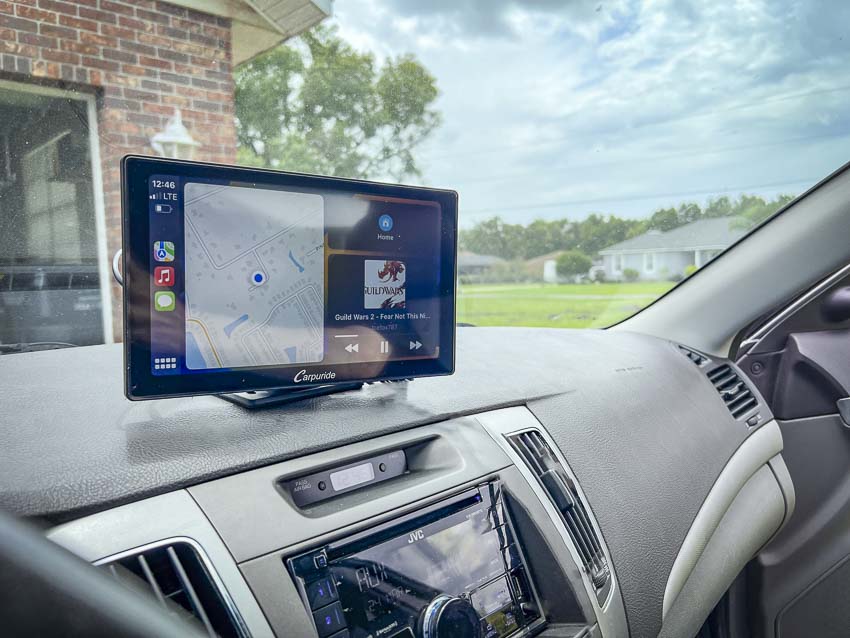
Carpuride has quietly become one of the better-known names in this space. Their larger 9-inch and 10-inch displays offer strong brightness, relatively fast startup times, and reliable wireless connectivity.
Many users also praise the stability of the audio performance compared to cheaper competitors. They’re especially popular among truck owners and rideshare drivers.
OTTOCAST Portable CarPlay Screen
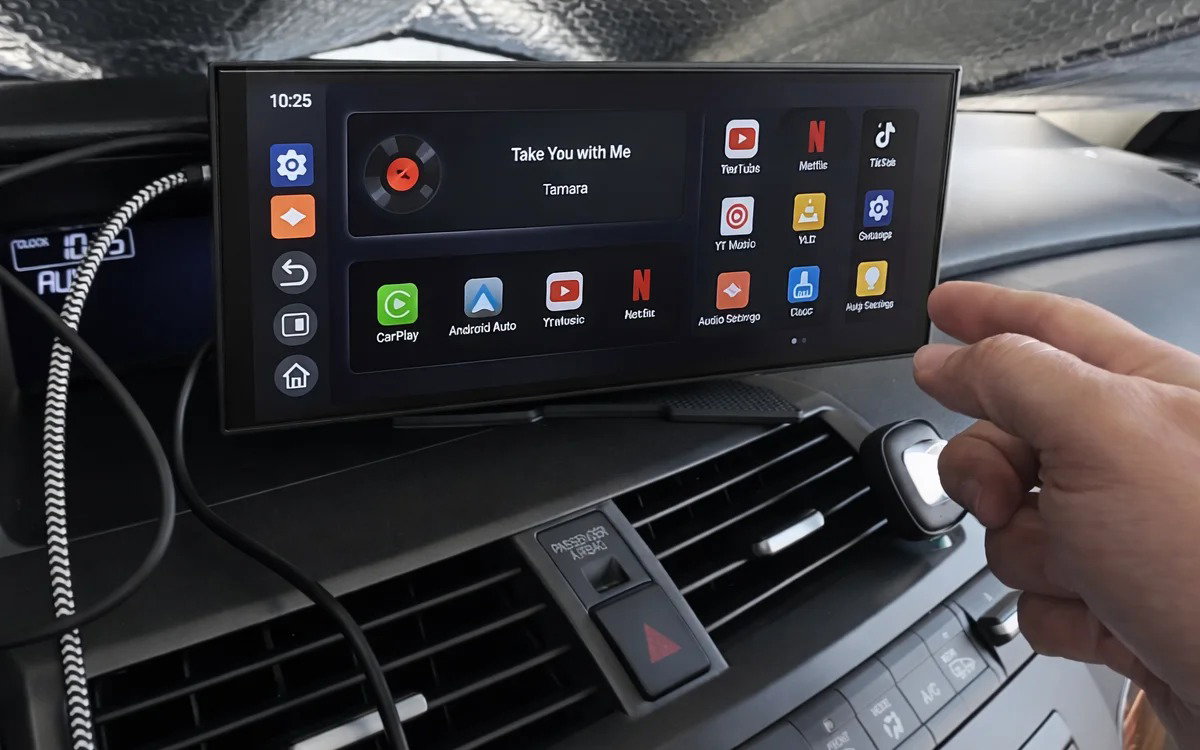
OTTOCAST gained attention initially for wireless CarPlay adapters, but their portable displays have developed a strong reputation as well. Their interfaces tend to feel polished, and the hardware quality is noticeably better than many generic Amazon brands.
The company also updates firmware more consistently than some competitors — something buyers rarely think about until bugs appear.
LAMTTO Wireless CarPlay Screen
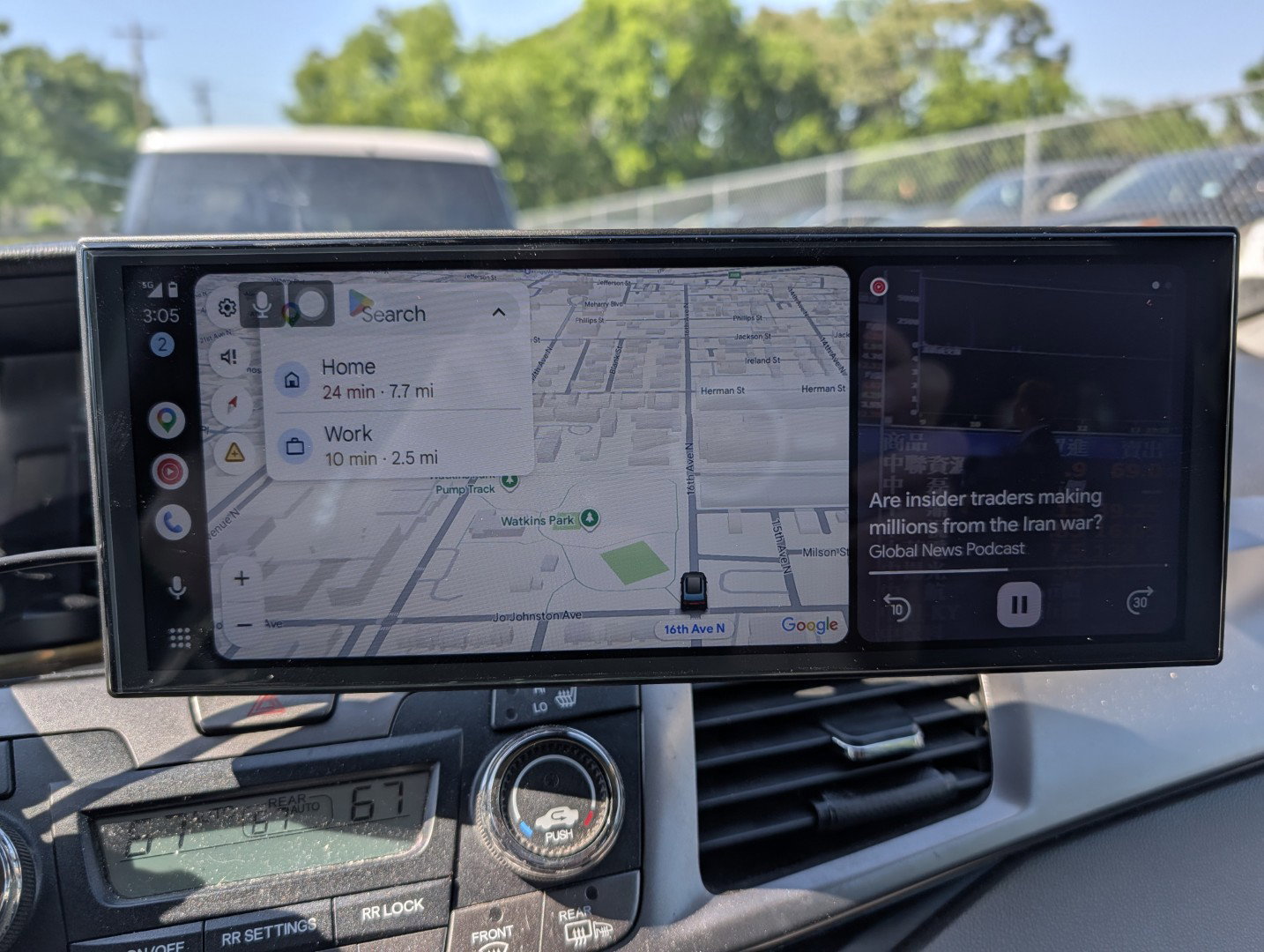
LAMTTO products have become a frequent “budget sweet spot” recommendation. They typically offer decent screen brightness and respectable responsiveness without reaching premium pricing territory.
For drivers upgrading an older commuter car, they often provide excellent value.
Hieha Portable CarPlay Units
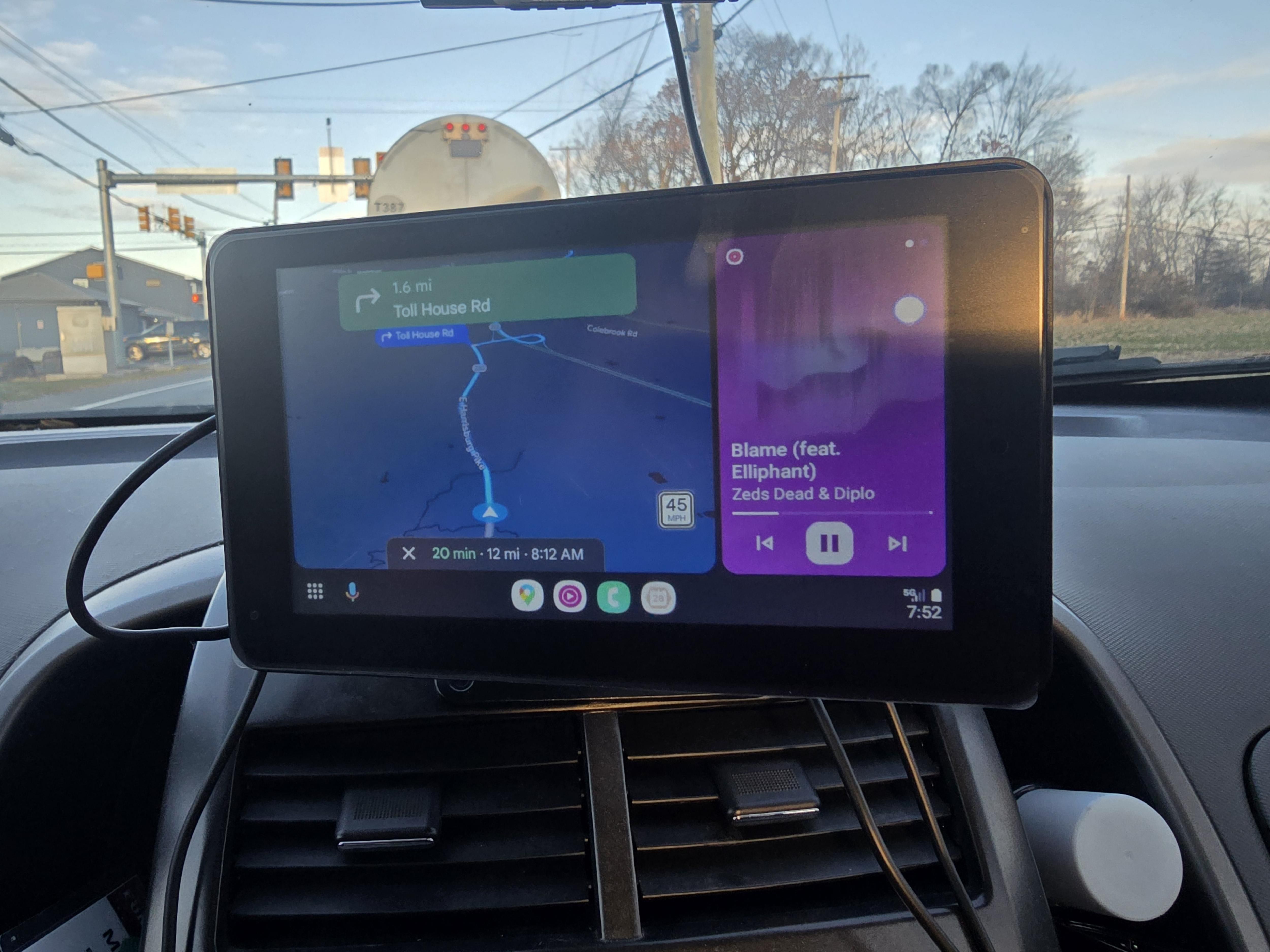
Hieha systems are widely purchased because they’re affordable and widely compatible. They may not feel as refined as higher-end options, but many drivers simply want reliable wireless CarPlay at the lowest reasonable price point.
And for that purpose, they often get the job done.
The One Upgrade Almost Everyone Forgets
If you install a portable CarPlay display, consider upgrading your charging setup too.
Wireless CarPlay drains battery faster than many drivers expect, especially during navigation and music streaming.
A weak cigarette-lighter adapter can cause slow charging or intermittent power issues.
A quality USB-C fast charger paired with a braided cable can make the whole setup feel significantly more polished.
It’s a small detail, but one that dramatically affects daily usability.
Heat Is the Hidden Enemy
This is something reviewers rarely discuss enough.
Dashboard-mounted electronics live in brutal conditions. In hot climates, interior dashboard temperatures can exceed 160 degrees Fahrenheit during summer parking. Cheap displays often fail because of:
- Weak adhesives
- Poor thermal management
- Low-grade LCD panels
- Inferior internal batteries
That’s why it’s smarter to buy from brands with strong customer support and established reputations instead of chasing the absolute cheapest listing online.
A slightly more expensive display that lasts three years is ultimately cheaper than replacing a bargain unit every summer.
Are Portable CarPlay Screens Actually Safe?
Surprisingly, they can improve safety when properly mounted.
A well-positioned CarPlay display reduces the need to touch the phone itself. Voice commands through Siri also help minimize distractions. However, placement matters enormously.
A poorly mounted screen that blocks visibility or requires excessive reach can create new problems. The safest setups place the display near the driver’s natural line of sight without obstructing the windshield.
This is one reason many drivers prefer dashboard-top mounting rather than windshield suction placement.
The Future of These Devices Looks Bigger Than Most People Think
Portable CarPlay screens may eventually become standard accessories rather than niche gadgets. Why? Because modern smartphones evolve faster than automotive software.
Car manufacturers work on multi-year development cycles. Smartphones update constantly. Drivers increasingly prefer the flexibility of bringing their digital ecosystem with them instead of depending on aging factory systems.
That shift explains why even owners of luxury vehicles increasingly use portable displays despite already having built-in infotainment systems.
In some ways, aftermarket wireless CarPlay screens are becoming the automotive equivalent of smart TVs replacing traditional cable boxes: consumers want hardware flexibility, app freedom, and constant updates.
And honestly, for many vehicles, a good portable CarPlay screen delivers one of the biggest day-to-day improvements per dollar you can currently make to a car. Not because it adds horsepower.
But because it makes every single drive feel more modern.
Some of the links here are affiliate links. That means if you click and buy, we might earn a small commission - at no extra cost to you. As an Amazon Associate, we earn from qualifying purchases. Thanks for supporting the site.
Wireless CarPlay Aftermarket CarPlay screen Portable CarPlay display Car infotainment upgrade Dashboard screen Apple CarPlay wireless Smartphone integration for cars Upgrade old car tech Uber driver tech No-dashboard-modification Best CarPlay screens How to add CarPlay to any car Best wireless CarPlay display for older cars Portable CarPlay vs head unit replacement
Comments