18Jun
For the true motorsport enthusiast, few experiences could rival the thrill of piloting a Formula 1 car. However, the realities of obtaining an authentic, modern F1 car are prohibitive for almost everyone. The technology is secret, the budgets are astronomical, and the cars are simply not for sale.
This is where the dream of building your own F1 race car replica comes into play.
While the genuine article is an unobtainable piece of engineering history, a new world of possibility opens up when you decide to build a replica.
This detailed guide is your roadmap, exploring the feasibility, costs, legalities, and the breathtaking world of DIY F1 replicas, using examples from dedicated craftsmen who have turned this fantasy into a rolling reality.
We'll also answer the most pressing questions, from "Can you buy an actual F1 car?" to "What is the difference between an F1 car and a replica car?".
Why Build a Replica? The Allure of the Unobtainable
For most, the appeal of a replica isn't just about having a car; it's about the journey. YouTuber Rich Rebuilds, for instance, is building his own F1 car from parts sourced on Facebook Marketplace and using a high-revving Suzuki Hayabusa motorcycle engine to capture the "F1-like performance and sound".
His project is a modern ode to the "kit cars of old," a testament to the fact that with enough grit and ingenuity, you can overcome the barrier of a multi-million-dollar price tag.
This sentiment is echoed by craftsmen like Yuji Watahiki, a Japanese fabricator who built a stunning replica of the iconic six-wheeled Tyrrell P34 in his shed.
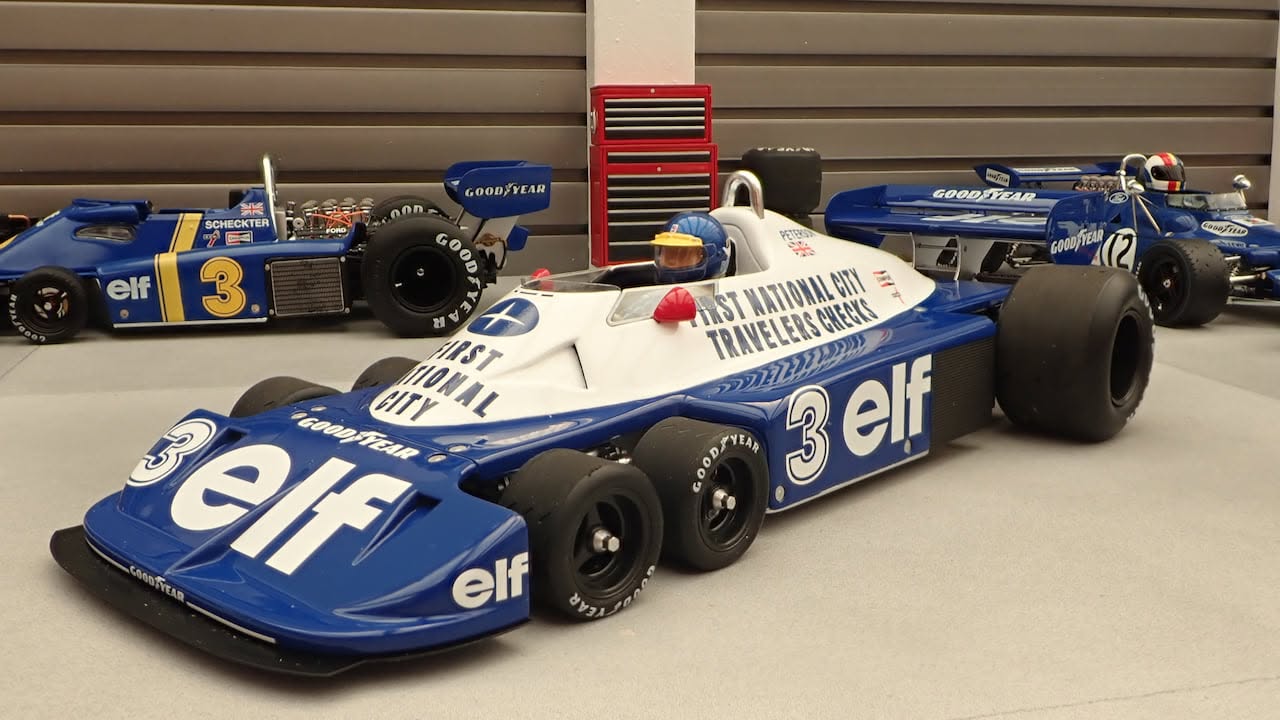
Image Credit: Jon Evans/Facebook.
He used an anvil, an English wheel, and his bare hands to shape the aluminum bodywork, relying on museum visits and photographs for reference. When asked why, he said, "The Tyrrell is the most unique of all F1 cars, so I challenged myself to build one".
These projects, born from passion, define the very essence of building an F1 race car replica. It's an opportunity to connect with the history of the sport, to learn the craft of fabrication, and to own a piece of automotive art that has your own hands in its creation.
Can You Buy an Actual F1 Car?
Before embarking on a build, it's crucial to understand the reality of the market for real F1 cars. The short answer is: yes, you can, but the cost and complexity are immense . The market is divided into several distinct tiers.
1. Modern F1 Cars:
Getty Images.
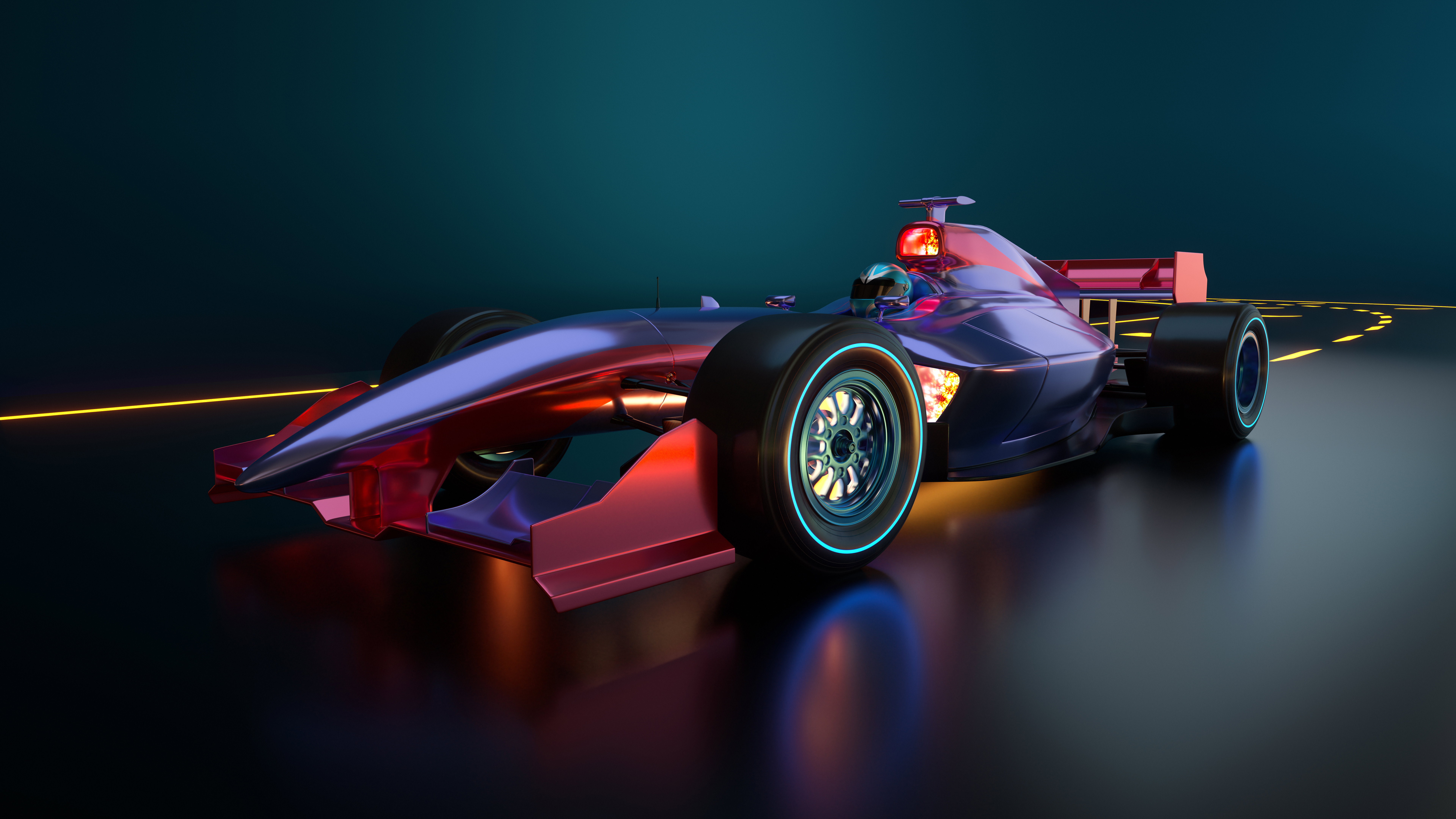
These are the cars you see on the track every other Sunday. They are not for sale. A modern F1 car costs a team at least €15 million (around $17.3 million) to build, but that figure is obscured by secrets and development costs.
The power unit and transmission alone are priced at about €12 million (about $13.8 million) per season. The few used modern cars that enter the market are often sold as "rolling chassis"—a complete shell but without the immensely expensive and cutting-edge hybrid power unit.
2. Show Cars:
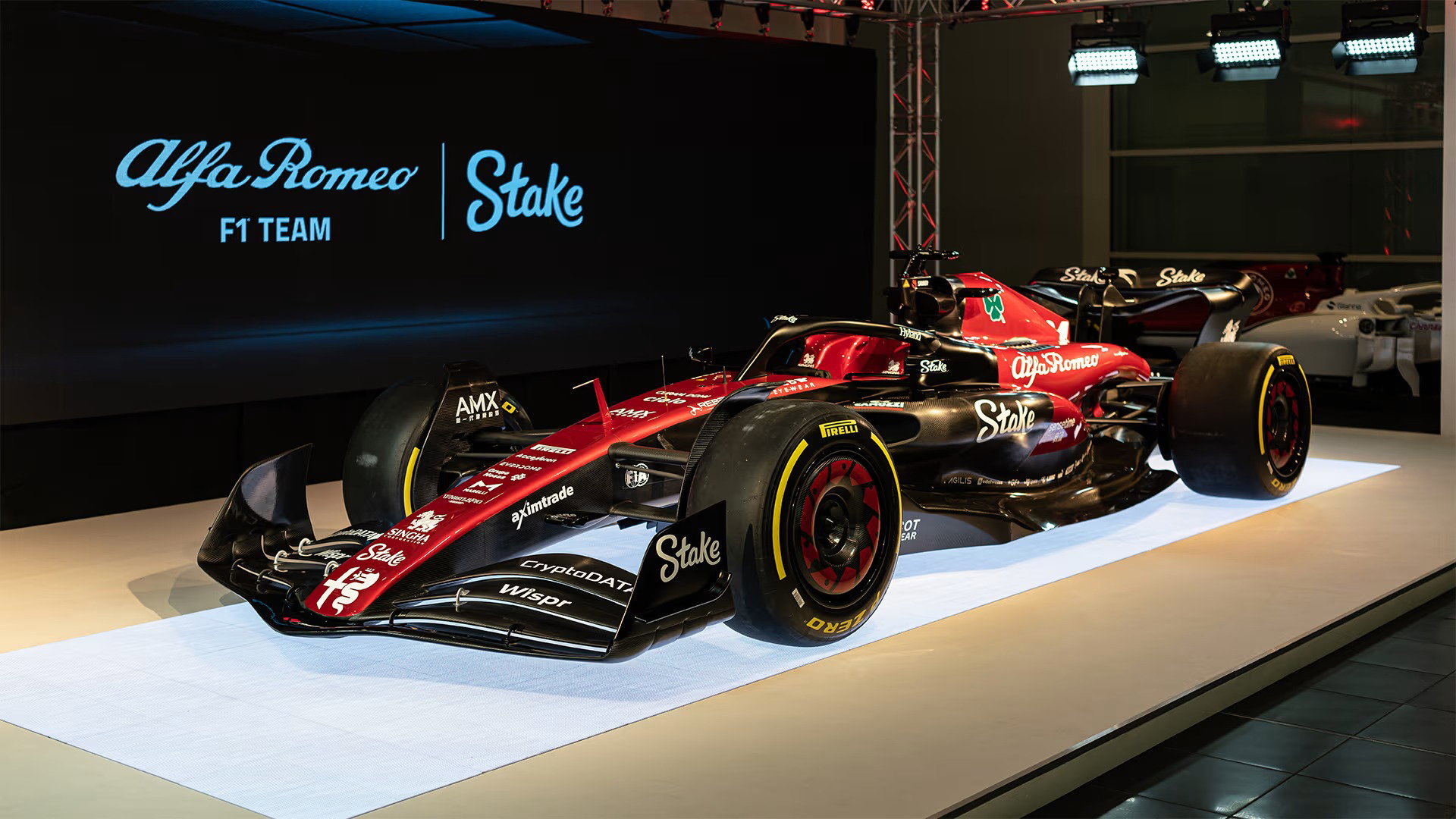
Image Credit: F1 Authentics.
For those on a stricter budget, "display" or "show cars" are an option. These are non-functional shells that are ideal for a garage display or a man cave. These can be purchased for around €115,000 (around $132,000).
Companies like F1 Authentics are a primary source for these, creating authentic show cars from genuine CAD designs supplied directly from the F1 teams.
3. Historic and Used F1 Cars:
This is where the market gets serious. A race-winning car from a legendary driver can go for astronomical sums. The most expensive F1 car ever sold was Juan Manuel Fangio’s 1954 Mercedes-Benz W196, which fetched €51,155,000 (roughly $58.7 million).
More recently, Jean Alesi’s Ferrari F92A, a car he was gifted after his racing career, sold for €2,912,800 (approx. $3.341 million). You can even find a completely rebuilt, race-ready car like the 1989 Tyrrell 018—the car in which Jean Alesi made his impressive F1 debut.
This car comes complete with a freshly built 3.5L Cosworth DFR engine, a rebuilt gearbox, and all new systems, making it ideal for historic racing events.
Why Are F1 Cars Illegal?
The phrase "F1 race car replica for sale" often comes with a key caveat. A common question is, "Why are F1 cars illegal?" The answer lies in regulations, not criminality. You cannot drive a pure F1 car on public roads because it fails to meet virtually every road car safety and emissions standard in existence.
F1 engines are designed for maximum performance, not fuel efficiency or quiet operation. They fail emissions tests and exceed legal noise limits.
While incredibly safe for a racetrack, F1 cars lack road-legal essentials like airbags, indicators, and headlights that meet highway standards.
The slick racing tires offer no grip in the wet and would be dangerous on public roads. The ride height is far too low to navigate even a speed bump.
The driver's seating position and the car's design offer minimal visibility, making it a hazard around other road users.
The result? Almost all F1 cars and serious track-day replicas are sold strictly for off-road use—private tracks, race circuits, and shows. Even beautifully crafted replicas like the Scarbo SVF1, though streetable in design, are sold as track-only cars for this very reason.
F1 Race Car Replica Price: How Much Does It Cost?
Getty Images.
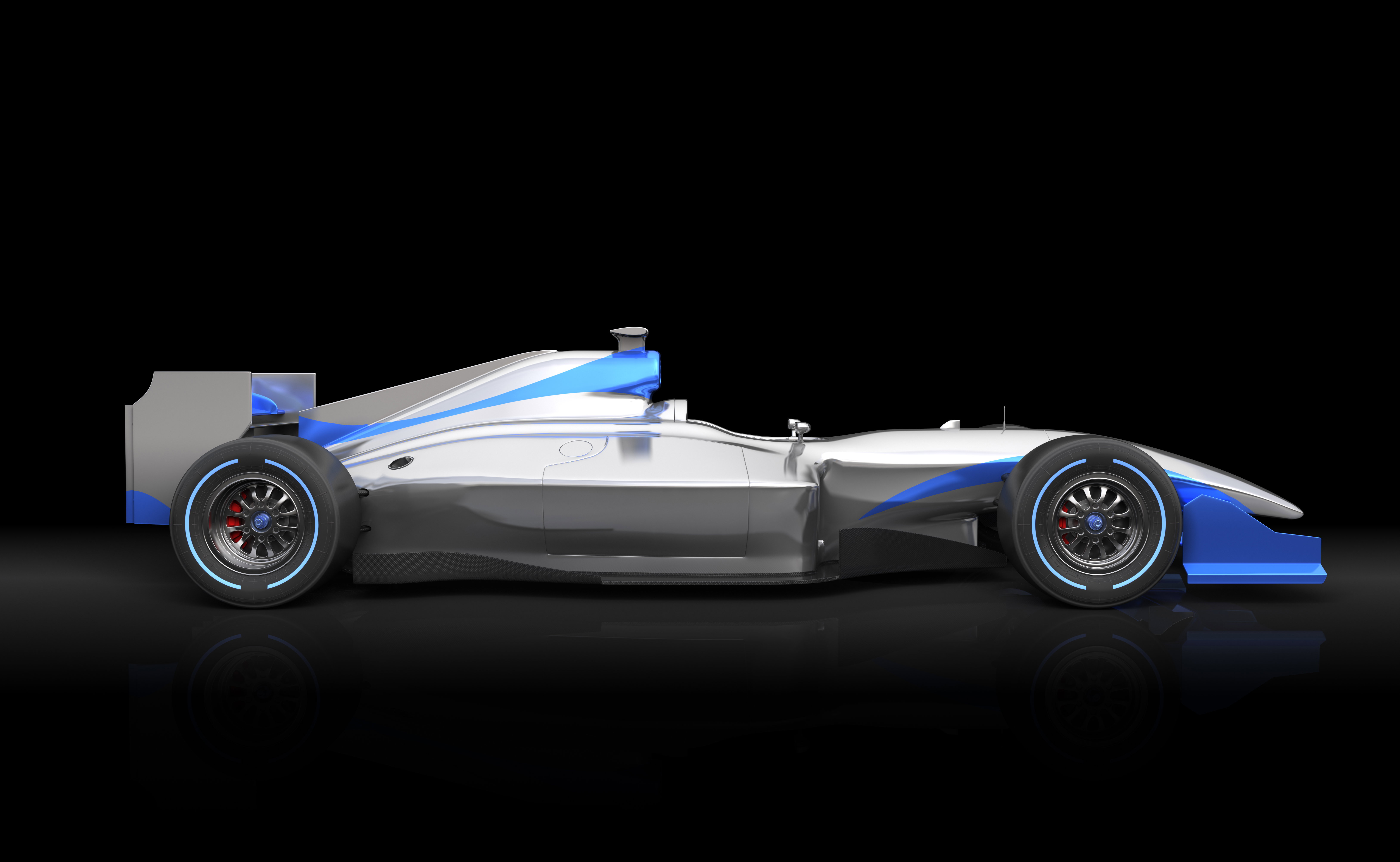
The F1 race car replica price varies more wildly than any other category. This is because there is no standard model or manufacturer. The price is determined by the quality of the build, the donor car used, and the extent of the fabrication.
Entry-Level Project Cars:
At the very bottom, you find vehicles like Rich Rebuilds' project. It’s a fiberglass body he found on Facebook Marketplace, which has since been stripped and is being rebuilt with scrap parts and a motorcycle engine. The cost here is mostly time, skill, and the price of used parts.
Commercial Replica Manufacturers
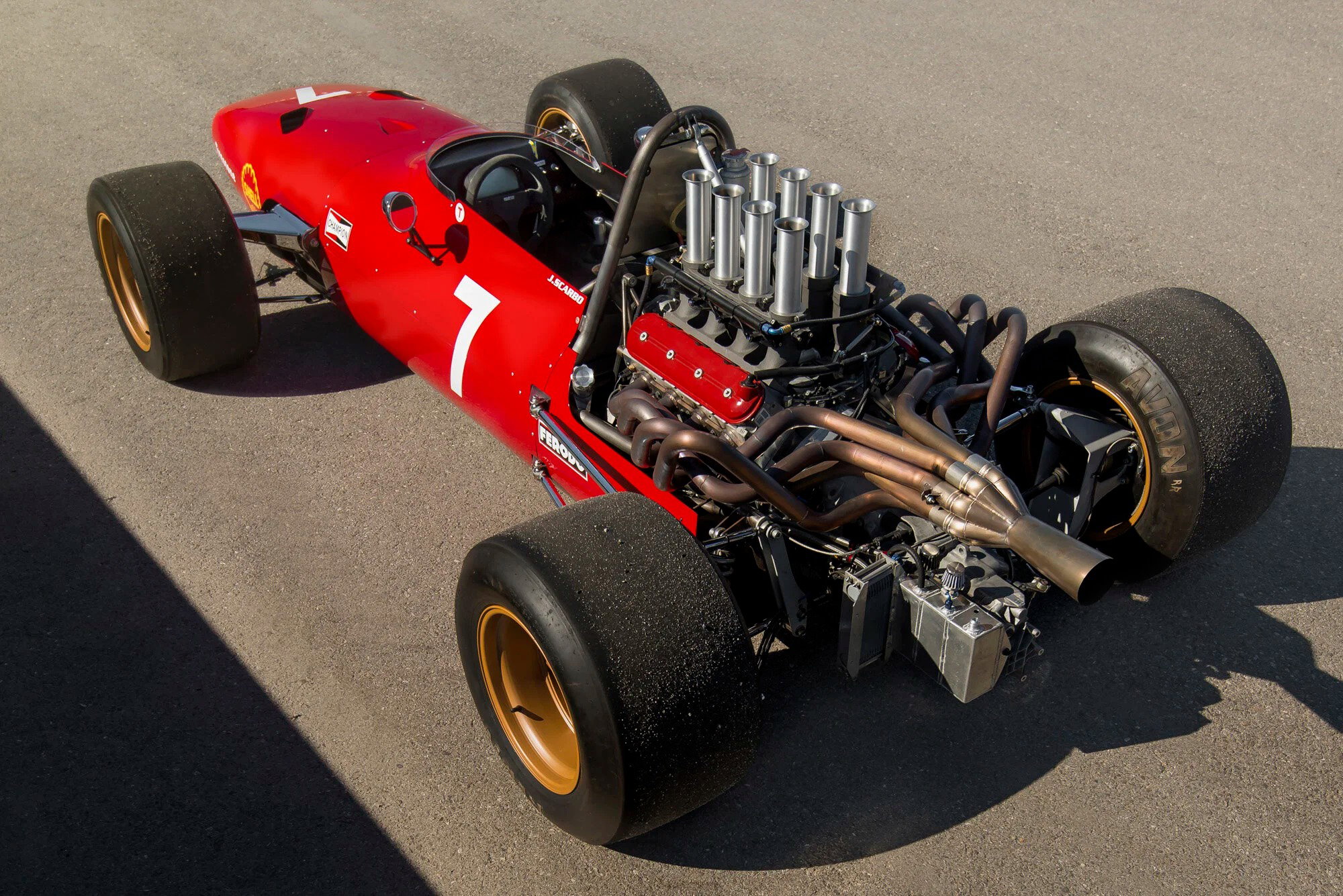
SVF1 / Image Credit: Scarbo Vintage.
If you want a turnkey replica, companies like Scarbo Performance offer a high-quality alternative. Their SVF1 is a tribute to the 1967 Ferrari 312 F1 car. Prices for a Scarbo range from $79,500 for a roller (a rolling chassis without an engine) to over $170,000 for a top-spec, turnkey model. The prototype sold at auction for $74,000
High-End Replicas:
At the extreme high end are replicas so authentic they are practically restorations. Take the Tyrrell P34 replicas built by CGA Race Engineering in the UK.

Tyrrell P34 / Image Credit: Quattroruote.
Using original blueprints, they build cars so authentic that they are priced at a staggering £1,750,000 (around $2.315 million). For this price, you're not buying a replica; you're buying a car that is essentially a new-old-stock F1 car.
What is the Difference Between an F1 Car and a Replica Car?
The gulf between a real F1 car and a replica is vast, but the definition is blurring. At its core, the difference comes down to authenticity, materials, and provenance.
1. Engine and Chassis: A modern F1 car is a carbon-fiber monocoque with a bespoke, incredibly expensive hybrid power unit. A replica, by contrast, often uses a tubular steel space-frame chassis for ease of construction and durability.
The engines are usually sourced from road cars or motorcycles, like the Chevy V8 in the Scarbo SVF1, or the Hayabusa engine in the Tyrrell replica.
2. Materials and Construction: Genuine F1 cars use exotic, aerospace-grade materials like carbon fiber, titanium, and bespoke alloys. A replica like Yuji’s is built with hand-formed aluminum bodywork, shaped with old-school tools.
A high-end replica from CGA Race Engineering, however, might use original blueprints to create a part that is essentially indistinguishable from the original.
3. Performance: A 2026 F1 car is a hybrid monster producing over 1,000 horsepower. A replica, like the Scarbo, produces around 425-525 horsepower. While that's a lot, it's not F1-level.
The focus of a replica is often on providing the experience—the open cockpit, the screaming engine note, and the raw, unfiltered handling of a vintage F1 car, rather than the mind-bending grip and downforce of a modern car.
F1 Race Car Replica Kit: A Viable Option?
Unfortunately, there is no "one-size-fits-all" F1 race car replica kit available on the market. Unlike Cobra replicas or Caterham 7s, F1 cars are too complex and varied to be standardized into a single kit. In fact, most searches for an "F1 race car replica kit" lead to high-quality model kits, like the 1:8 scale CaDA BWT Alpine F1 Team A525 or the Amalgam McLaren ML39 models.
The true "kit" is the one you design yourself. It's the components you gather from different sources, like the motorcycle engine from a donor bike, the wheels sourced from an online auction, and the custom aluminum panels you fabricate by hand.
A Step-by-Step Blueprint for Building Your Own F1 Replica
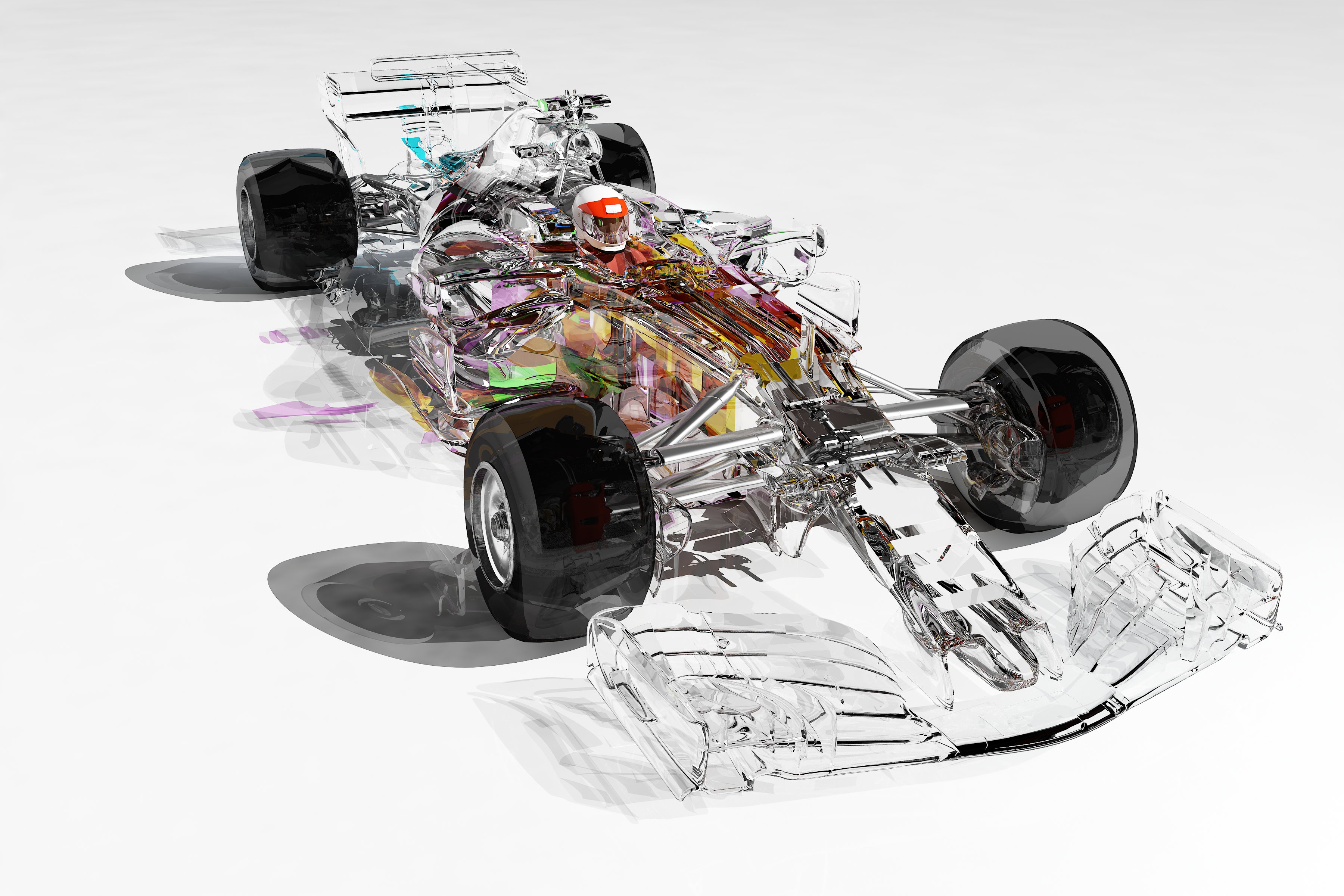
Getty Images.
If you are determined to build your own F1 car, this step-by-step guide will help you navigate the complex process.
Step 1: Choose Your Subject and Define Your Goal
The first step is decisive. What car do you want to replicate? The iconic 6-wheeled Tyrrell P34? The sleek lines of a 1967 Ferrari 312? Or do you just want to build a car that looks like an F1 car ? This choice dictates the chassis, the engine, and the bodywork.
Step 2: The Chassis: The Foundation
A genuine F1 car uses a carbon-fiber monocoque. This is almost impossible to replicate at home. Instead, builders use a steel space-frame chassis. The Scarbo SVF1 uses a TIG-welded 4130 steel tube frame, which is both strong and easier to work with.
The chassis is the spine of the car; it needs to be perfectly designed to accommodate the suspension, engine, and driver.
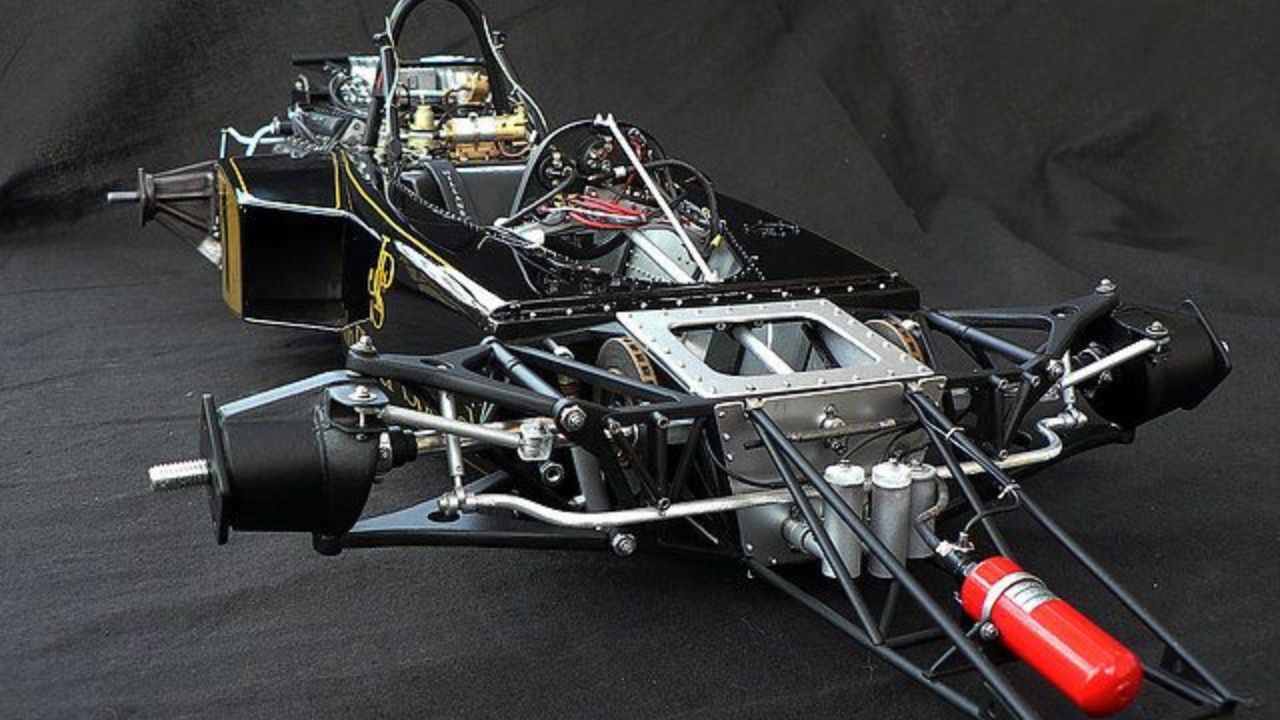
Image Credit: Pinterest.
When you set out to build the chassis for an F1 replica, think of it as sculpting the backbone of the car. Start with a clear design, ideally sketched out or modeled in CAD software, so you know exactly where the suspension pickup points, engine mounts, and driver’s cockpit will sit.
Precision here is critical because every tube you cut and weld must align perfectly to avoid structural weaknesses. Builders typically use 4130 chromoly steel tubing, which balances strength and workability. Tubes are cut with a notcher or hole saw to ensure tight joints, then carefully fitted before welding.
TIG welding is the preferred method because it produces clean, strong welds with excellent control, but it requires patience and practice—every bead must penetrate fully without overheating the metal.
As you assemble the frame, tack weld sections first, then check alignment with a jig or flat surface before committing to full welds. Reinforce high-stress areas like suspension mounts with gussets or double tubing. Once complete, inspect every weld visually and, if possible, with dye penetrant testing to catch flaws.
The finished chassis should feel rigid and balanced, ready to accept the suspension arms, engine cradle, and seating position that will define the car’s performance.
Step 3: Power and Drivetrain
Finding an F1 car for sale with engine is rare, and if you do find one, it will be incredibly expensive. Most replicas use more accessible options. The Hayabusa engine is a popular choice for its high-revving nature and compact size.
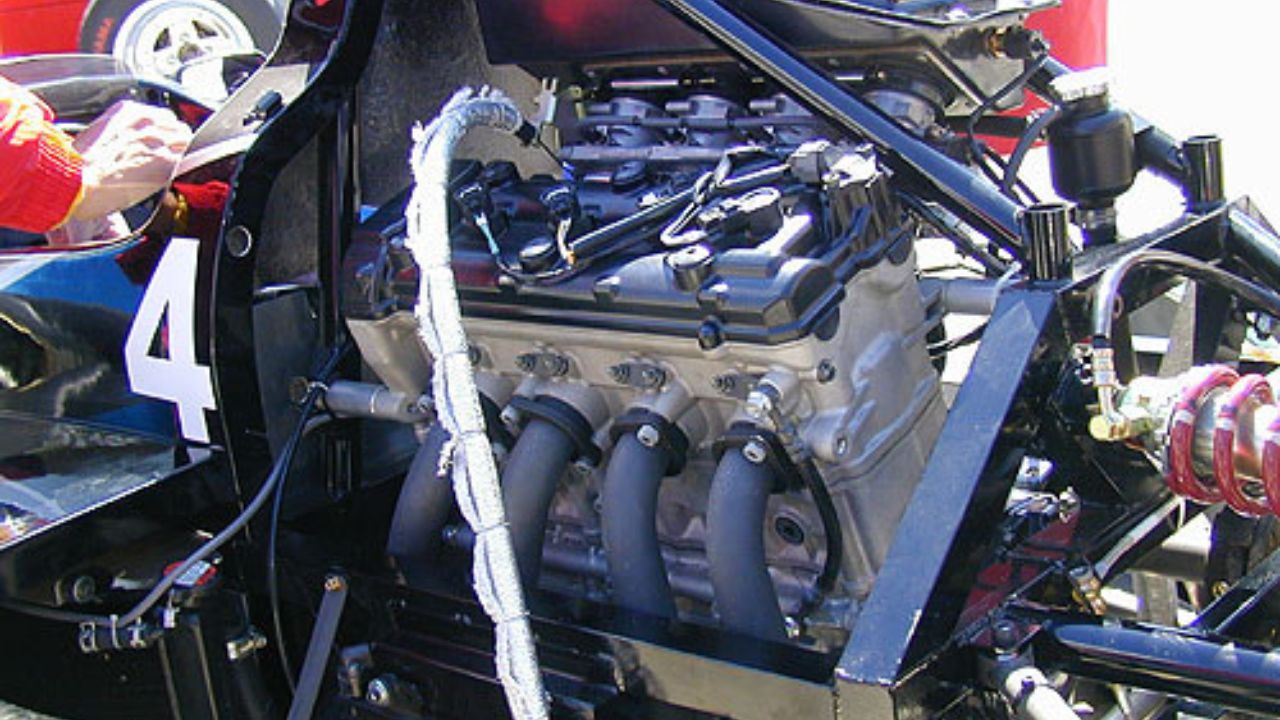
The Hayabusa / Image Credit: Army of Darkness.
The Scarbo uses a reliable Chevrolet V8, which offers a good power-to-weight ratio and is easy to maintain. You'll also need a matching transmission. Scarbo uses a five or six-speed transaxle, while a Suzuki Cappuccino rear differential was used in one Tyrrell build.
Installing the engine begins with preparation.
The chassis must be ready with reinforced mounts positioned exactly where the engine will sit, and you’ll want to measure twice before committing to any cuts or welds.
Using an engine hoist or crane, carefully lower the engine into the bay, guiding it so that the mounting points line up with the brackets you’ve fabricated. It’s important to keep the drivetrain geometry in mind here—driveshaft angles and transmission alignment must be straight to avoid premature wear.
Once the engine is in position, tack the mounts and check clearances for the exhaust, cooling system, and intake routing. Only after confirming that everything fits without interference should you fully weld the mounts.
With the engine secured, bolt the transmission to the bellhousing and connect it to the rear differential or transaxle, ensuring the couplings are tight and balanced. At this stage, you’ll also run fuel lines, coolant hoses, and electrical wiring, keeping them neatly routed away from heat sources.
The final step is to connect the throttle linkage, clutch, and gear shifter, then test-fit the driver’s seating position to confirm ergonomics. Done correctly, the installation integrates the power unit seamlessly into the chassis, transforming the frame into a functioning machine.
Step 4: Bodywork and Suspension
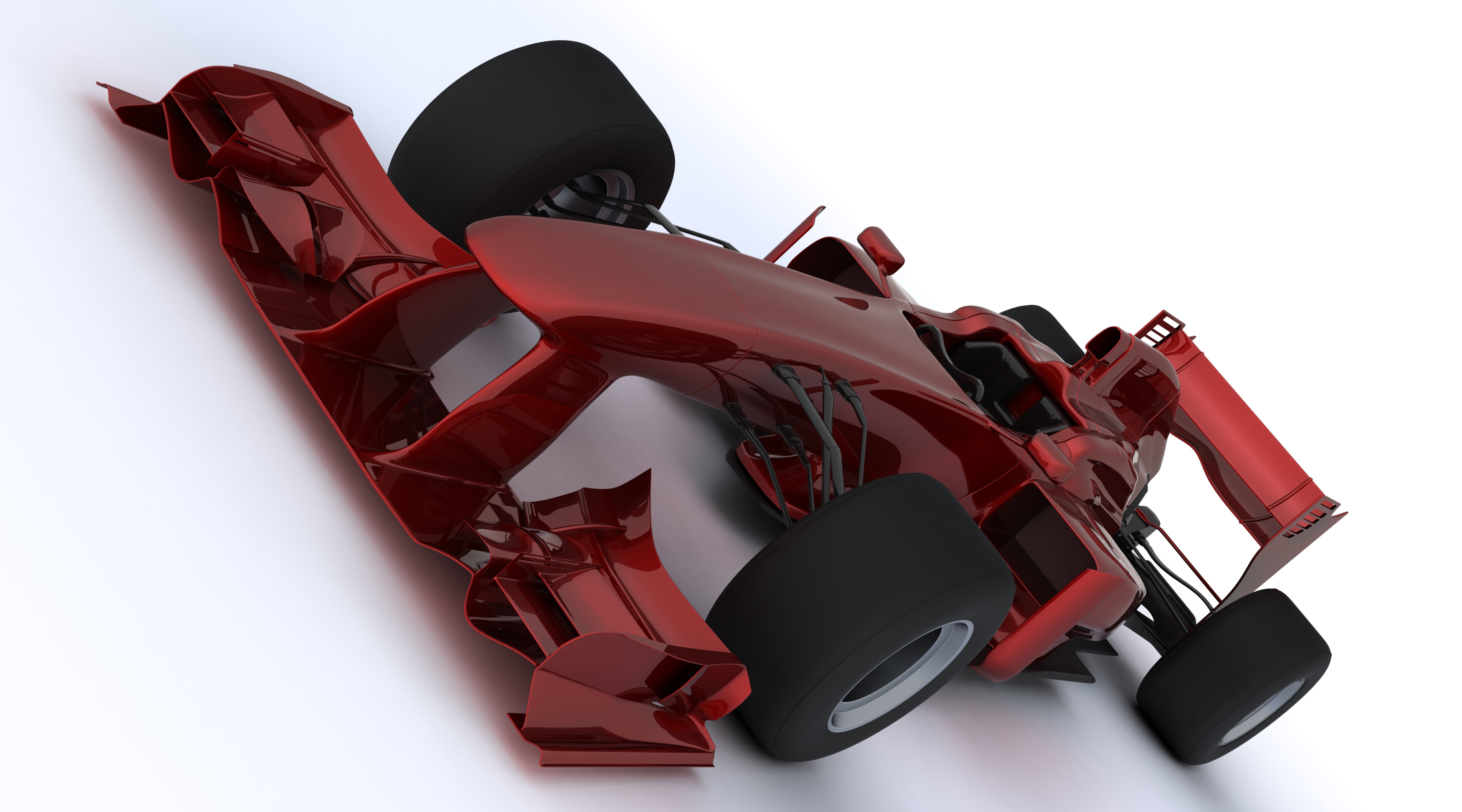
The bodywork is where your vision comes to life. Yuji Watahiki used an English wheel and an anvil to shape his aluminum panels.
For a more modern approach, you could use fiberglass or carbon composite panels, which are lighter and easier to produce, as offered by Scarbo. The suspension needs to mimic the original's double-wishbone setup to ensure the car handles and looks authentic.
Getty Images.
Building the bodywork and suspension of your F1 replica is where the car begins to take on its iconic shape and driving character. For the bodywork, start by creating lightweight panels that can be mounted onto the chassis. Fiberglass and aluminum sheet are the most accessible materials, though advanced builders may experiment with carbon-fiber laminates.
Begin with a wooden or foam buck to form the contours, then lay fiberglass cloth over it with resin, sanding and layering until you achieve a smooth, aerodynamic shell. Each panel should be designed to bolt onto the chassis with brackets, allowing easy removal for maintenance.
Pay attention to airflow—openings for cooling, ducts for brakes, and a nose cone that channels air efficiently all contribute to performance.
The suspension is equally critical, as it dictates how the car handles. A double-wishbone setup is the closest to F1 design and can be fabricated using steel arms with heim joints for adjustability. Mount the upper and lower arms to reinforced points on the chassis, ensuring precise geometry for camber, caster, and toe.
Coilover shocks are then installed between the arms and chassis, tuned for ride height and stiffness. Every pivot must be aligned carefully, as even small errors can cause instability at speed. Once assembled, cycle the suspension through its full range of motion to check for binding, then fine-tune with shims and spacers.
Together, the bodywork and suspension transform the bare frame into a car that looks the part and also responds dynamically on track.
Step 5: The Details and The Drive
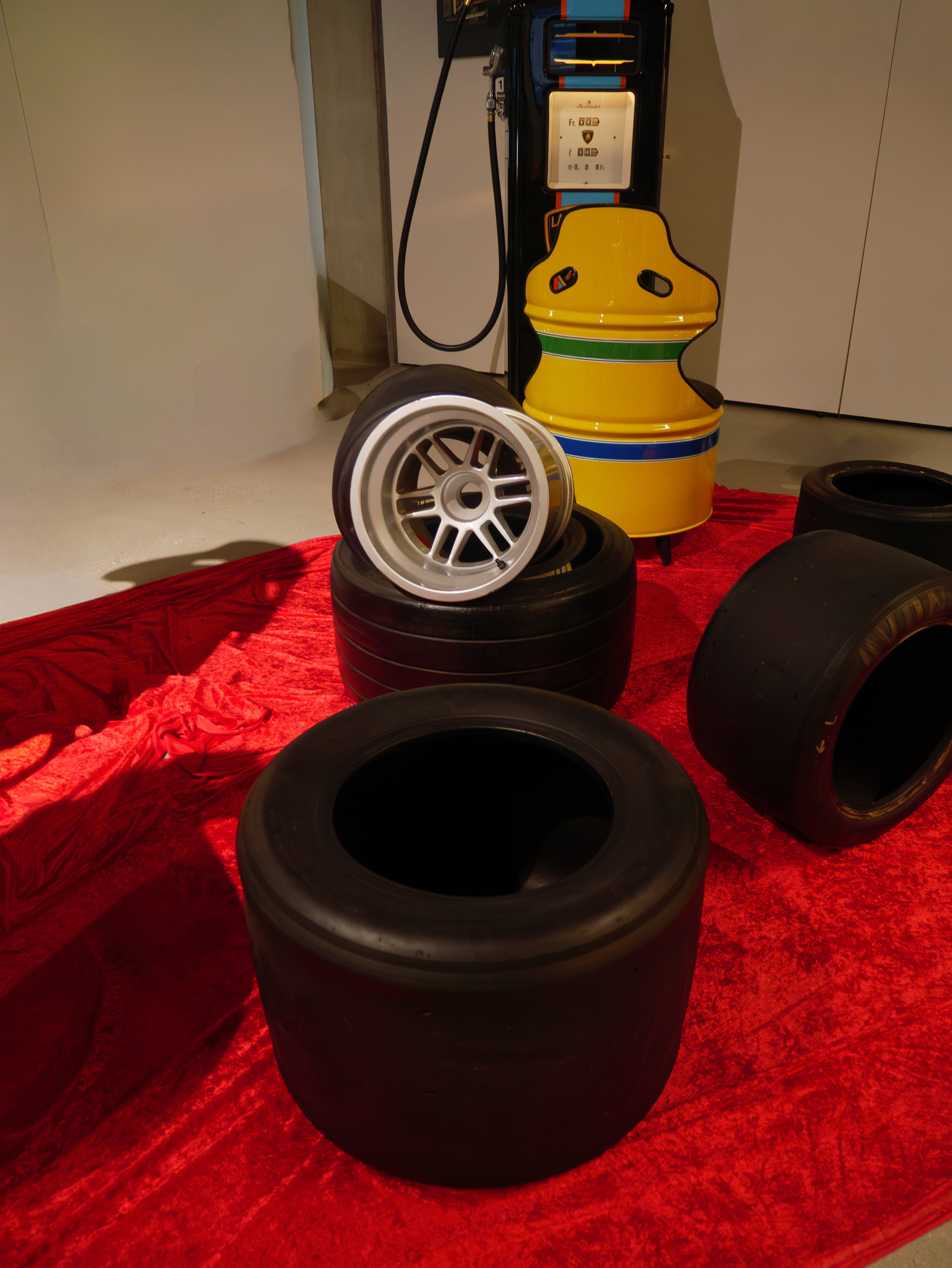
The final stage is the most rewarding. The wheels, tires, steering wheel, and dashboard all need to be sourced or fabricated. Yuji found wheels at an online auction and had them machined. The end result is not just a static model but a car that you can fire up and drive on a track.
Getty Images.
Sourcing and installing the wheels, tires, steering wheel, and dashboard is where your replica begins to feel like a complete car rather than just a frame. Wheels and tires should be chosen with performance and fitment in mind. Many builders opt for lightweight alloy racing wheels paired with performance tires that mimic the low-profile look of F1 slicks.
Measure your suspension hubs carefully to ensure the correct bolt pattern and offset, then mount the wheels with high-strength lug nuts. Tires should be balanced before installation to prevent vibration at speed, and it’s wise to check clearance through the full suspension travel to avoid rubbing.
The steering wheel is both functional and symbolic—it connects the driver directly to the car.

Getty Images.
A quick-release racing wheel is ideal, allowing easy entry and exit from the cockpit. Install the steering column securely to the chassis, making sure the universal joints align smoothly with the rack-and-pinion steering system.
The wheel itself can be fitted with buttons for ignition, lights, or even paddle shifters if your drivetrain supports them.
For the dashboard, simplicity and clarity are key. Fabricate a lightweight panel from aluminum or composite material, then cut openings for gauges or a digital display. Essential readouts include tachometer, oil pressure, water temperature, and fuel level.
Wiring should be routed neatly behind the panel, with fuses and relays accessible for maintenance. Mount the dashboard firmly to the chassis but design it to be removable for service. Once installed, test all instruments and switches to confirm they respond correctly.
Together, these components transform the replica into a driver-focused machine. The wheels and tires give it grip, the steering wheel provides control, and the dashboard delivers vital feedback—bringing you closer to the authentic F1 experience.
What to Look for When Buying
If building a car from scratch seems too daunting, the market for a finished F1 race car replica for sale is small but accessible. When shopping, consider these factors:
Purpose: Do you want a showpiece for your living room or a car to drive on track days?
Authenticity: If provenance is important to you, look for builders like CGA Race Engineering that use original blueprints and parts.
Budget: Prices for a used F1 car can easily top $1 million. However, you can get a functioning replica for around $74,000 (as the Scarbo prototype sold for) or a turnkey new one for about $172,000.
Maintenance: An F1 engine needs constant, expert care. A replica with a Chevy V8 or a Hayabusa engine can be serviced by any competent mechanic, which is a huge plus for running costs.
F1 race car replica build your own F1 car F1 replica kit F1 race car replica price F1 car for sale with engine used F1 car for sale F1 race car replica for sale how to build an F1 car DIY F1 car F1 replica build guide Tyrrell P34 replica Scarbo SVF1 F1 car legality why are F1 cars illegal can you buy an F1 car F1 show car F1 rolling chassis authentic F1 car cost F1 replica cost motorsport DIY F1 project car vintage F1 replica F1 car engine swap Hayabusa F1 engine F1 space frame chassis
Comments