18Jun
In 1995, the average family sedan contained a handful of microprocessors.
Today, a fully equipped luxury vehicle may contain somewhere between 50 and 100 electronic control units (ECUs), each running its own software, communicating across multiple internal networks, and coordinating thousands of functions every second.
Your car isn't primarily a transport machine anymore.
It is currently one of the most complex computing devices most people will ever own.
Yet unlike smartphones or laptops, few people realize just how much code, networking, and cybersecurity infrastructure is hiding beneath the sheet metal.
From Carburetors to Computers
In the late 1960s and early 1970s, a car was exactly what most people imagined it to be: a mechanical machine. Fuel mixed with air through a carburetor. Ignition timing was adjusted by distributors and vacuum advance mechanisms.
Gauges relied on simple electrical circuits, and a competent mechanic armed with a socket set, a timing light, and a repair manual could understand nearly every major system in the vehicle.
Take a 1967 Ford Mustang equipped with the 289-cubic-inch V8.
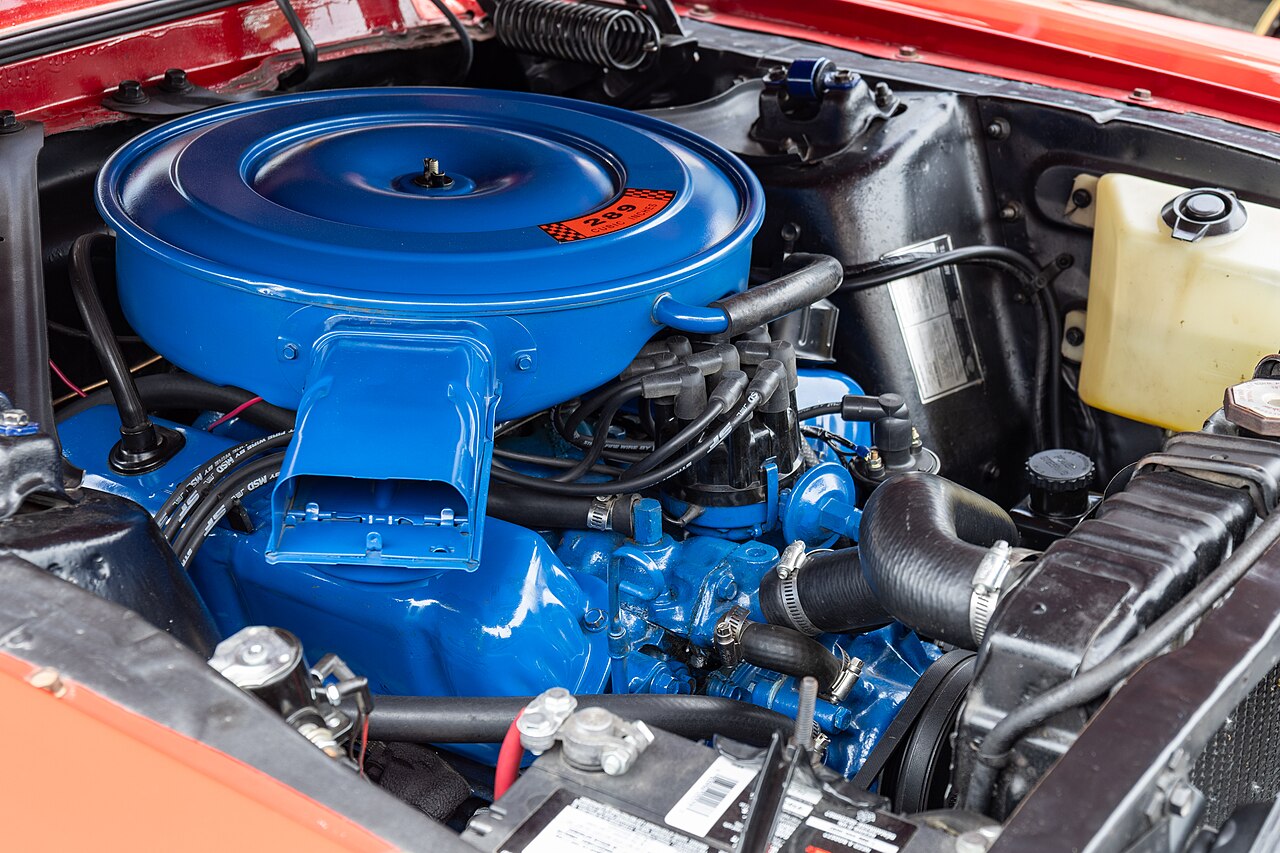
Image Credit: Crisco 1492 - Own work, CC BY-SA 4.0, Wikimedia.
There was no engine management computer deciding fuel delivery hundreds of times per second. No sensors monitoring wheel speed. No software updates waiting in the background. The car's behavior was governed almost entirely by physics and mechanical engineering.
Even by the mid-1980s, vehicles such as the 1985 Toyota Corolla AE86 remained largely understandable to enthusiasts willing to lift the hood.
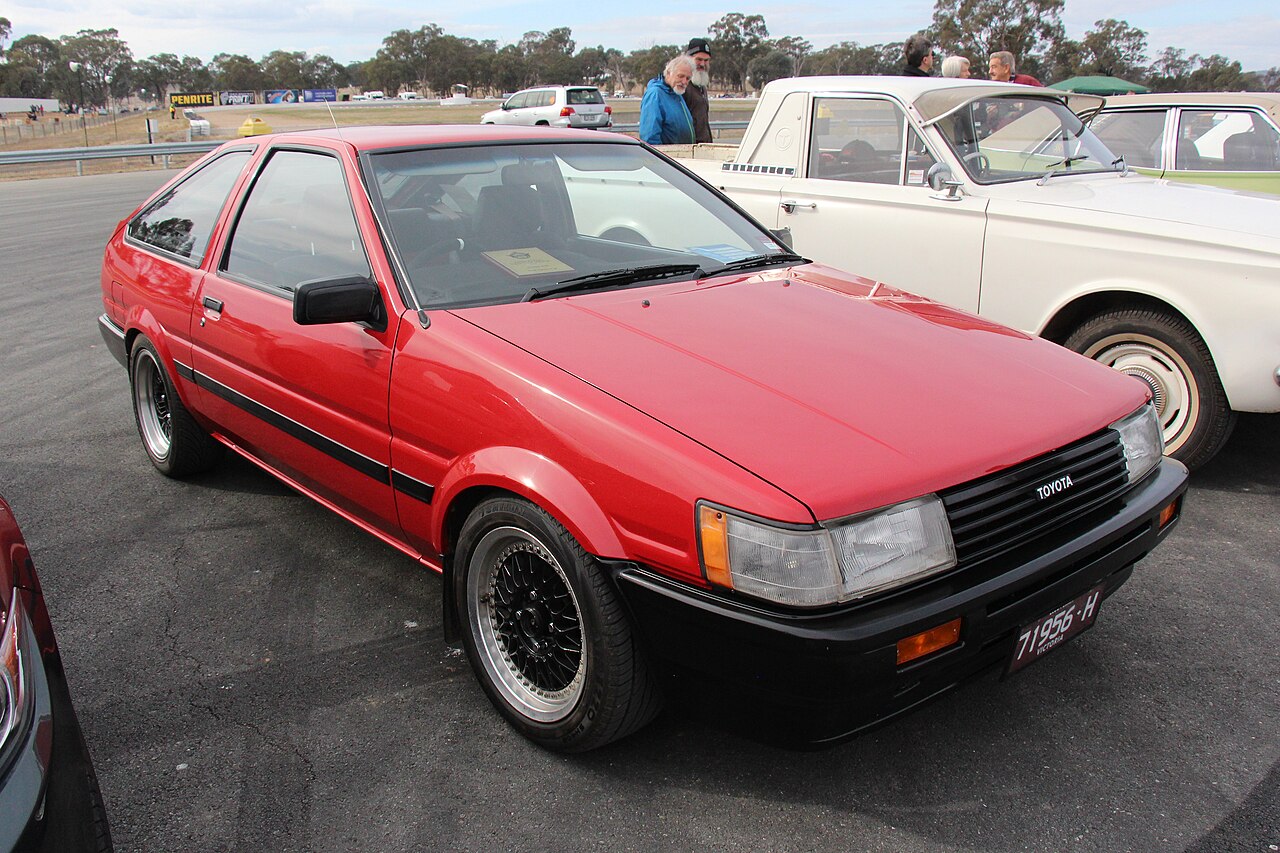
Image Credit: Cars Down Under - CC BY 2.0, Wikimedia.
Electronics existed, but in supporting roles. They hadn't yet become the vehicle's nervous system. That began to change in the late 1980s and accelerated throughout the 1990s. Stricter emissions regulations demanded more precise fuel control.
Consumers expected better fuel economy and improved reliability. Safety systems such as anti-lock brakes became increasingly common. The result was the gradual arrival of the Electronic Control Unit, or ECU.
A 1994 Toyota Camry LE, for example, already relied on computers to manage fuel injection, ignition timing, automatic transmission behavior, and diagnostic functions. Yet these early systems remained relatively isolated.
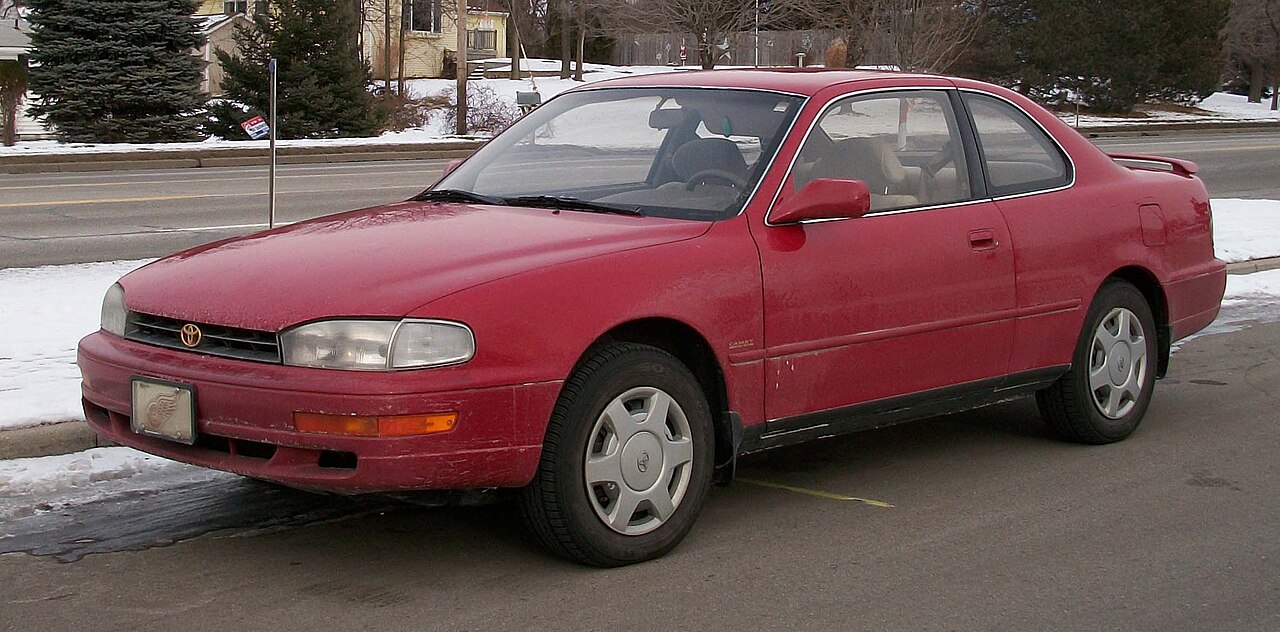
Image Credit: Taxiguy57 - Own work, Public Domain, Wikimedia.
The computers enhanced the car rather than defining it. Few people noticed the significance of this shift at the time.
What appeared to be a modest technological upgrade was, in reality, the beginning of one of the most dramatic transformations in automotive history: the evolution of the automobile from a mechanical device into a distributed computing platform.
Meet the Hidden Computers
Ask the average driver how many computers are inside their car and you'll likely get an answer somewhere between one and five. The reality is far more astonishing.
Modern automobiles hide dozens of Electronic Control Units (ECUs)—specialized computers designed to perform dedicated tasks. Rather than relying on a single "master computer," most cars function as networks of processors working together in real time, each responsible for a narrow set of responsibilities.
Some oversee obvious functions.
The Powertrain Control Module manages engine performance, fuel delivery, ignition timing, and emissions systems. The Transmission Control Module determines shift patterns and torque delivery. Safety-critical ECUs monitor anti-lock braking, electronic stability control, and airbag deployment.
Others operate almost invisibly.
There are controllers dedicated to power seats, automatic climate control, adaptive headlights, keyless entry systems, parking sensors, and even ambient lighting. The higher up the market you go, the more extraordinary the numbers become.
Take the 2025 Mercedes-Benz S580 4MATIC, for instance; the technological flagship of Mercedes-Benz's sedan lineup.
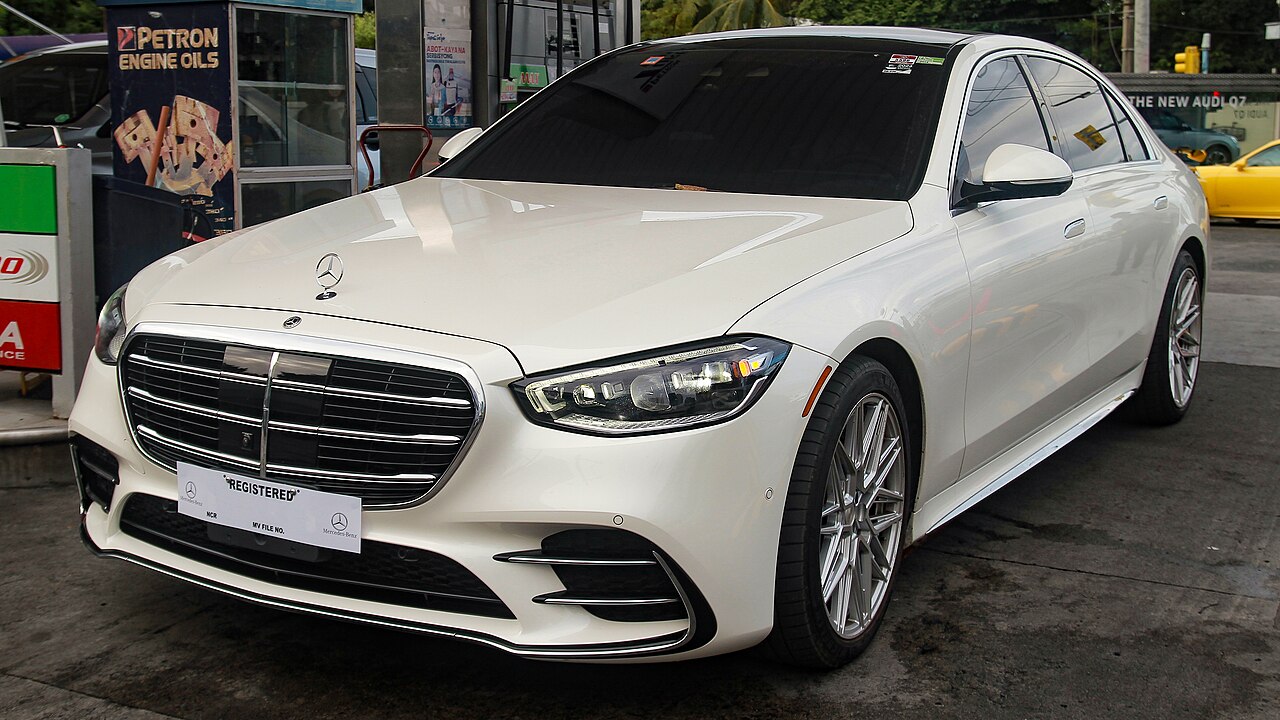
Image Credit: Ethan Llamas - Own work, CC BY-SA 4.0, Wikimedia.
Powered by a 4.0-liter twin-turbocharged V8 paired with a mild-hybrid system, the S-Class integrates an astonishing array of computing power to support features ranging from rear-wheel steering and adaptive air suspension to multicontour massage seats and advanced driver-assistance technologies.
Industry estimates suggest luxury vehicles of this caliber can contain upward of 100 ECUs. The result is an architecture that resembles an enterprise IT environment more than a traditional automobile.
Your heated steering wheel may have its own controller. The panoramic sunroof may rely on another. Radar sensors watching the road ahead feed information into still more processors.
Individually, these computers perform simple tasks.
Collectively, they orchestrate one of the most sophisticated consumer products ever built—often without the driver realizing they're sitting behind the wheel of a distributed computing system.
The Nervous System Inside Every Car
Of course, dozens of computers scattered throughout a vehicle would be useless if they couldn't talk to one another. That's where the Controller Area Network—better known as the CAN bus—comes in.
Developed by Bosch in the 1980s, CAN was designed to solve a growing problem. As automakers added electronic systems, the amount of wiring required exploded. Running a dedicated wire between every module quickly became impractical, adding cost, weight, and complexity.
CAN replaced that chaos with a shared communication network. Think of it as a company-wide Slack channel for your car. Instead of operating in isolation, ECUs broadcast messages that other modules can read and respond to.
If a wheel-speed sensor detects that a tire is slipping on a wet road, the Anti-lock Braking System (ABS) controller immediately transmits that information.
The Engine Control Module may reduce torque. The Transmission Control Module can adjust shifting behavior. The Electronic Stability Control system may selectively apply braking force to individual wheels. All of this happens in milliseconds.
The elegance of CAN lies in its efficiency. Multiple computers share the same communication lines while message-priority rules ensure that critical information—such as braking events—takes precedence over less important functions.
A request to illuminate ambient lighting can wait. Information related to vehicle stability cannot. This architecture transformed automotive engineering. It reduced wiring, improved reliability, lowered manufacturing costs, and made increasingly sophisticated features possible.
But CAN was created during a different era. It assumed that every device connected to the network could be trusted. There was no expectation that a malicious actor might impersonate legitimate modules or inject unauthorized commands.
The system's greatest strength—its openness and efficiency—would later become one of its most controversial vulnerabilities as connected vehicles entered the internet age.
One Car, Multiple Networks
If the CAN bus is the backbone of the modern automobile, it isn't the only network operating beneath the surface. In fact, today's vehicles resemble miniature enterprise environments, with multiple communication systems handling different workloads based on speed, cost, and reliability requirements.
The workhorse remains CAN, which continues to manage mission-critical functions such as engine control, transmission operation, braking systems, and electronic stability control. Its robustness and real-time responsiveness have made it indispensable for decades.
But not every task requires that level of sophistication. Enter LIN, or Local Interconnect Network. LIN is slower and significantly cheaper to implement, making it ideal for simpler functions. Window switches, mirror adjustments, seat controls, rain sensors, and interior lighting often communicate through LIN.
Why use a high-performance network to move a power seat when a lightweight alternative will do? Some automakers went even further.
FlexRay, introduced in the early 2000s, offered deterministic, high-speed communication with built-in redundancy. BMW employed it in models such as the F01-generation 7 Series to support advanced chassis technologies, including adaptive suspension and dynamic stability systems.
Mercedes-Benz also utilized FlexRay in select applications where timing precision was paramount. Now, another transition is underway. Advanced driver-assistance systems generate enormous amounts of data. High-resolution cameras, radar arrays, ultrasonic sensors, and future autonomous-driving hardware simply overwhelm older network architectures.
That's where Automotive Ethernet enters the picture.
Originally derived from networking technologies found in offices and data centers, Automotive Ethernet delivers the bandwidth required to move gigabits of information across the vehicle. Surround-view camera feeds, over-the-air updates, and centralized computing platforms increasingly depend on it.
The result is striking: Beneath the bodywork, modern cars no longer resemble mechanical machines with a few computers attached. They resemble layered IT infrastructures on wheels.
The Tesla Effect
Before Tesla, most automakers treated software as a supporting actor. A vehicle's hardware defined its capabilities, while software existed largely to manage individual systems. Engineers sourced dozens of Electronic Control Units from suppliers, each responsible for a specific task.
Once a car left the factory, its functionality remained largely fixed for the rest of its life. Tesla challenged that assumption.
Take the 2025 Tesla Model Y Long Range Dual Motor.
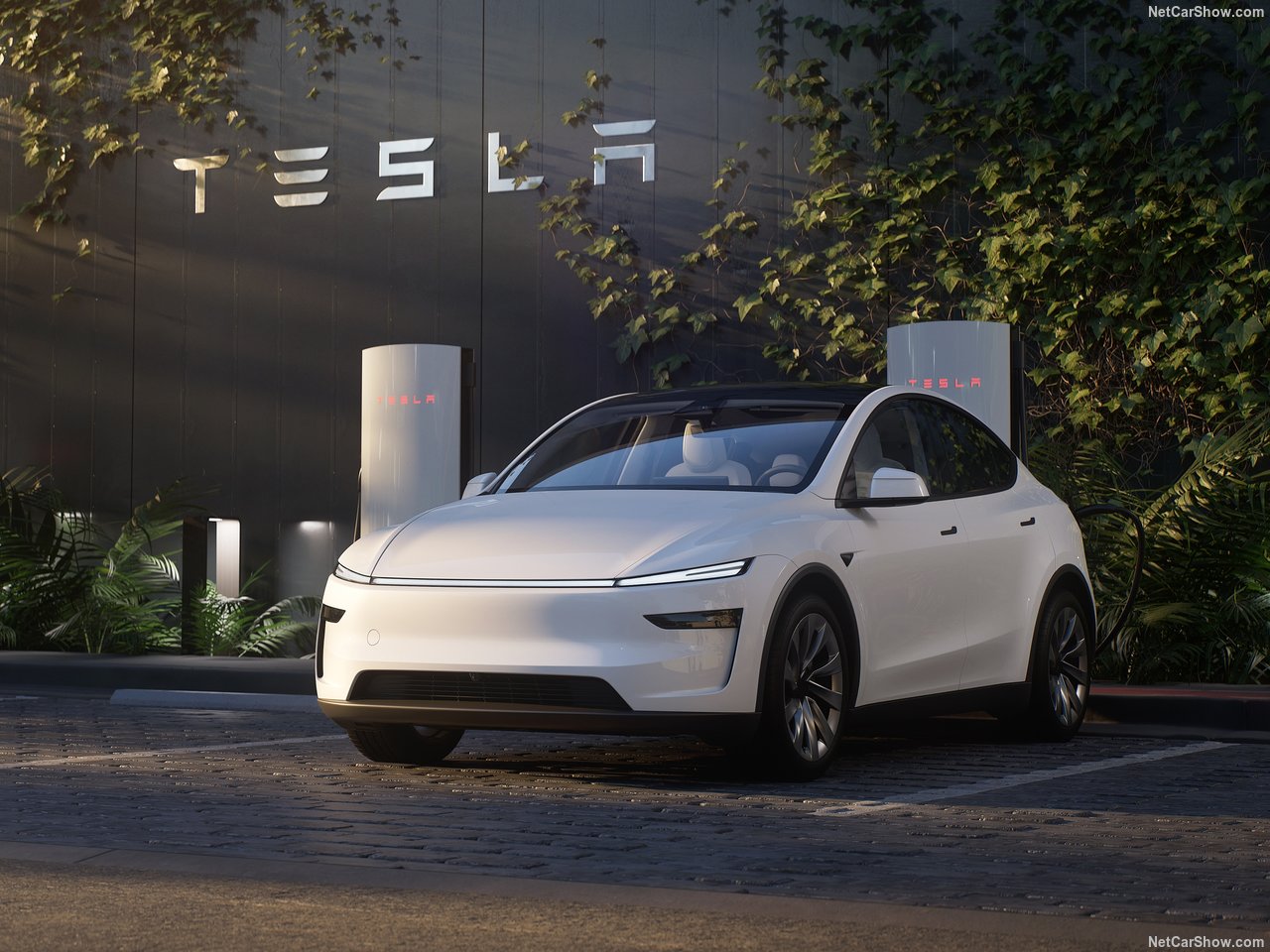
Image Credit: Tesla.
On paper, it's an electric crossover with impressive acceleration, competitive range, and a minimalist interior. Underneath, however, it represents a fundamentally different philosophy: the car as a software platform. Features that once required a trip to the dealership can now arrive overnight through over-the-air (OTA) updates.
Tesla has used software updates to refine charging behavior, improve range estimates, redesign user interfaces, modify traction-control characteristics, and introduce new entertainment and convenience features.
The process is strikingly familiar to smartphone users.
Engineers develop an update, digitally sign it, push it to vehicles through cellular or Wi-Fi connections, and install it remotely after verification. The car wakes up with new capabilities it didn't possess the day before. Traditional automakers have struggled to replicate this model.
Their vehicles were built around fragmented architectures consisting of dozens of supplier-developed modules, often using different software stacks and development timelines. Updating one system without affecting another became a logistical challenge.
Tesla, by contrast, pursued tighter vertical integration and more centralized computing from the outset. The advantages are obvious: faster innovation, rapid bug fixes, and a continuously evolving ownership experience. But the approach also raises difficult questions.
If software can add functionality, it can also restrict it. Features become dependent on ongoing support, manufacturer control, and digital infrastructure. The automobile was once a finished product. Tesla helped turn it into a living operating system.
The Jeep Hack That Changed Everything
For years, cybersecurity experts warned that increasingly connected vehicles would eventually attract the same kinds of attacks that plagued computers and smartphones.
To many in the automotive industry, those concerns felt largely theoretical. Then, in the summer of 2015, two researchers proved otherwise.
Security researchers Charlie Miller and Chris Valasek targeted a 2014 Jeep Cherokee equipped with Chrysler's Uconnect infotainment system, which relied on Sprint's cellular network for its connected services.
Working remotely from miles away, they exploited vulnerabilities that allowed them to gain access to the vehicle's internal systems through its internet-connected interface. What happened next stunned both the industry and the public.
As journalist Andy Greenberg drove the Jeep on a Missouri highway for a demonstration organized by Wired, the researchers began manipulating features from afar.
The radio volume surged unexpectedly. Air conditioning settings changed without warning. Windshield wipers activated. Washer fluid sprayed across the glass. Those pranks were unsettling enough. But the demonstration escalated.
Under the right conditions, Miller and Valasek showed they could interfere with steering functions, affect transmission behavior, and degrade braking performance. They had moved beyond hacking an infotainment system. They had reached the vehicle's operational core.
The implications were impossible to ignore.
A car was no longer an isolated machine. It was a connected computer capable of being attacked through digital pathways never envisioned by earlier generations of engineers.
The fallout was immediate.
Fiat Chrysler Automobiles issued a software patch and recalled approximately 1.4 million affected vehicles across multiple brands. More importantly, the Jeep Cherokee hack changed the conversation.
Cybersecurity quickly evolved from a niche concern discussed at security conferences into a fundamental requirement of automotive engineering in the internet age.
Why Automotive Cybersecurity Is So Difficult
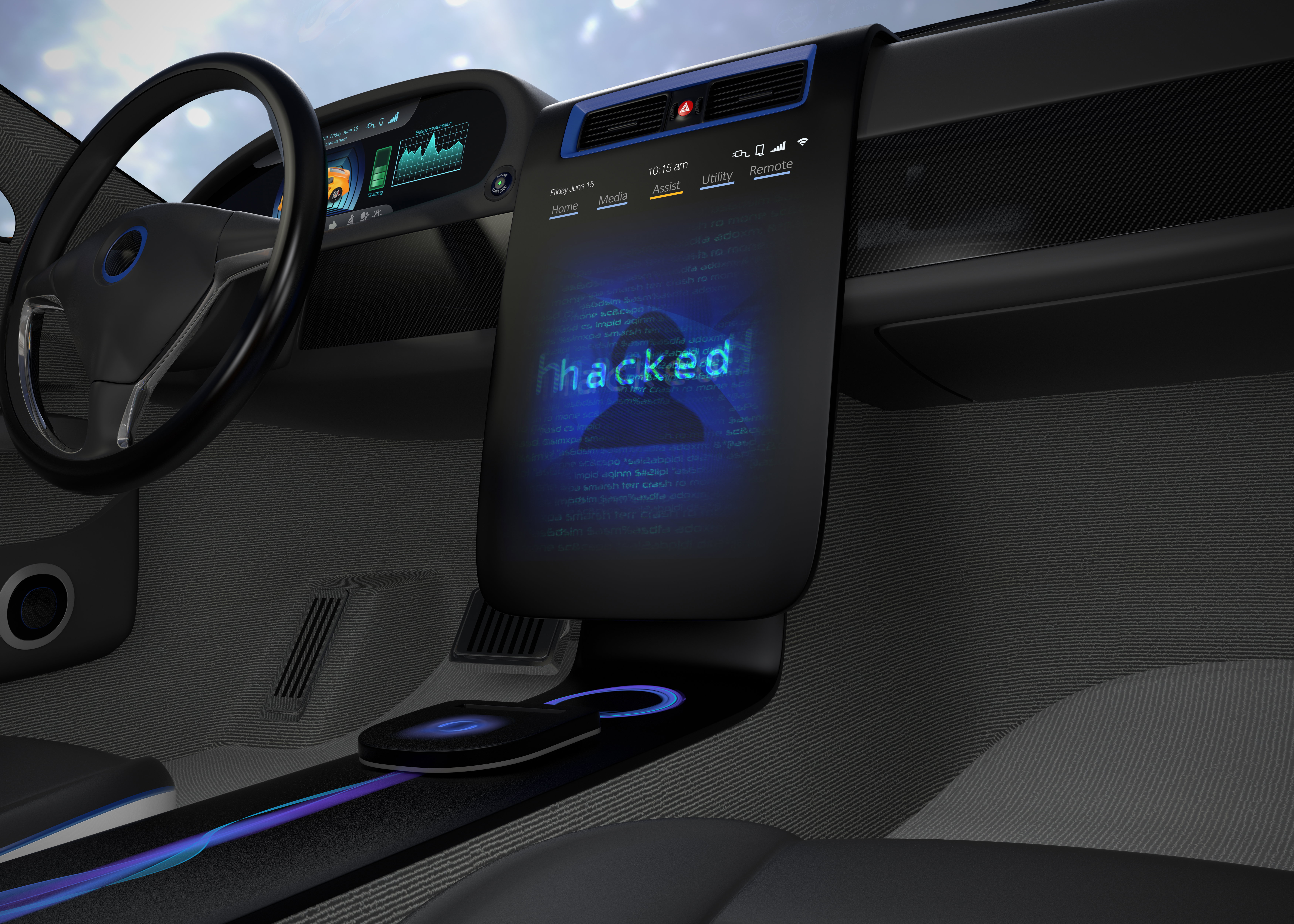
Securing a smartphone is hard. Securing a modern automobile is exponentially harder. When your phone freezes, the worst-case scenario is usually inconvenience. You restart it, reinstall an app, or download a patch.
But when software governs steering assistance, braking systems, airbag deployment, or adaptive cruise control, failure carries consequences measured not in lost productivity, but in human lives.
That's what makes automotive cybersecurity uniquely challenging.
Getty Images.
Vehicles operate under strict real-time constraints. Certain decisions must occur within milliseconds, every single time, under every conceivable condition. A delayed social media notification is harmless. A delayed braking command at highway speed is not.
Then there's the issue of longevity.
Consumers replace smartphones every three to five years. Cars routinely remain on the road for ten, fifteen, or even twenty years. The average age of vehicles in the United States now exceeds twelve years, meaning manufacturers must think about software support on timelines that would seem absurd in the consumer electronics industry.
Legacy architecture further complicates matters.
Many of today's connected vehicles trace their foundations to platforms originally designed long before internet connectivity became standard. Engineers built Controller Area Networks on the assumption that every module attached to them could be trusted.
Authentication, encryption, and intrusion detection were often secondary considerations—if they existed at all. As vehicles evolved, manufacturers layered telematics systems, Wi-Fi hotspots, smartphone integration, and over-the-air update capabilities onto those older foundations.
The result is an uneasy balancing act.
Automakers must simultaneously protect against evolving cyber threats, maintain functional safety, comply with regulatory standards, and preserve reliability over decades of operation.
In many ways, the industry is attempting to retrofit twenty-first-century cybersecurity principles onto twentieth-century assumptions about trust. The remarkable thing isn't that vulnerabilities occasionally emerge. It's that these extraordinarily complex systems function as reliably as they do.
Toyota's Alternative Philosophy
If Tesla represents Silicon Valley's "move fast and iterate" approach to automotive software, Toyota embodies something very different: caution. The 2025 Toyota Camry Hybrid XLE is, on the surface, an unlikely technology case study.
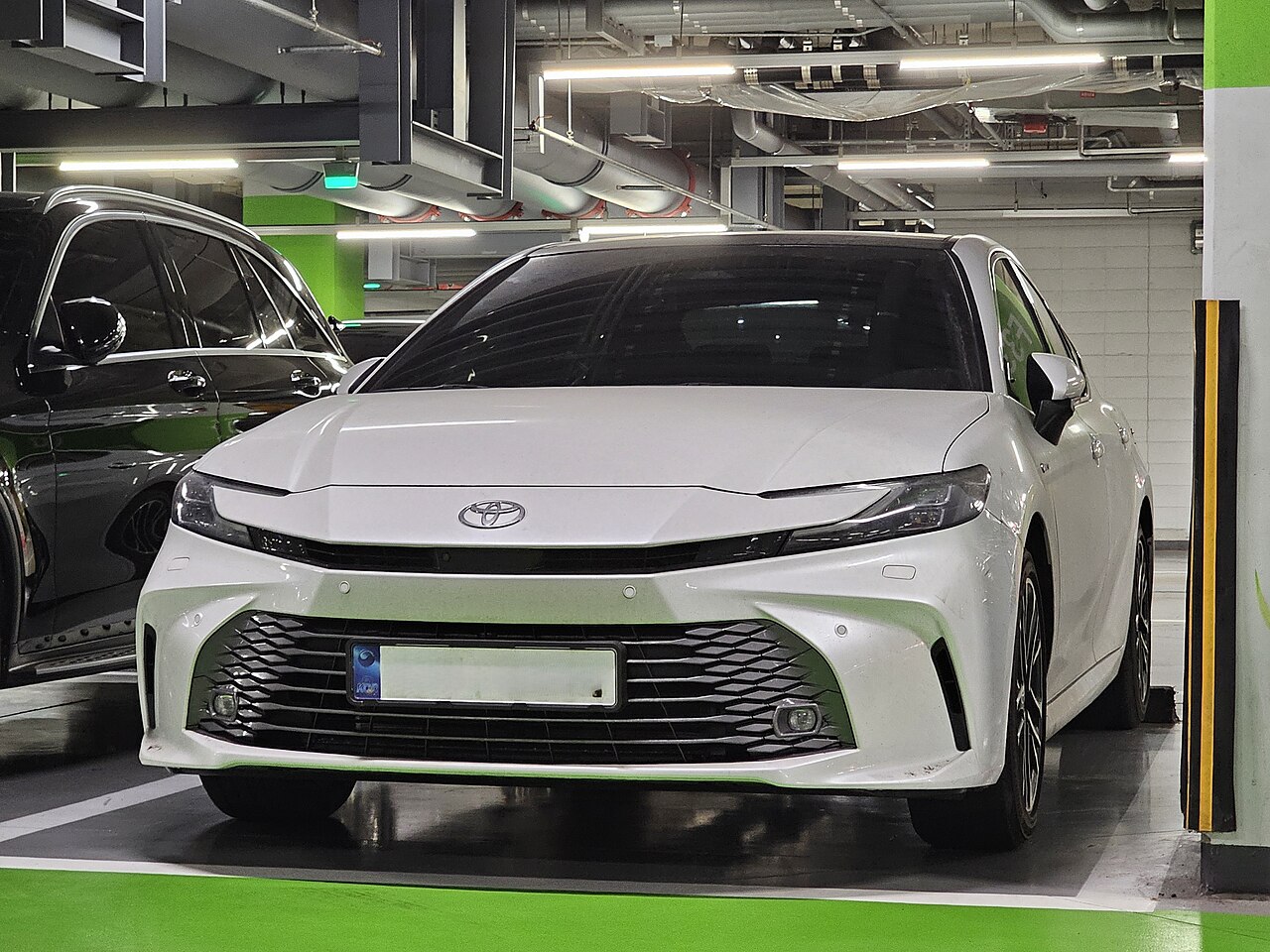
Image Credit: Damian B Oh - Own work, CC BY-SA 4.0, Wikimedia.
It isn't marketed as a software-defined vehicle. There are no flashy promises about unlocking new capabilities overnight. It won't suddenly gain a radically redesigned interface through a surprise update while parked in your driveway.
And that's precisely the point.
Toyota has built its reputation on predictability. Features tend to arrive gradually, often after years of testing and validation. The company's software strategy reflects the same philosophy that helped make its vehicles synonymous with reliability: prioritize stability over novelty.
This conservative approach can feel frustrating in an era shaped by Tesla.
Owners may envy the excitement of frequent over-the-air enhancements and rapidly evolving user experiences. Critics argue that Toyota has been slower to embrace the software-first mindset reshaping the industry. But restraint has advantages.
Every additional line of code introduces potential bugs.
Every connected feature expands the attack surface.
Every over-the-air capability raises questions about verification, cybersecurity, and unintended consequences.
By adopting new technologies incrementally, Toyota reduces the likelihood of exposing customers to unproven systems at scale. The contrast between the two companies reveals a deeper philosophical divide. Tesla treats the automobile like a smartphone—continuously updated, constantly evolving, and never truly finished.
Toyota treats it like an appliance designed to perform its core function with minimal drama for hundreds of thousands of miles. Neither approach is inherently right or wrong. One prioritizes speed, adaptability, and innovation. The other prioritizes robustness, validation, and trust earned over time.
As software increasingly defines the driving experience, consumers—and regulators—may ultimately decide which philosophy better serves the future of mobility.
The End of the ECU Era?
Ironically, just as modern vehicles reached peak ECU proliferation, the industry began searching for a way to simplify it. For decades, adding a new feature often meant adding another computer.
Adaptive headlights? New ECU.
Power tailgate? Another ECU.
Rear-wheel steering? Yet another controller.
The result was a patchwork of dozens—sometimes more than 100—specialized modules connected by increasingly complex networks. Now, automakers are moving in the opposite direction.
Companies like Tesla, Rivian, Mercedes-Benz, and Ford are embracing software-defined vehicle (SDV) architectures built around a handful of far more powerful centralized computers.
Rather than assigning every function its own processor, these systems consolidate responsibilities into zonal controllers capable of managing multiple tasks simultaneously.
The benefits are significant. Fewer ECUs mean less wiring, reduced weight, lower manufacturing costs, and faster software deployment.
Over-the-air updates become easier to manage, and engineers gain greater control over the vehicle as a unified platform. But centralization introduces new risks. If one of dozens of minor controllers fails, the impact may be limited.
If a central computing unit experiences a critical fault, the consequences could be far more severe. The future of automotive computing may involve fewer computers than today's vehicles. They'll simply be far more powerful—and far more important.
How Much Code Is in a Car?
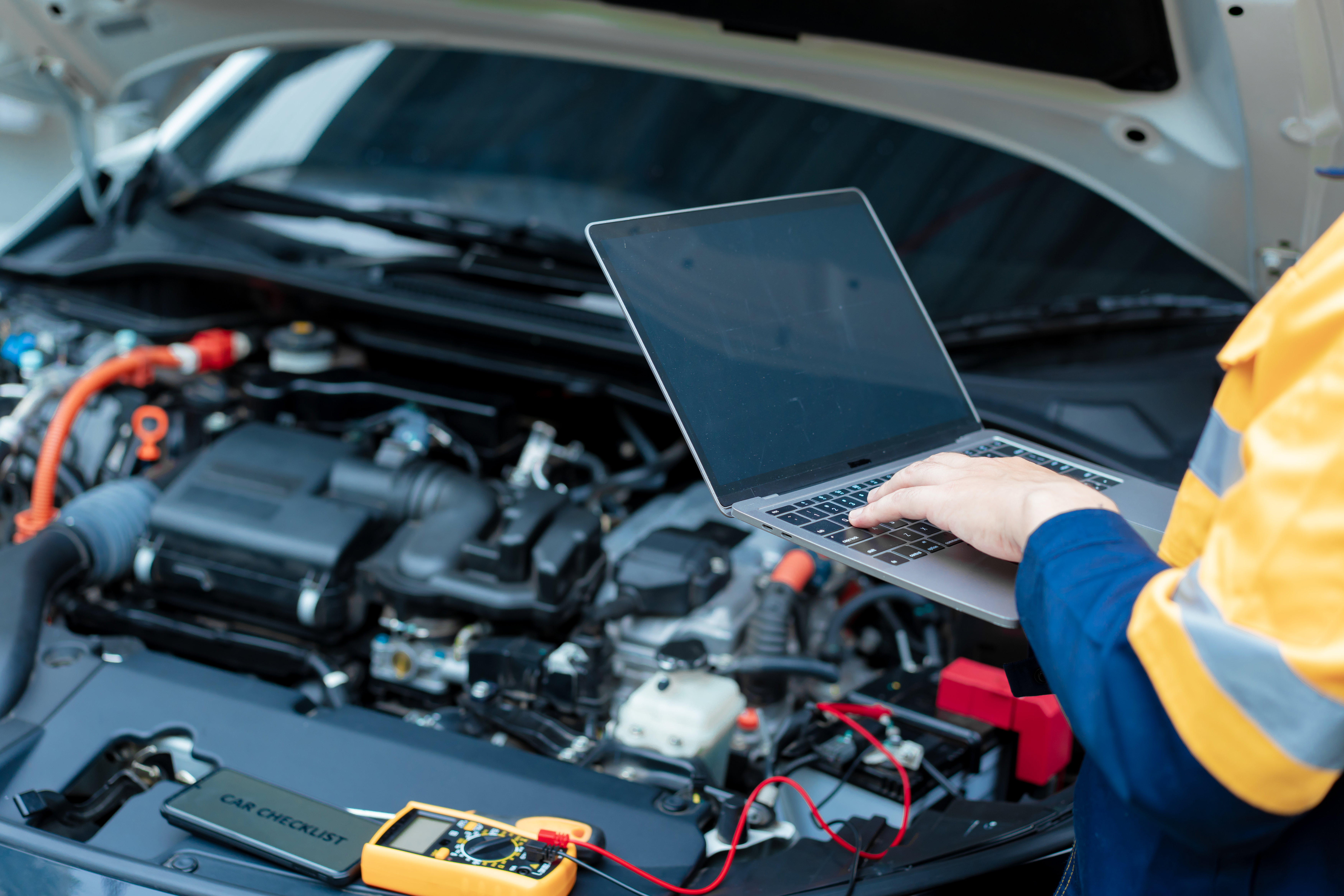
One of the most repeated claims in the automotive world is that modern cars contain "more lines of code than a fighter jet."
Getty Images.
While the exact figures depend on how software is counted, the broader trend is undeniable: today's vehicles run on astonishing amounts of code.
In the early 1990s, automotive software was relatively modest, focused primarily on engine management and basic diagnostics.
Fast-forward to the present, and premium vehicles integrate software controlling everything from adaptive cruise control and battery management to infotainment systems and driver-assistance technologies.
Industry estimates have suggested that modern vehicles can contain tens of millions—and in some cases more than 100 million—lines of code spread across dozens of interconnected systems. A significant portion of that complexity stems from the sheer number of functions consumers now expect as standard.
Of course, comparisons with aircraft or operating systems should be treated cautiously. Different industries measure software complexity differently, making one-to-one comparisons imperfect. But the exact number is almost beside the point.
The trajectory matters more.
Cars have evolved from machines enhanced by software into products fundamentally defined by it. Increasingly, the driving experience depends not just on engineering tolerances and mechanical precision, but on millions of instructions written by teams of programmers working quietly behind the scenes.
The Ethical Questions Nobody Asked
For most of automotive history, ownership was straightforward. You bought a car. It belonged to you. You could repair it, modify it, sell it, or drive it until the wheels fell off. The relationship between owner and machine was defined primarily by mechanical limitations.
Software has complicated that understanding. When features are activated through code rather than hardware alone, what exactly does ownership mean? If a vehicle leaves the factory with heated seats physically installed but requires a subscription to use them, does the customer truly own the feature?
If over-the-air updates can alter performance characteristics, user interfaces, or functionality after purchase, how much control should manufacturers retain over products already sold?
Data raises equally difficult questions. Modern vehicles collect enormous amounts of information: location histories, driving behavior, camera inputs, diagnostic records, and usage patterns. That data can improve navigation, predictive maintenance, and safety systems.
But who owns it?
The driver? The automaker? The software provider?
And under what circumstances should it be shared with insurers, advertisers, law enforcement agencies, or third parties?
Repair rights have become another flashpoint. Independent mechanics increasingly argue that software locks and proprietary diagnostic tools undermine consumers' ability to maintain products they legally own.
Manufacturers counter that unrestricted access could expose safety-critical systems to tampering and cybersecurity threats. None of these debates have easy answers. Yet they reveal a profound shift in the nature of the automobile itself.
Cars were once sold as finished products.
Today, they increasingly resemble connected platforms governed by licensing agreements, software policies, and ongoing manufacturer relationships. The industry's next great challenge may not be building better electric motors or autonomous systems.
It may be deciding where technological innovation ends—and the rights of ownership begin.
You Don't Drive a Car Anymore
The steering wheel still turns. The tires still grip the road. Press the accelerator, and you're propelled forward much as drivers have been for more than a century. But beneath those familiar sensations, the automobile has undergone a quiet transformation.
Modern cars are no longer defined solely by pistons, gears, and sheet metal. They are networks of processors, sensors, and software systems negotiating thousands of decisions every second.
They receive updates like smartphones, communicate across complex digital architectures, and increasingly rely on code to determine what they can do—and who gets to control them.
The next great automotive revolution may not be electrification or autonomy but society's realization that the car has already become something entirely different: one of the most sophisticated computing devices most people will ever own.
You don't simply drive a modern car. You interact with a distributed computer system traveling at 70 miles per hour.
software-defined vehicles automotive cybersecurity electronic control units CAN bus network Tesla over-the-air updates Jeep Cherokee hack modern car technology automotive software connected car security ECU architecture vehicle data privacy car repair rights Toyota software philosophy automotive Ethernet future of transportation
Comments