27Jun
Image Credit: Nissan.
When Nissan announced that the Rogue ranked No. 1 in the compact SUV segment in the 2026 J.D. Power U.S. Initial Quality Study (IQS), many enthusiasts and long-time observers probably did a double take. The Nissan Rogue topping a quality study would have seemed unlikely just a decade ago.
For years, the Rogue carried baggage that had little to do with its attractive styling, spacious interior, or competitive pricing. Instead, the conversation revolved around continuously variable transmission (CVT) failures, expensive repairs, recalls, and reliability concerns that followed the model through much of its first two generations.
The irony is that today's Rogue is arguably the most dependable version Nissan has ever built. Yet the model continues to battle a reputation shaped by problems that mostly belong to its past.
So how did Nissan get here? The answer lies in nearly two decades of engineering revisions, transmission redesigns, stricter quality control, and gradual improvements that transformed one of America's most criticized compact SUVs into one of its highest-rated.
A Rocky Beginning
The Nissan Rogue debuted for the 2008 model year as Nissan's answer to the exploding compact crossover market.
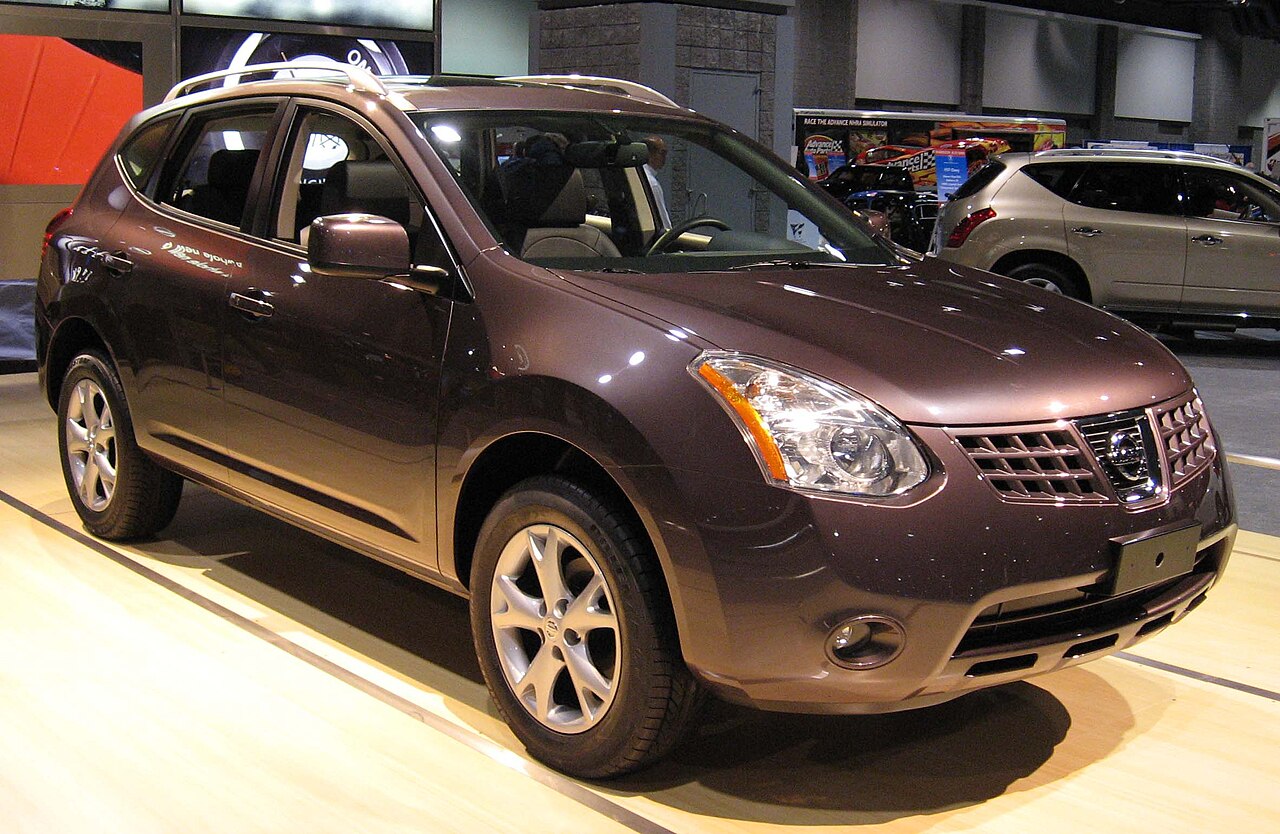
'08 Rogue / Image Credit: IFCAR - Own work, Public Domain, Wikimedia.
Built on Nissan's C-platform and powered by the naturally aspirated 2.5-liter QR25DE four-cylinder engine, the Rogue promised practicality, good fuel economy, and passenger-car-like driving manners.
Unfortunately, one component overshadowed everything else. The Rogue became one of the earliest mainstream crossovers to rely exclusively on Nissan's Xtronic continuously variable transmission.
Unlike conventional automatic transmissions that use planetary gearsets and stepped ratios, a CVT relies on two variable-diameter pulleys connected by a high-strength steel belt. By constantly changing pulley diameters, the transmission can maintain the engine at its most efficient operating speed.
The design theoretically improves fuel economy and delivers seamless acceleration. In practice, early Nissan CVTs became infamous.
First Generation (2008–2013): Reliability Challenges
The first-generation Rogue quickly developed a reputation for premature CVT failures. Owners reported symptoms including:
- Sudden loss of acceleration
- Transmission overheating
- Jerking during acceleration
- Shuddering
- Hesitation
- High engine revs with little forward movement
- Limp-home mode
- Complete transmission failure
One of the biggest engineering weaknesses involved thermal management. Under sustained highway driving or in hot climates, the transmission fluid temperature could rise significantly.
When temperatures exceeded safe operating limits, the transmission control module often reduced engine output to protect internal components. Drivers described the experience as frightening.
Imagine attempting to merge onto an interstate only to discover the vehicle refusing to accelerate beyond moderate speeds. The steel push belt inside the CVT also experienced accelerated wear when lubrication degraded or excessive heat developed.
Once belt or pulley surfaces began wearing unevenly, metal particles contaminated the transmission fluid, causing a cascade of internal damage. Because early CVTs were largely non-serviceable internally, repairs frequently meant replacing the entire transmission. Costs often exceeded several thousand dollars.
Nissan responded by extending warranty coverage for many CVT-equipped vehicles, including certain Rogue models, acknowledging the widespread nature of owner complaints. Not everything about the first-generation Rogue was problematic.
The QR25DE engine itself proved relatively durable when properly maintained.
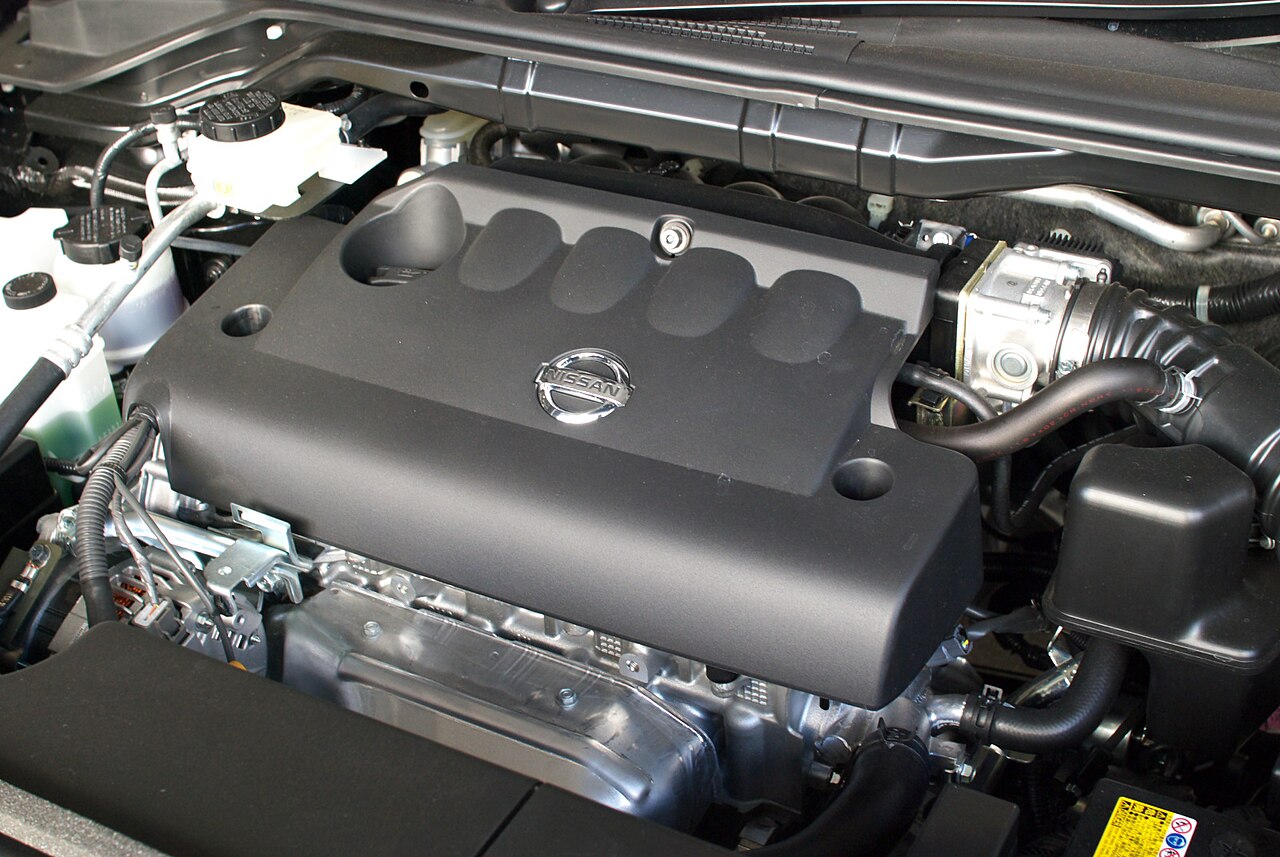
Nissan QR25DE engine / Image Credit: Hatsukari715 - Own work, Public Domain, Wikimedia.
Suspension components were generally robust, while the cabin aged reasonably well. By 2011 and 2012, Nissan had implemented software updates, improved cooling strategies, and production refinements that slightly reduced failure rates.
Still, the first-generation Rogue earned a reputation ranging from poor to merely fair.
Second Generation (2014–2020): Improvement Arrives Slowly
The redesigned 2014 Rogue represented a major leap in styling, practicality, and refinement.
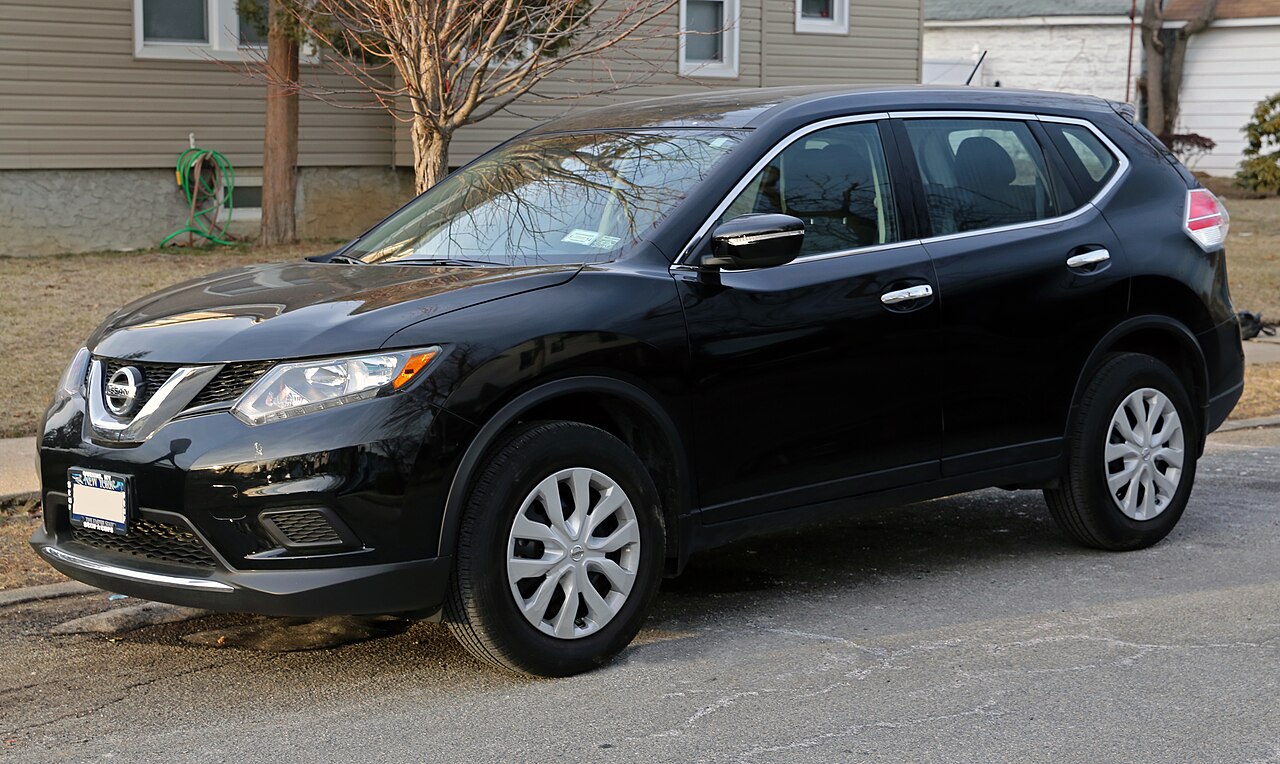
'14 Rogue S AWD / Image Credit: Mr.choppers - Own work, CC BY-SA 3.0, Wikimedia.
Built on the Renault-Nissan CMF platform, the second-generation Rogue offered significantly more interior space, improved crash protection, and optional third-row seating in some markets.
Unfortunately, the transmission story did not disappear overnight. Although Nissan introduced updated versions of the Xtronic CVT featuring revised hydraulic controls, lower-friction components, and software improvements, owner complaints continued. Common issues included:
- CVT hesitation
- Judder during acceleration
- Delayed engagement
- Premature wear
- Electrical glitches affecting transmission control
- Infotainment problems
- Battery drain
- Occasional sensor failures
Several recalls also affected second-generation Rogue models, addressing concerns ranging from braking systems to electrical components and occupant safety equipment. The challenge wasn't simply that problems existed. It was that competitors were becoming remarkably dependable.
Living in the Shadow of the Best
During the 2010s, compact SUV buyers increasingly gravitated toward vehicles with nearly bulletproof reputations.
The Toyota RAV4 became synonymous with durability. The Honda CR-V consistently ranked among the segment's most reliable choices. Both relied on conventional automatic transmissions—or, in Honda's case, exceptionally well-developed CVTs—backed by decades of engineering refinement.
'12 RAV4, '11 CR-V EX L / Image Credit: Wikimedia.
As a result, every Rogue transmission complaint reinforced a narrative. Even though many owners experienced years of trouble-free driving, public perception increasingly painted the Rogue as an unreliable crossover. In reality, the gap wasn't always as dramatic as internet forums suggested.
Many reported failures clustered around earlier production years and higher-mileage vehicles. But reputations are difficult to reverse. By comparison, Toyota and Honda enjoyed remarkable consistency across multiple generations, so the Rogue looked weaker than it often was.
Engineering Improvements Behind the Scenes
Beginning around the 2018 and 2019 model years, Nissan accelerated improvements to its CVT technology. Engineers focused on several critical areas:
Improved Belt Materials
Higher-strength steel belts reduced wear under high torque loads.
Enhanced Hydraulic Pressure Control
More precise hydraulic regulation minimized belt slip while improving durability.
Updated Valve Bodies
Revised valve body designs delivered smoother operation and better fluid control.
Optimized Transmission Cooling
Improved heat management helped reduce one of the earliest CVT failure triggers.
Refined Software Calibration
Transmission control software became significantly more sophisticated, reducing unnecessary stress during acceleration and improving shift simulation.
The results began showing up in owner surveys. By 2019 and especially 2020, reliability ratings noticeably improved. While isolated transmission complaints were still there—as they do with virtually every modern vehicle—they became far less common than in previous years.
Third Generation (2021–Present): A Different Rogue
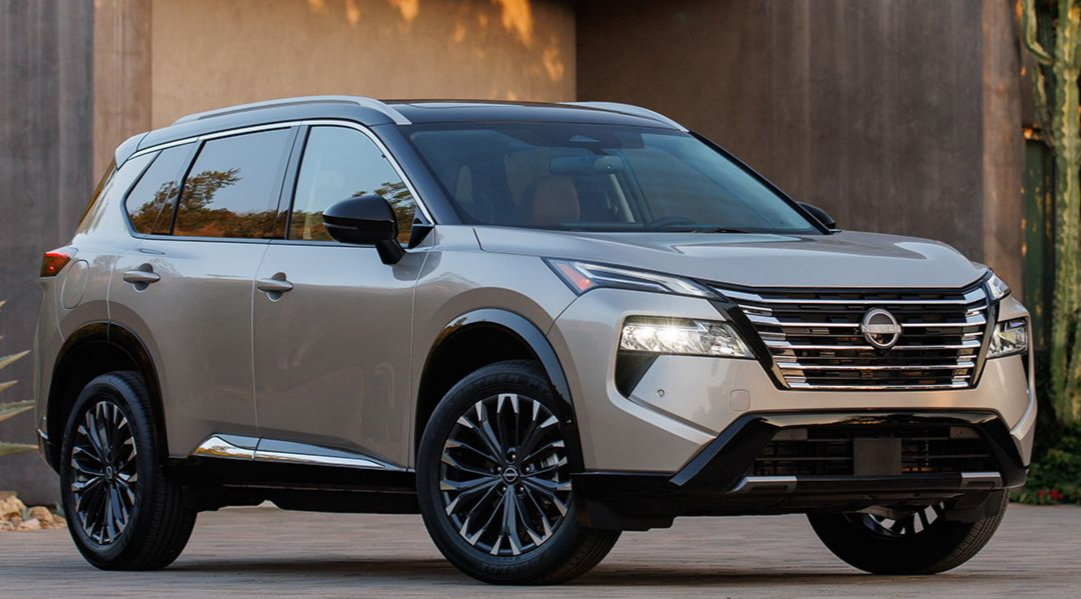
2024 Rogue / Image Credit: Nissan.
The current Rogue represents Nissan's most comprehensive reset yet. Built on an evolved CMF-C/D architecture, the crossover introduced stiffer body construction, dramatically improved safety, and substantially higher manufacturing quality.
The cabin immediately felt more premium. Panel gaps tightened. Materials improved. Noise insulation increased. Assembly quality became noticeably more consistent.
Although some early 2021 models experienced minor first-year issues—including infotainment bugs and a handful of electronic glitches—these proved relatively modest compared to the transmission controversies of earlier generations. Then came another significant engineering milestone.
The Variable Compression Engine
For 2022, Nissan introduced the innovative 1.5-liter VC-Turbo three-cylinder engine. The engine features one of the automotive industry's most advanced mechanical designs.
Unlike conventional engines with a fixed compression ratio, Nissan's VC-Turbo continuously adjusts compression between approximately 8:1 and 14:1 using a sophisticated multi-link crank mechanism.
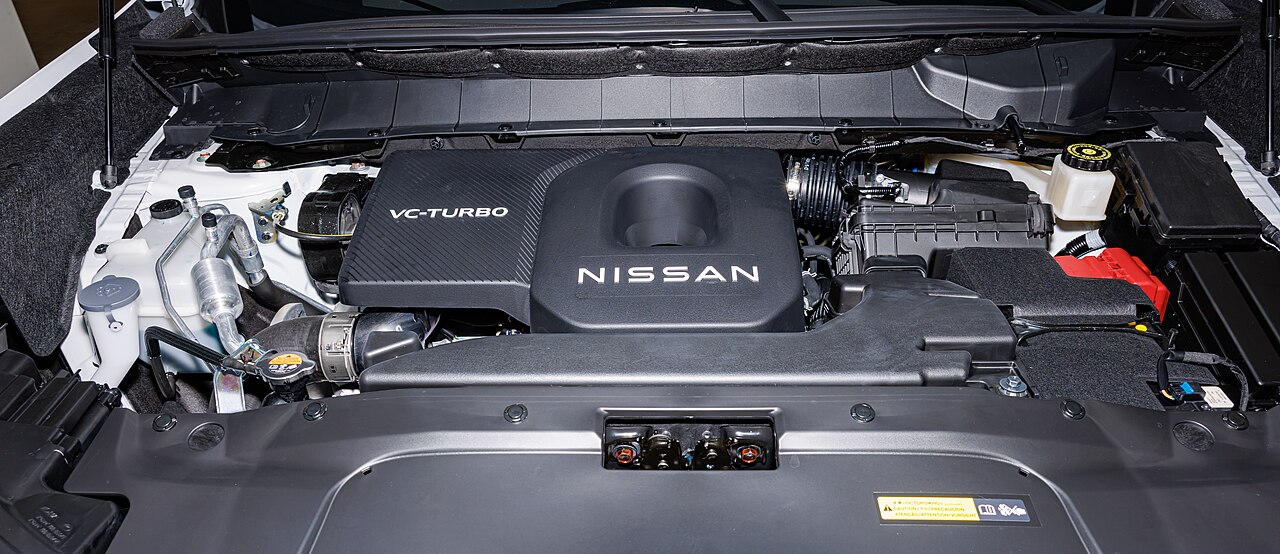
Nissan VC-Turbo / Image Credit: Dinkun Chen - Own work, CC BY-SA 4.0, Wikimedia.
Lower compression supports higher turbo boost during acceleration. Higher compression improves fuel efficiency during cruising. The technology allows the Rogue to deliver stronger performance while maintaining impressive fuel economy. Just as importantly, Nissan paired the engine with the latest evolution of its Xtronic CVT, benefiting from years of durability improvements.
Real-world owner reports have been encouraging. Independent reliability surveys increasingly place 2022 through 2025 Rogue models among the stronger performers in the segment. The widespread transmission horror stories that once defined the Rogue have become far less common.
The 2026 J.D. Power Result
The J.D. Power Initial Quality Study measures problems experienced during the first 90 days of ownership. Critics sometimes point out that long-term durability and initial quality are different metrics—and they're right. A vehicle can score well initially while developing issues later.
Likewise, an automobile with excellent long-term durability can experience minor early production defects. Nevertheless, the IQS remains one of the industry's most closely watched benchmarks because it reflects manufacturing consistency, supplier quality, assembly precision, and early customer satisfaction.
For the Rogue to finish first in the compact SUV segment suggests Nissan's quality-control efforts are paying off.It's also evidence that today's Rogue should not automatically be judged by the shortcomings of models built over a decade ago.
Nissan Rogue Reliability by Generation
| Generation | Years | Reputation | Common Issues | Highlights |
|---|---|---|---|---|
| 1st Gen | 2008–2013 | Poor to Fair | CVT transmission failures, jerking, stalling | Later years (2011–2012) showed gradual improvement |
| 2nd Gen | 2014–2020 | Mixed | CVT issues, electrical faults, recalls | 2019–2020 models became noticeably more reliable |
| 3rd Gen | 2021–Present | Strong | Minor first-year quality concerns | 2022–2025 models widely praised for improved reliability and refined CVT |
A Reputation Finally Catching Up with Reality
The Nissan Rogue's story is a reminder that automotive reputations often lag behind engineering reality.
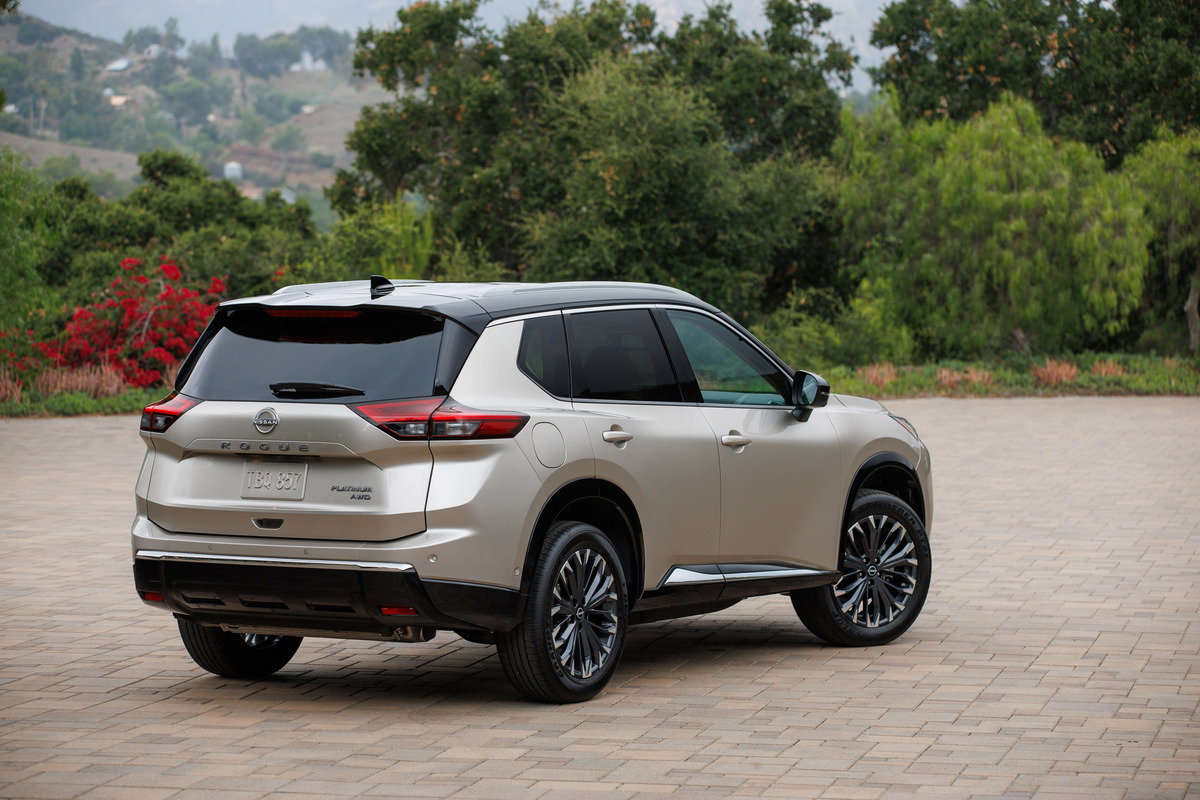
2024-'26 Rogue / Image Credit: Nissan.
Early generations undeniably suffered from serious CVT-related reliability problems that damaged consumer confidence and allowed rivals like the Toyota RAV4 and Honda CR-V to dominate discussions about dependability.
Those competitors earned their reputations through years of remarkably consistent reliability, making the Rogue appear weaker than it actually was—particularly as Nissan steadily improved the vehicle during the latter years of the second generation.
Today's Rogue is fundamentally different from the crossover that frustrated many owners in the late 2000s and early 2010s. Years of transmission redesigns, software refinements, better thermal management, stronger internal components, and improved manufacturing quality have transformed the model into a far more mature and dependable vehicle.
Its No. 1 ranking in the 2026 J.D. Power U.S. Initial Quality Study won't erase memories of the past overnight. Reputations built over years of transmission failures take time to rebuild.
But if recent reliability trends continue, Nissan may finally have done enough to ensure that the Rogue is remembered not for its CVT headaches, but for one of the industry's most impressive quality turnarounds.
Comments