01Aug
Sim racing has grown from a niche hobby into one of the most exciting ways to experience motorsports without leaving home. Whether you dream of attacking the famous corners of Spa, mastering drifting techniques, or competing in online championships, the right racing simulator wheel can completely transform your experience.
While many newcomers start with a standard game controller, they often discover that a steering wheel provides a level of realism, precision, and immersion that controllers simply cannot match. Feeling force feedback as your virtual tires lose grip or fighting the steering during a high-speed corner makes every lap far more engaging.
Choosing the right wheel, however, can feel overwhelming. The market offers everything from affordable beginner models to professional-grade direct drive systems that rival equipment used by real racing teams. Understanding what separates these options helps you invest wisely and build a system that matches both your budget and driving goals.
Why a Racing Simulator Wheel Makes Such a Big Difference
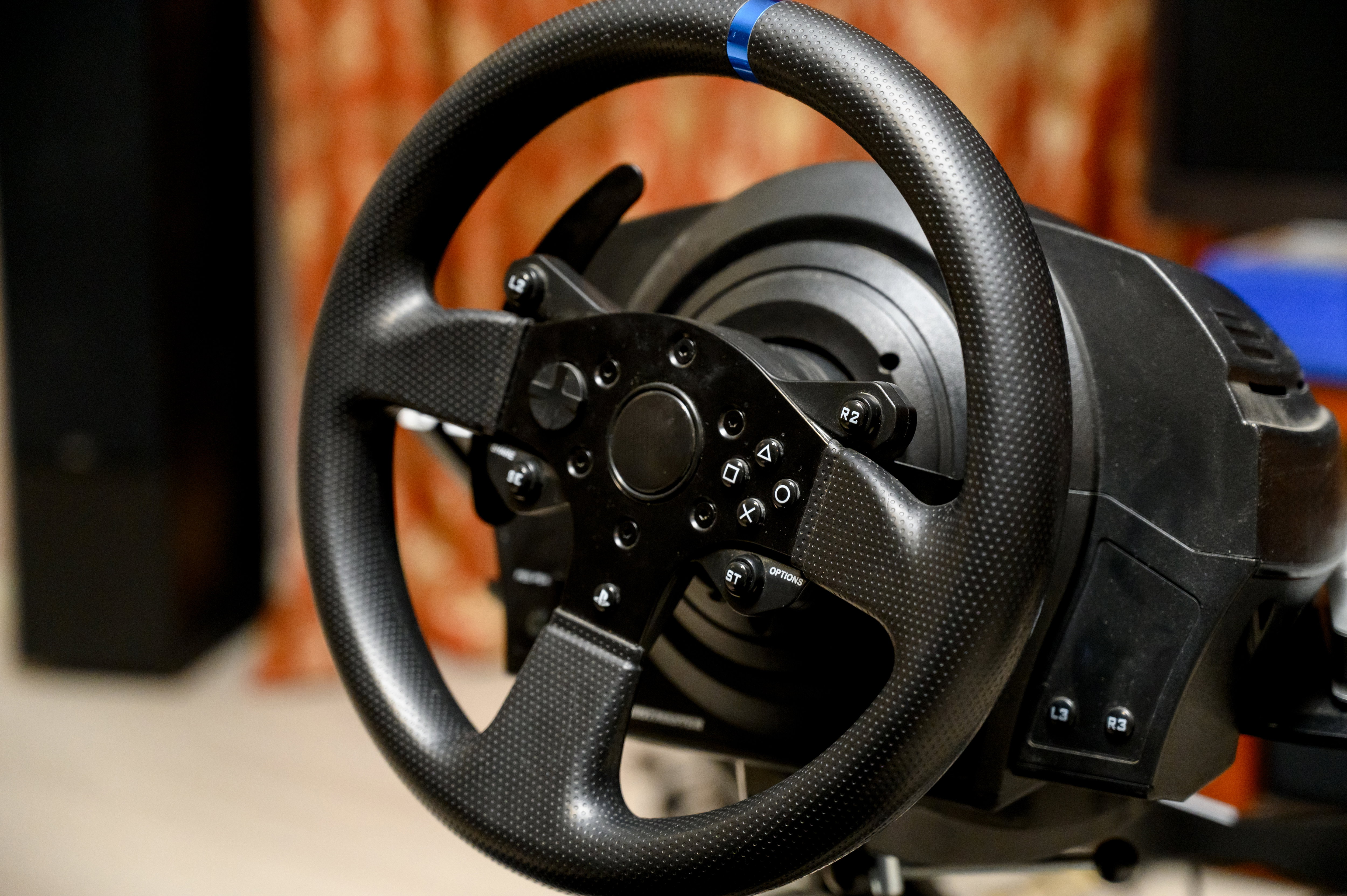
A quality racing simulator wheel does much more than steer your virtual car.
GettyImages.
Modern wheels recreate the physical sensations that drivers experience on real racetracks through force feedback. Instead of simply turning left or right, you feel bumps in the pavement, weight transfer during cornering, curb strikes, understeer, oversteer, and even subtle changes in grip levels.
These details provide valuable information that helps improve consistency and lap times.
For example, if your front tires begin sliding during a corner, force feedback allows you to sense that loss of grip before you even see it on screen. This gives you time to make smoother steering corrections and maintain control.
Other advantages include:
- Improved steering precision
- Better throttle and braking coordination
- More consistent racing lines
- Greater immersion
- Enhanced enjoyment during long racing sessions
Many experienced sim racers also find that a wheel encourages smoother driving techniques because the steering inputs more closely resemble those used in real cars. As your skills improve, the equipment becomes less of a gaming accessory and more of a genuine driving tool.
Choosing the Right Racing Simulator Wheel for Your Budget
Not every racing simulator wheel delivers the same experience. Understanding the major categories helps narrow your options.
Entry-Level Wheels
Beginner wheels typically use gear-driven mechanisms for force feedback.
These systems offer enough resistance to create an enjoyable driving experience while remaining affordable. They work well for casual racers, newcomers, and anyone exploring sim racing for the first time. Popular features include:
- Paddle shifters
- Adjustable steering rotation
- Basic force feedback
- Integrated pedals
- Console compatibility
Although gear-driven wheels may feel slightly mechanical compared to premium models, they provide excellent value for learning racecraft.
Belt-Driven Wheels
Belt-driven systems represent the next step up. Instead of gears, belts transmit force feedback more smoothly, resulting in quieter operation and more natural steering feel. Drivers often notice:
- Smoother steering inputs
- Better road texture detail
- Reduced mechanical noise
- More accurate force transitions
These wheels appeal to enthusiasts who spend significant time in simulators and want higher realism without entering premium pricing territory.
Direct Drive Wheels
Direct drive technology sits at the top of the market. Rather than using gears or belts, the steering wheel mounts directly onto the motor shaft. This allows force feedback to be transmitted with exceptional accuracy and virtually no mechanical delay.
Benefits include:
- Outstanding steering precision
- Extremely detailed force feedback
- Powerful torque output
- Superior responsiveness
- Professional-level durability
Many esports competitors and racing drivers train using direct drive systems because they closely replicate the steering feel found in real race cars. Although these wheels command higher prices, they also offer the highest level of performance currently available.
Building the Ideal Racing Simulator Setup
GettyImages.
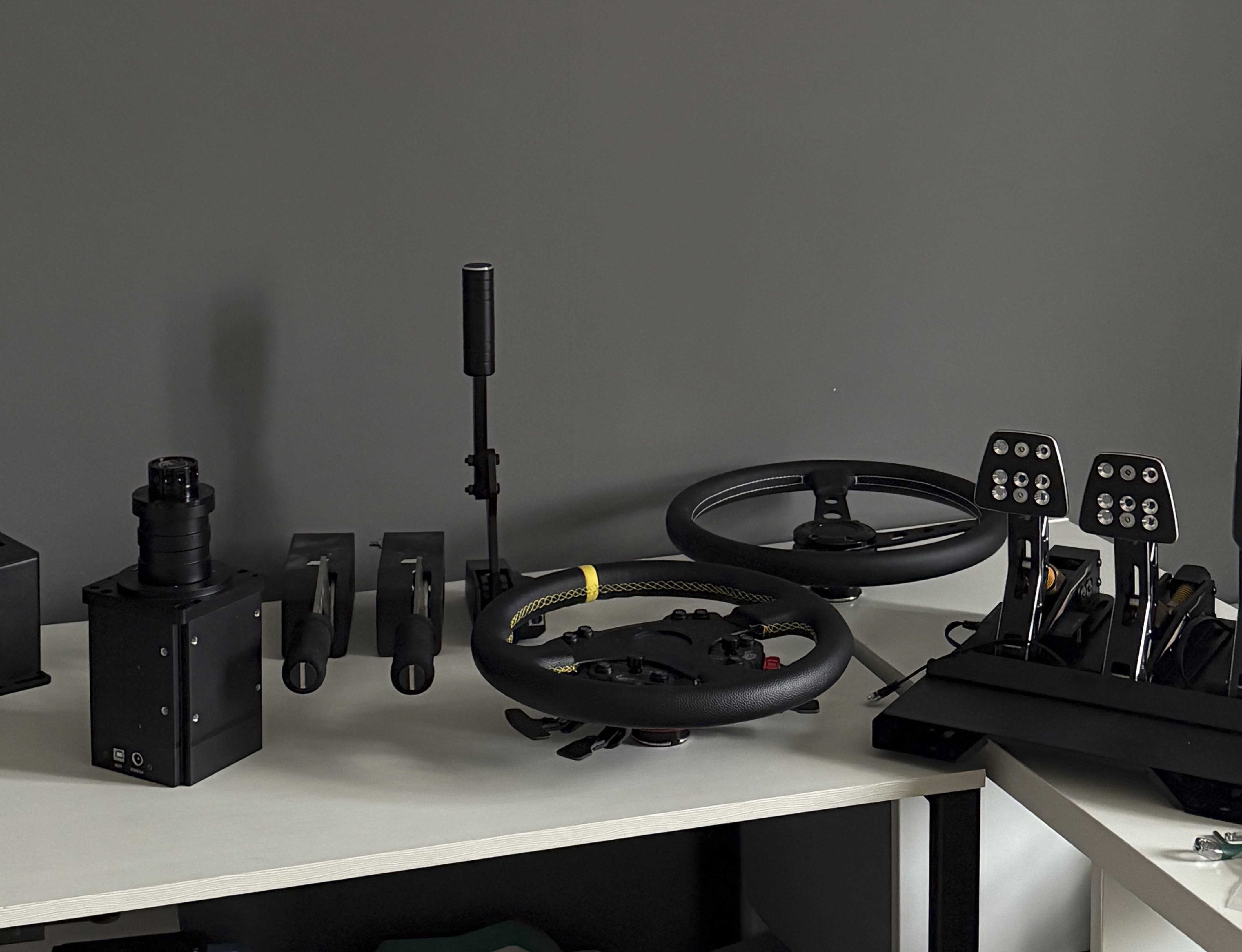
A great wheel performs best when paired with a thoughtfully designed racing simulator setup. Many beginners clamp their wheel to a desk, which works well for learning. However, as force feedback becomes stronger, a more stable mounting solution dramatically improves consistency.
Several components contribute to an enjoyable setup.
Pedals
Pedals deserve just as much attention as the steering wheel.
Higher-quality pedals often feature load cell brake technology, which measures braking pressure instead of pedal travel. This design allows drivers to develop muscle memory similar to real-world driving, leading to smoother braking and shorter stopping distances.
Many experienced sim racers consider upgraded pedals one of the most valuable improvements they can make.
Wheel Stand or Cockpit
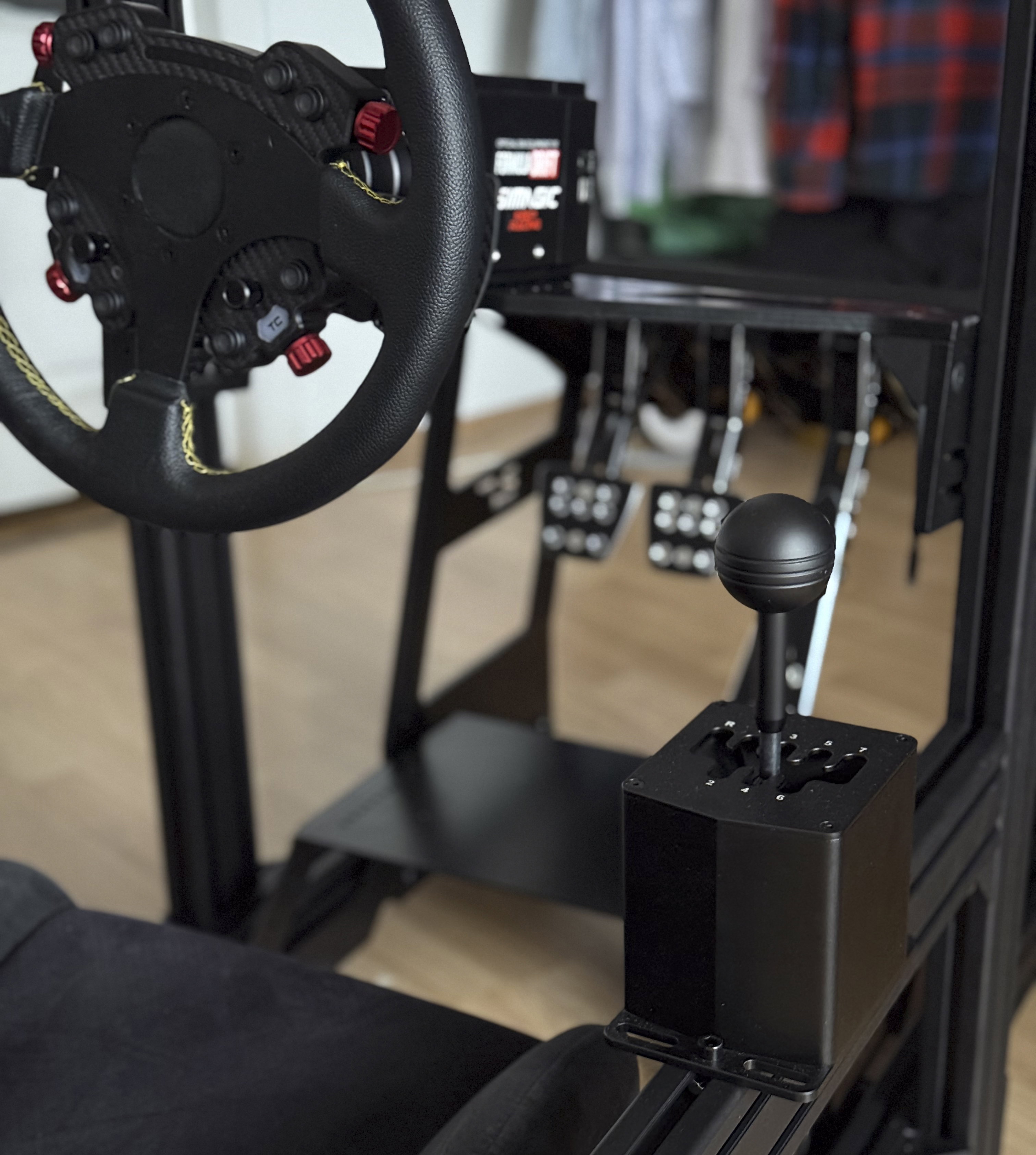
Mounting hardware affects both comfort and performance. A folding wheel stand provides stability while remaining easy to store after use. For enthusiasts planning long racing sessions, a dedicated racing simulator cockpit offers the best experience.
These rigid frames securely mount the wheel, pedals, seat, and sometimes multiple monitors or motion systems. A cockpit helps eliminate unwanted movement during aggressive steering inputs while also promoting a comfortable driving position that reduces fatigue.
Display Options
Visual immersion matters almost as much as steering feel. Popular display choices include:
- Single ultrawide monitor
- Triple monitor setup
- Virtual reality headset
- Large television
Each option offers different advantages. Triple monitors provide exceptional peripheral vision, while VR delivers unmatched immersion by placing drivers inside the cockpit of every vehicle.
Shifters and Handbrakes
Drivers interested in rally racing, drifting, or historic race cars often benefit from adding separate shifters and handbrakes. These accessories increase realism and make specific racing disciplines significantly more enjoyable.
Although optional, they become worthwhile additions once the core wheel and pedal setup is complete.
How to Match Your Wheel with Your Favorite Racing Games
GettyImages.
Not every sim racing title demands the same equipment. Understanding your preferred games helps determine the ideal racing simulator wheel.
Formula Racing
Games focused on Formula cars reward precision steering, fast responses, and detailed force feedback. Direct drive wheels excel here because even small steering corrections influence lap times.
GT Racing
GT racing places heavy emphasis on consistency over long races. A quality belt-driven or direct drive wheel paired with load cell pedals provides an excellent balance between realism and affordability.
Rally Racing
Rally titles involve constant steering corrections over changing terrain. Strong force feedback helps drivers anticipate slides while a dedicated handbrake enhances hairpin turns.
Drifting
Drifting requires rapid steering transitions and excellent self-aligning torque. Many experienced drifters prefer powerful force feedback systems that allow the wheel to rotate naturally during sustained slides.
Truck and Bus Simulators
Even slower-paced driving simulations benefit from a quality steering wheel. Long highway journeys become far more immersive with realistic steering resistance and proper pedal control.
What to Look for Before Buying
With so many models available, comparing specifications can simplify the decision-making process.
Force Feedback Quality
The strength and detail of force feedback often define the overall driving experience. More detailed feedback allows drivers to react naturally to changing grip levels and road conditions.
Compatibility
Ensure the wheel supports your preferred platform. Some models work exclusively on PC, while others support Xbox, PlayStation, or multiple systems. Checking compatibility before purchasing helps avoid costly mistakes.
Wheel Size
Larger steering wheels generally provide a more realistic driving feel, especially for touring cars, trucks, and road vehicles. Smaller wheels often suit Formula and GT racing because they encourage faster steering inputs.
Upgrade Options
Many manufacturers build complete ecosystems that include:
- Multiple steering wheel rims
- Performance pedals
- Sequential shifters
- H-pattern gearboxes
- Handbrakes
- Dashboard displays
- Button boxes
Choosing a brand with a strong ecosystem makes future upgrades much easier.
Build Quality
Materials influence both durability and comfort. Premium wheels commonly feature:
- Aluminum construction
- Genuine leather
- Alcantara coverings
- Carbon fiber accents
- Metal paddle shifters
These materials not only improve longevity but also create a more authentic driving experience.
Is a Racing Simulator Wheel Worth the Investment?
For anyone who spends meaningful time playing racing games, the answer is usually yes.

GettyImages.
A racing simulator wheel transforms driving from pressing buttons into controlling a vehicle with genuine steering inputs and realistic feedback. Every braking zone, apex, and acceleration feels more connected to the car, creating a level of immersion that controllers rarely achieve.
The experience becomes even better when combined with a stable racing simulator setup and, eventually, a dedicated racing simulator cockpit. Together, these components create an environment that supports skill development, longer driving sessions, and a stronger sense of realism.
Beginners do not need to purchase the most expensive equipment available. An affordable force feedback wheel paired with solid pedals can provide hundreds of hours of enjoyable racing while leaving room for future upgrades. As your confidence grows, expanding your setup with improved pedals, a cockpit, or a direct drive system becomes a natural progression rather than an immediate necessity.
Ultimately, the best racing simulator wheel is the one that fits your budget, supports your favorite racing platforms, and encourages you to spend more time enjoying the virtual track.
Some of the links here are affiliate links. That means if you click and buy, we might earn a small commission - at no extra cost to you. As an Amazon Associate, we earn from qualifying purchases. Thanks for supporting the site.
Comments