30Jun
Most articles on this topic give you four sentences and call it a day: pull the dipstick, wipe it, reinsert it, look at the level. Technically true, practically useless. If that were the whole story, nobody would ever overfill their engine, misjudge a low reading on a hill, or get spooked by a dipstick that looks "milky" when nothing is actually wrong.
Start With the Dipstick Itself
GettyImages.
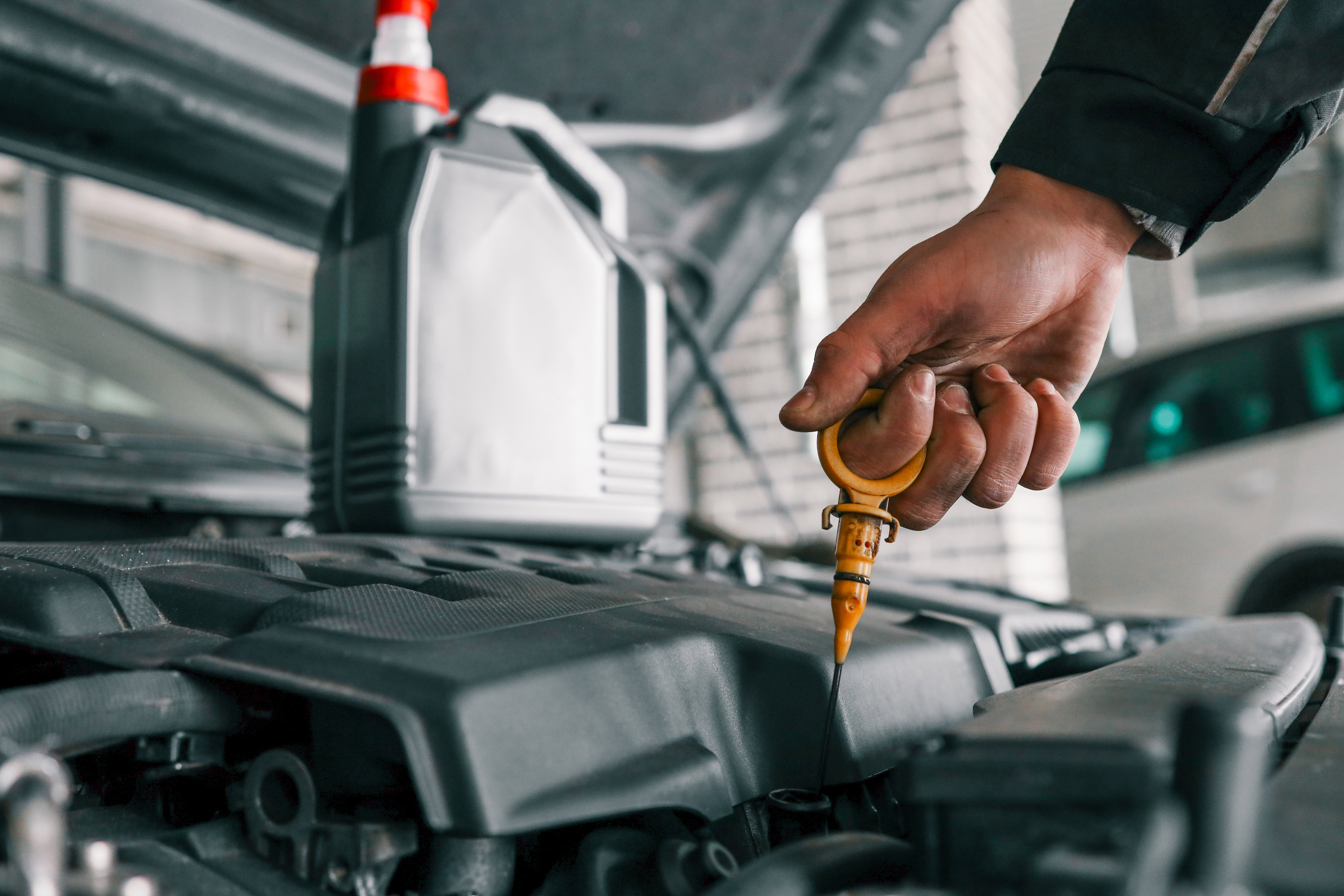
Before you even touch your oil, find the dipstick. It's usually a brightly colored loop or T-shaped handle (often yellow or orange) sticking out of the engine block, distinct from the transmission dipstick if your car has one of those too — and yes, people mix these up more often than you'd think, especially on older transmissions with external dipsticks.
The engine oil dipstick will typically have an oil-can icon stamped on the handle. If you're not sure, your owner's manual will show you exactly where it lives, because dipstick placement varies wildly across engine layouts (transverse vs. longitudinal, four-cylinder vs. V6, etc.).
Step One: Get the Car Into the Right State

GettyImages.
This is where most guides skip the nuance. You can't just check oil whenever — the reading depends heavily on engine temperature and how the car is sitting.
Engine temperature is crucial.
Checking immediately after a drive gives you a misleadingly high or erratic reading because the oil is still circulating through the engine, the turbocharger (if equipped), and the upper valve train.
Some of your oil volume is literally suspended in the engine rather than pooled in the pan where the dipstick measures it.
Vehicle position is equally crucial.
Parking on an incline, even a subtle driveway slope, will tilt the oil pan and throw off your reading by a noticeable margin. Always check on level ground.
This naturally leads to the question everyone has but rarely sees answered with real specificity.
When Is the Best Time to Check Your Oil?
GettyImages.
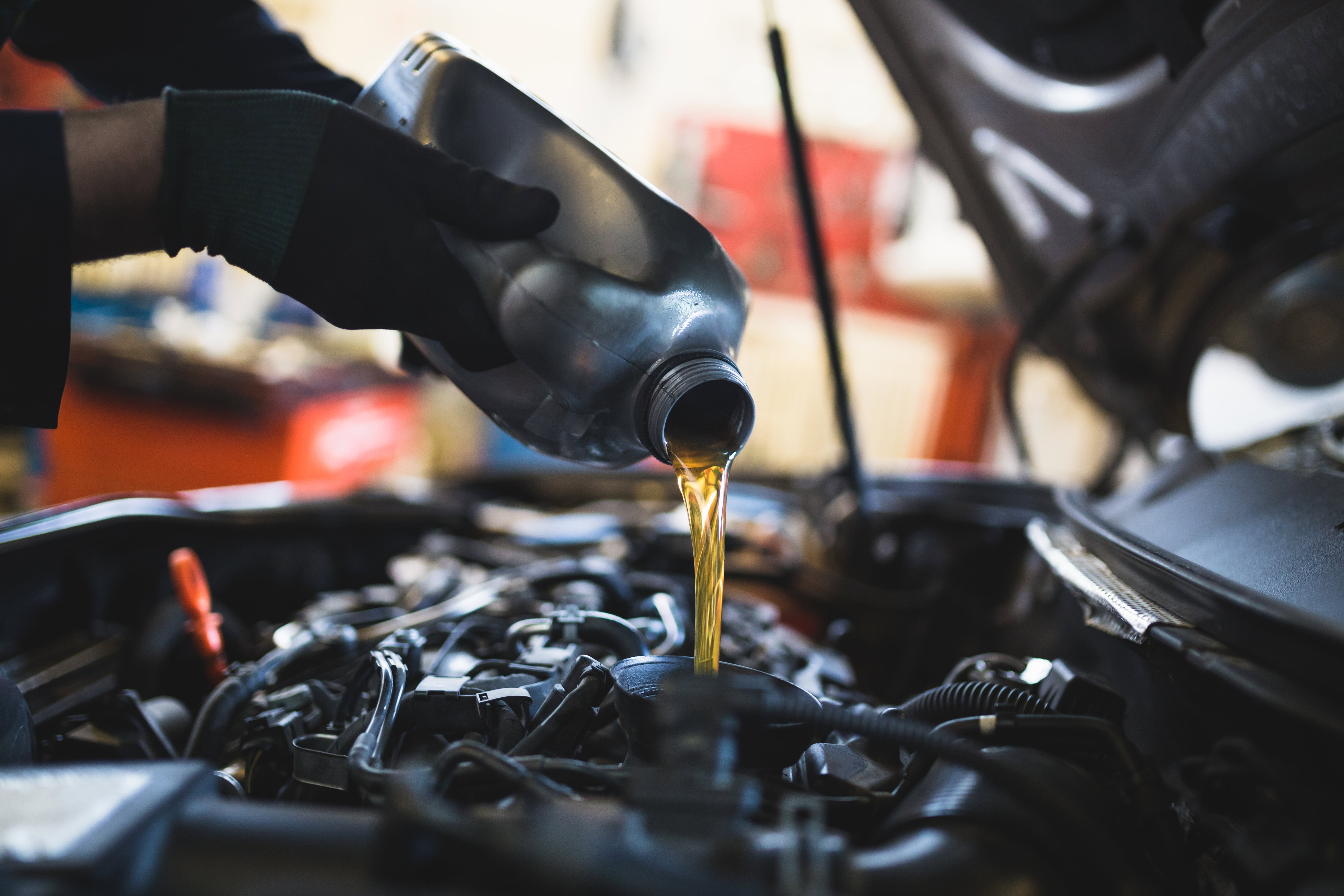
The ideal window is when the engine is cold or has been off for at least 10–15 minutes after a short drive, with the car parked on level ground. Let's break down the reasons for this:
Cold start (before driving at all): This is the gold standard, especially first thing in the morning. All the oil has fully drained back into the oil pan overnight, giving you the truest possible reading.
10–15 minutes after shutting off a warm engine: Acceptable and often more practical. This gives enough time for oil clinging to cylinder walls, the turbo, and upper engine components to drain back down, without the engine being dangerously hot to work around.
Immediately after driving: Avoid this. Oil is still circulating and coating internal surfaces, so the dipstick will often read low even though your oil level is fine — leading people to overfill unnecessarily.
While the engine is running: Never check oil with the engine on. Beyond the obvious safety issue, the reading will be inaccurate, and the dipstick tube can spray hot oil.
A useful habit: it never hurts to check your oil at the start of a trip, not the end. You'll get a clean reading, and you'll catch a problem before it becomes one on the highway.
Step Two: Pull, Wipe, and Reinsert — Fully
GettyImages.
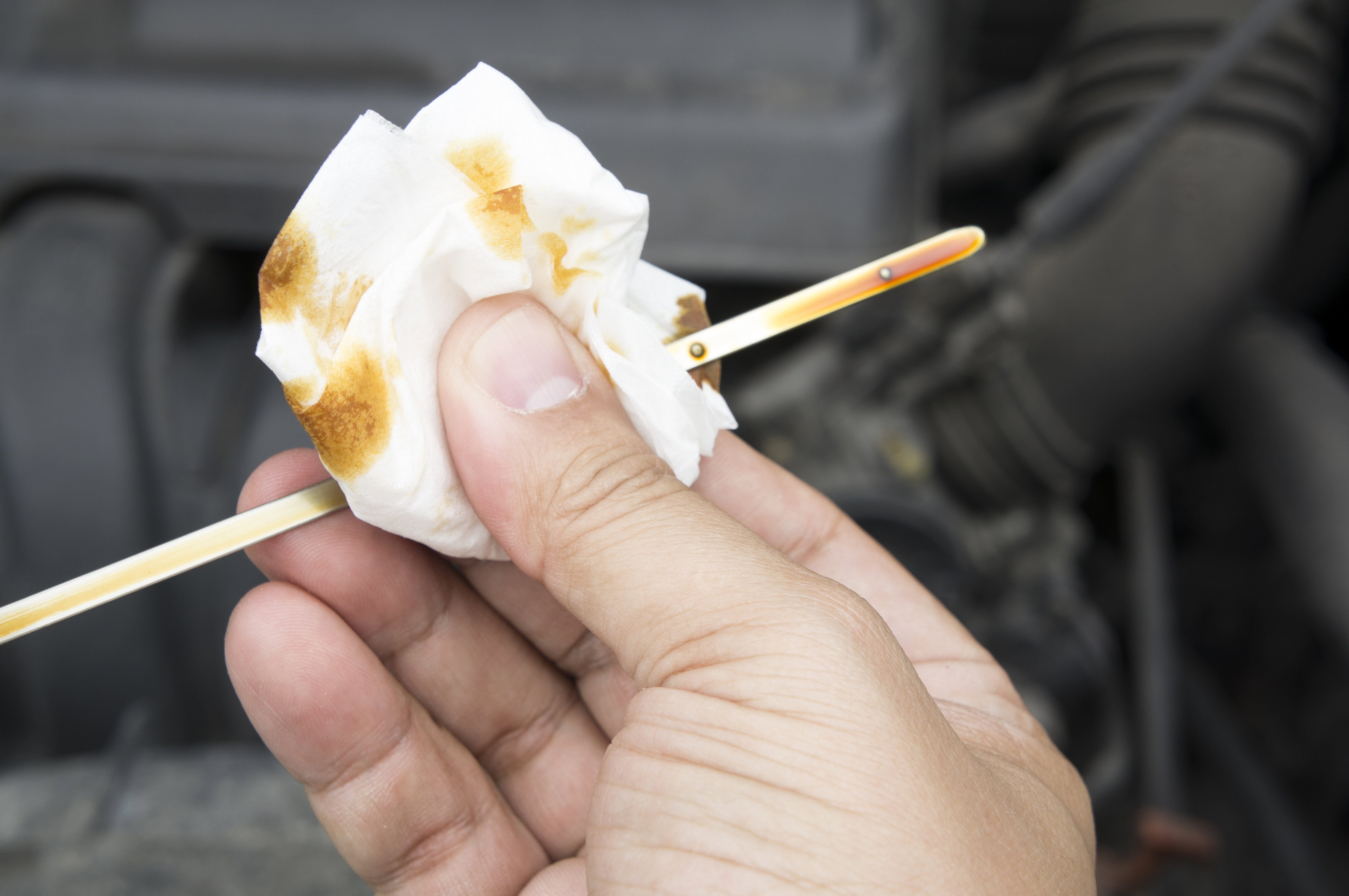
Pull the dipstick out and wipe it clean with a lint-free rag or paper towel. This first pull doesn't count; it's just to get a clean baseline.
Now reinsert it. This is the step people botch most: the dipstick has to go all the way back down its tube, fully seated. If you push it in at an angle or it catches halfway, you'll pull it back out with an artificially low reading because it never reached the oil pool at the bottom.
Pull it out a second time, this time holding it horizontally rather than vertically, to prevent oil from running down the stick and distorting where the "true" level sits.
Step Three: Actually Reading the Markings
GettyImages.
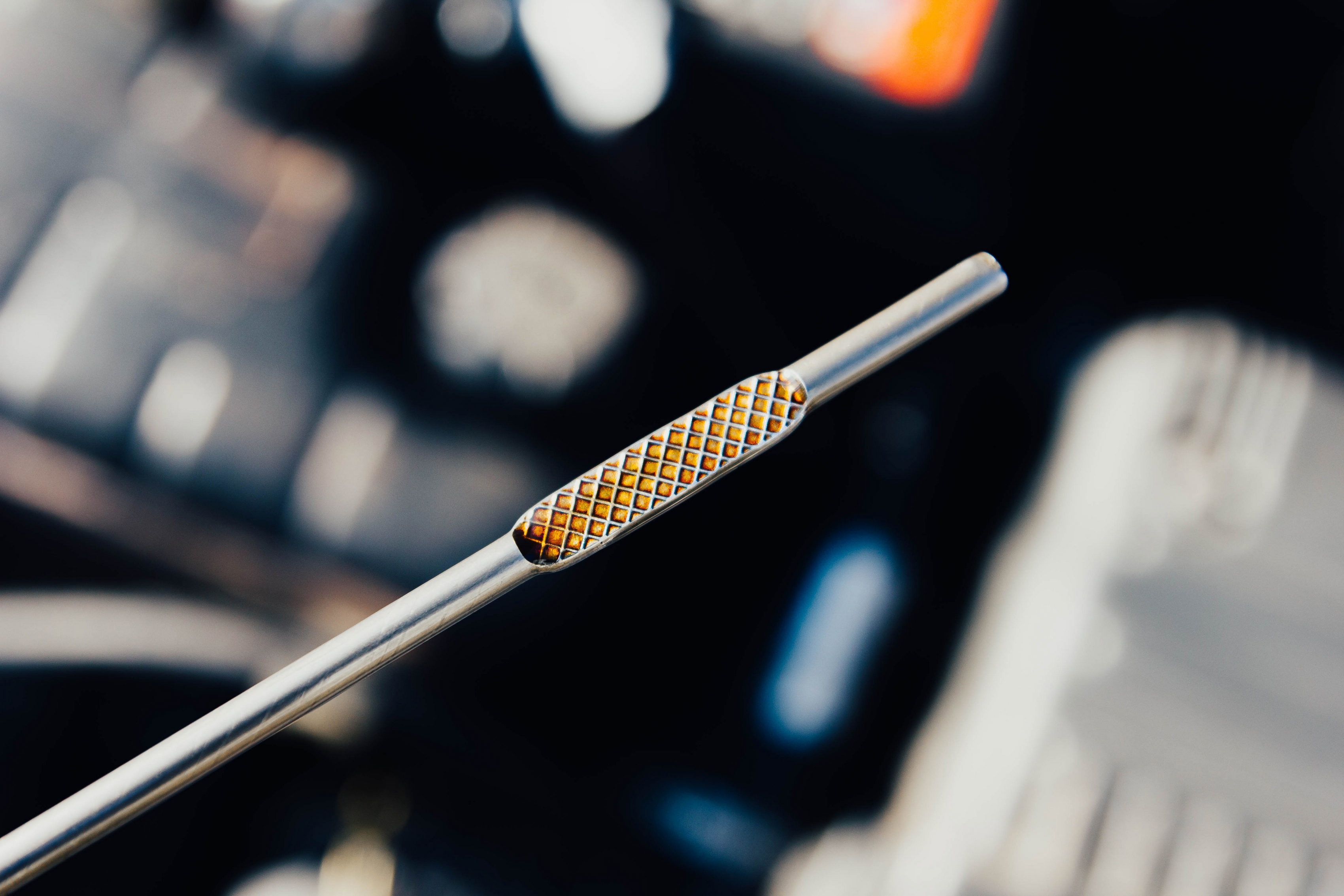
Here's where the real literacy comes in. Dipsticks use a few different marking conventions depending on the manufacturer and knowing which one you're looking at avoids confusion. Let's get into it:
Two pinholes or notches: Common on many Japanese and domestic vehicles. The oil level should fall between the two holes; right at or near the top hole is ideal.
MIN/MAX text: Common on European vehicles. Self-explanatory, but the nuance is that "MIN" doesn't mean "fine for now" — it means you're at the lowest acceptable level and should top off soon.
Crosshatched or knurled section: Found on some trucks and SUVs. The acceptable range is the textured zone itself, not a specific line within it.
The general rule across all of these is that you want the oil level sitting in the upper portion of the acceptable range, not just technically within it. Oil sitting right at MIN is functionally low; it's the difference between "compliant" and "comfortable."
The Overfill Trap
Less discussed, but just as important: overfilling is not harmless. Too much oil lets the crankshaft churn into it like an eggbeater, aerating the oil and creating foam. Foamy oil doesn't lubricate properly and can starve oil pressure to critical components, particularly at higher RPMs.
If your reading comes back above MAX, don't just shrug it off; that's a problem in the opposite direction, and on some engines, it warrants draining the excess rather than ignoring it.
What Oil Color and Texture Are Actually Telling You
GettyImages.
This is where a dipstick check becomes genuinely diagnostic instead of just a level gauge.
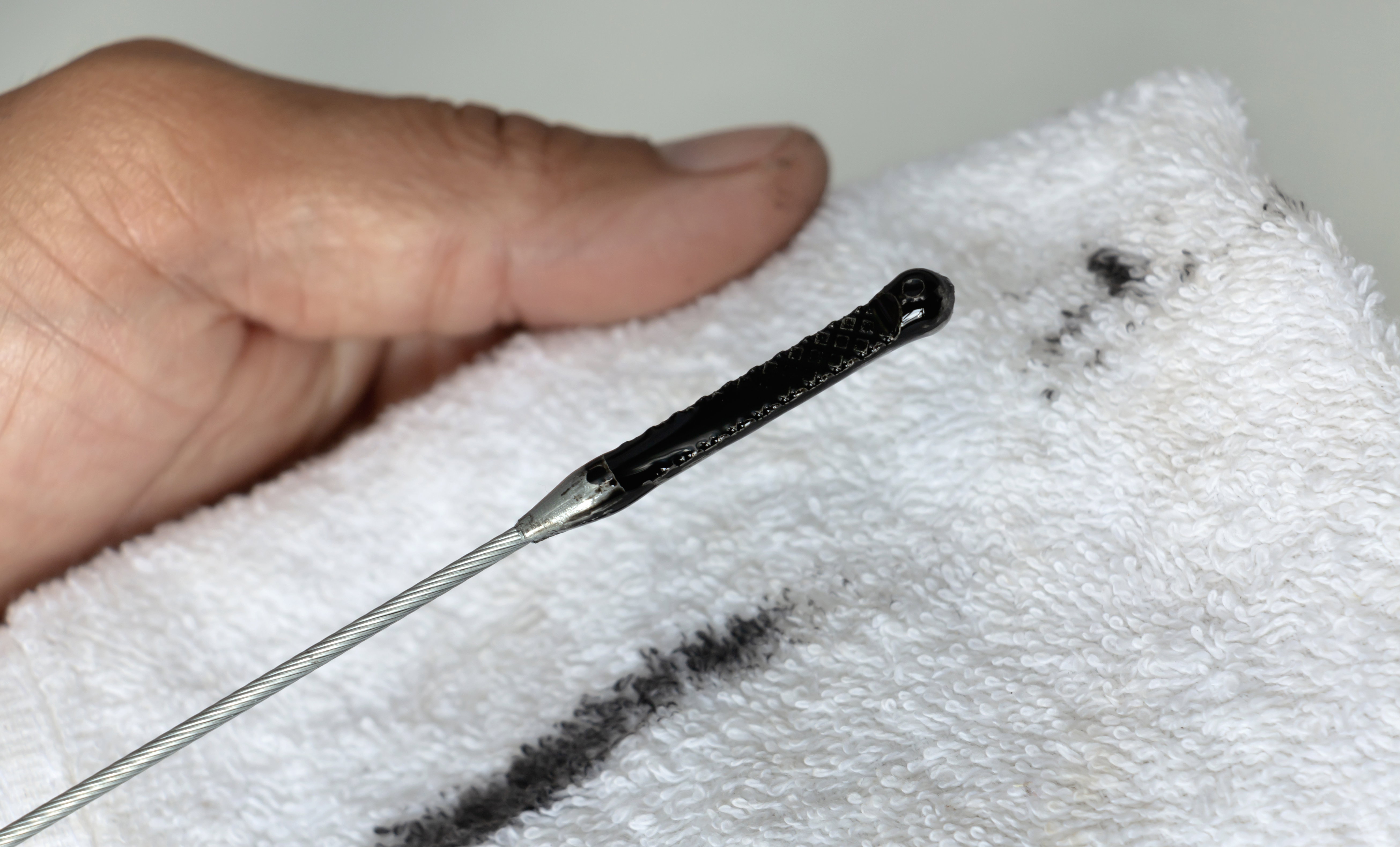
Amber to dark brown: Normal. Oil darkens with use as it picks up combustion byproducts — this alone isn't a red flag.
Black and gritty between the fingers: Likely overdue for a change, or carrying excessive soot, which is more common in older diesel engines or vehicles with heavy stop-and-go driving.
Milky, frothy, or tan like a milkshake: This is the one that should genuinely concern you. It usually indicates coolant intrusion into the oil — often from a failing head gasket — and it's not a "schedule a service eventually" issue. It's a "stop driving the car and get it diagnosed soon" issue, because coolant in your oil destroys lubrication properties fast.
Shimmering or metallic flecks: Small amounts of metallic sheen can be normal, especially in a newer engine still breaking in. Visible metal shavings or a gritty metallic feel, though, suggests internal wear and is worth a mechanic's attention.
Smell test: A faint gasoline smell can indicate fuel dilution from a rich-running engine or short-tripping habits; a sharp burnt smell can point to oil that's run past its thermal breakdown point.
A Few Things Nobody Tells You
GettyImages.
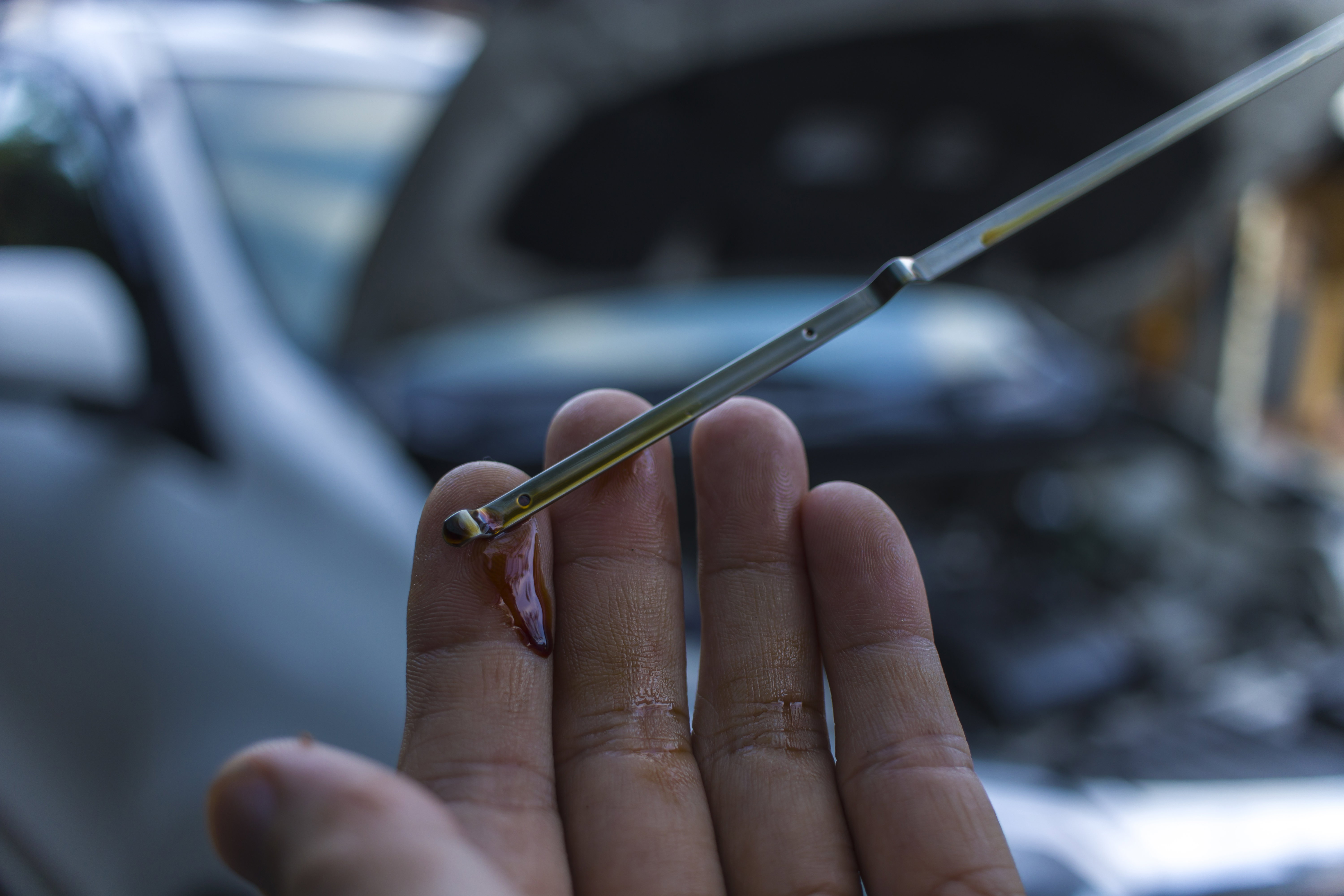
Check your oil more often than your maintenance reminder suggests if you tow, drive in extreme heat, or do a lot of short trips — these conditions accelerate oil degradation and consumption beyond "normal" mileage assumptions.
Modern engines with electronic oil monitors sometimes don't even have a dipstick, relying instead on a sensor and a dashboard readout. If your car falls into this category, manually checking isn't an option, and you should trust the digital reading paired with regular service intervals.
Finally, keep a log.
Noting your oil level and condition over a few weeks reveals consumption trends; a slow, steady drop of a quarter inch a month is very different from suddenly needing a quart added overnight, and only a log will let you tell the difference.
The Bottom Line
Reading a dipstick correctly is simple mechanically, but reading it well (understanding timing, position, color, and texture) turns a 30-second chore into a genuine diagnostic habit.
Most engine problems give you warning signs long before they become expensive ones, and the dipstick is one of the cheapest early-warning tools you have. Use it properly, and it'll tell you more than just "full" or "low."
Comments