11Jun
The U.S. military is advancing a new approach to one of modern warfare's most expensive challenges: destroying low-cost drones without relying on missiles that can cost hundreds of thousands, and sometimes more than $1 million, per shot.
According to a recent report by The Wall Street Journal, U.S. Marines are increasingly turning to specialized guns, advanced ammunition, and electronic warfare systems that can neutralize unmanned aerial threats at a fraction of the cost of traditional missile interceptors.
The effort reflects a growing recognition that the economics of drone warfare have shifted dramatically, forcing militaries to rethink how they defend against increasingly cheap and abundant aerial threats.
A Cost Problem Reshaping Modern Warfare
For years, military planners have struggled with a glaring imbalance. Adversaries can deploy drones that cost only a few thousand dollars, while defenders often respond with sophisticated missiles worth hundreds of thousands or even millions.
The challenge has become especially evident in conflicts across Ukraine and the Middle East, where inexpensive drones have repeatedly threatened military installations, naval assets, and critical infrastructure.
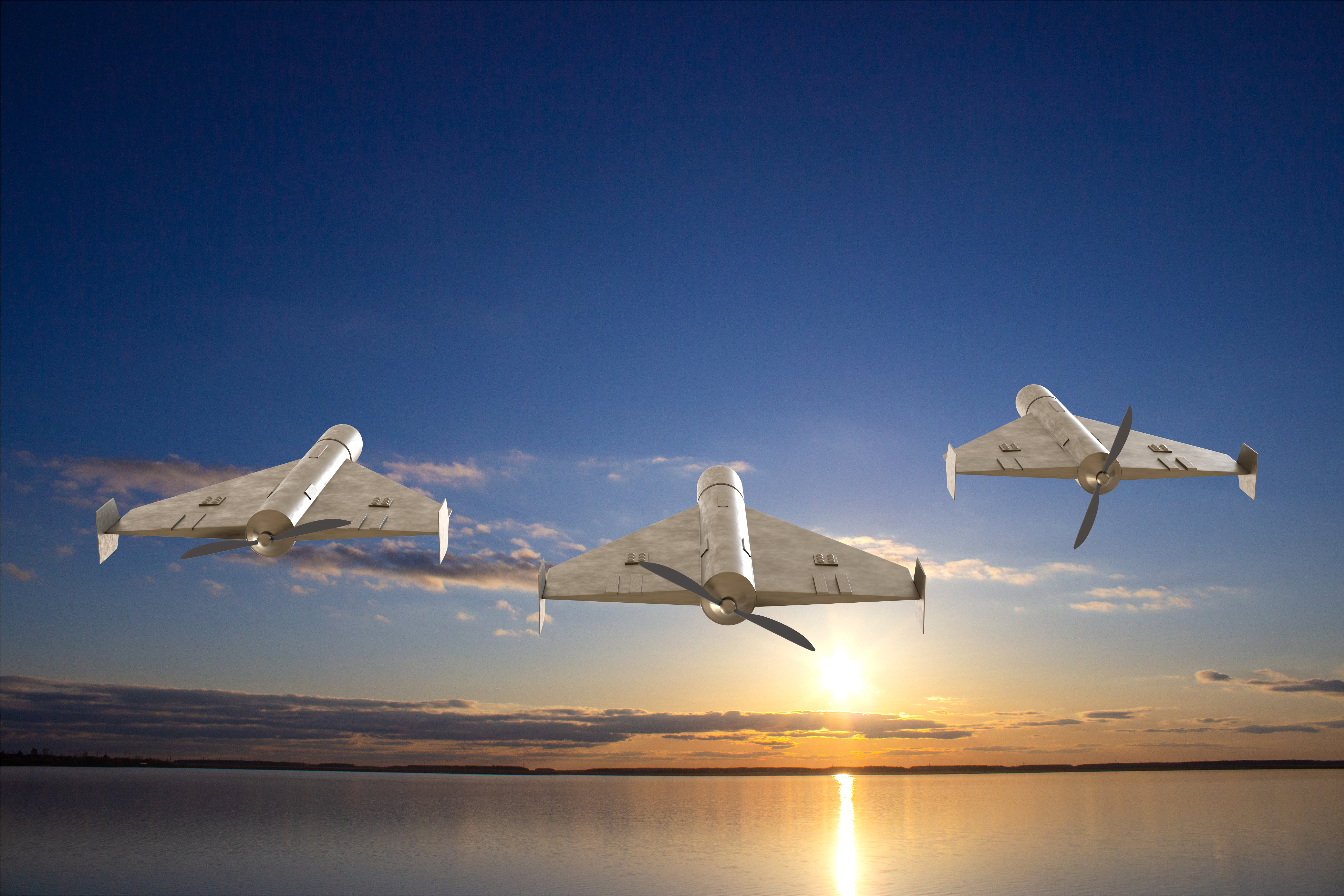
Iranian Shahed drones / Getty Images.
Iranian-designed Shahed drones, for example, are estimated to cost around $30,000 each, while smaller commercial-style quadcopters can be acquired for between $1,500 and $5,000.
By contrast, some of the missiles used to destroy them carry significantly higher price tags. The AIM-120 air-to-air missile can cost approximately $1 million per round, while a Stinger missile may cost about $430,000. Defense analysts have increasingly warned that such exchanges are financially unsustainable if drone attacks occur at scale.
That concern has pushed the Pentagon and defense contractors to search for alternatives that preserve expensive missiles for high-value targets while providing more economical options against low-cost drones.
MADIS Offers Multiple Ways to Defeat Drone Threats
The Wall Street Journal report highlights the U.S. Marine Corps' Marine Air Defense Integrated System, known as MADIS, as one of the most promising answers to the problem.
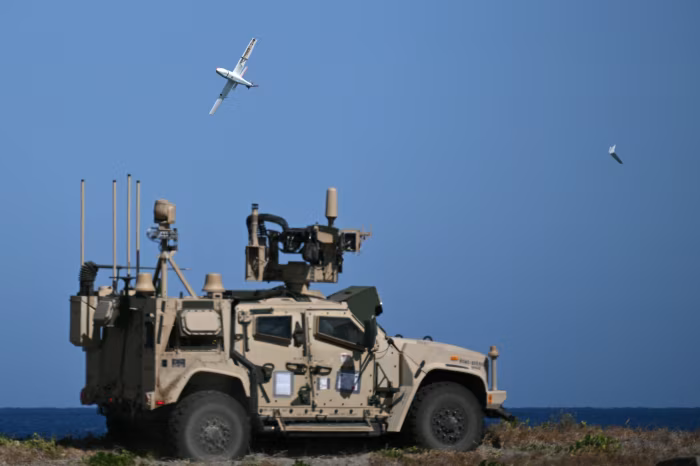
Image Credit: TED ALJIBE/AFP/GETTY IMAGES via WSJ.
MADIS consists of two Joint Light Tactical Vehicles, the successor to the Humvee. One vehicle carries advanced radar systems designed to detect and track airborne threats, while the other is equipped with Stinger missiles. Together, the vehicles also feature electronic warfare capabilities that can disrupt or jam enemy drones.
What makes the system particularly noteworthy is its layered approach. Rather than relying solely on missiles, commanders can choose among guns, electronic warfare tools, or missile interceptors depending on the nature of the threat.
Military officials say this flexibility is critical in an era when drones vary widely in size, speed, range, and sophistication. A small commercial quadcopter requires a different response than a larger one-way attack drone designed to strike military targets.
The system was recently demonstrated during joint military exercises in the Philippines, where U.S. Marines used MADIS vehicles to engage airborne drone targets over waters near the South China Sea.
Specialized Ammunition Changes the Economics
A key feature of the MADIS platform is its ability to fire specialized 30mm ammunition equipped with proximity fuzes.
Unlike conventional rounds that require a direct hit, these munitions are designed to detonate when they come close to a target. The explosion increases the likelihood of destroying a drone even if the projectile does not strike it directly.
According to estimates cited by The Wall Street Journal, using five of these specialized rounds to destroy a drone would cost roughly $11,250. While that figure is not insignificant, it is dramatically lower than firing a Stinger missile or an AIM-120 interceptor.
The cost advantage becomes even more important when military planners consider the possibility of drone swarms, where dozens or even hundreds of unmanned aircraft could be launched simultaneously. In such scenarios, relying exclusively on expensive missile systems could rapidly deplete inventories and strain defense budgets.
Military personnel involved in the Philippine exercises reported using the 30mm cannon against larger drone targets while employing smaller-caliber weapons for more compact threats. The drills underscored the importance of having multiple defensive options available as drone technology continues to evolve.
Production Challenges Remain Despite Progress
While the lower-cost approach offers clear advantages, challenges remain before it can be deployed on a large scale.
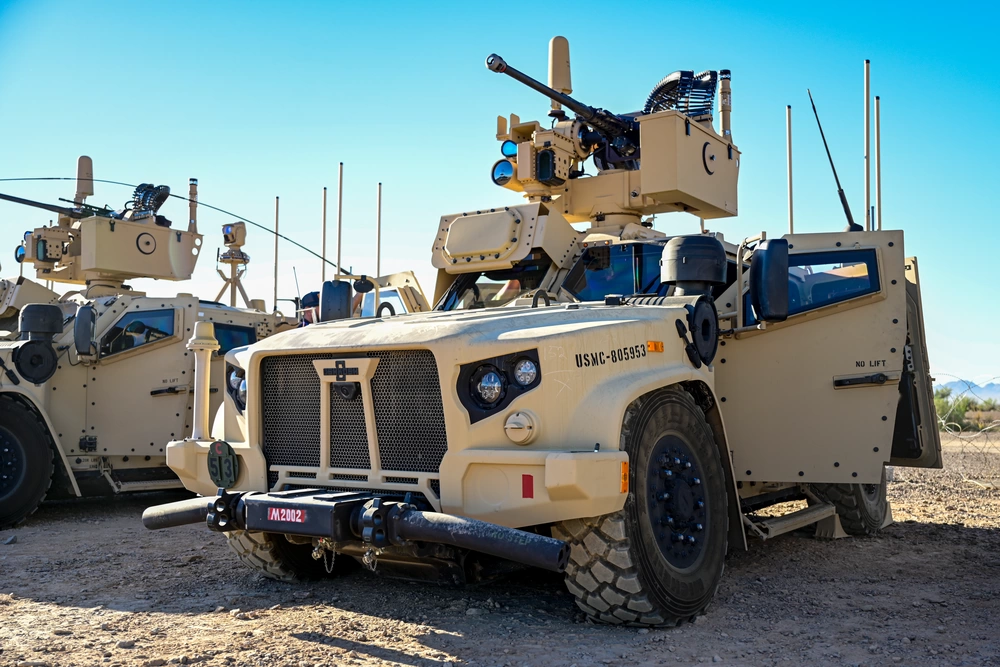
Image Credit: Sandbox.
Industry experts note that proximity-fuzed ammunition relies on highly specialized components that are not yet produced in the quantities required for a major conflict. Demand for these systems has surged as governments around the world seek more affordable counter-drone solutions.
Defense manufacturers are already moving to expand production capacity. Northrop Grumman has invested in facilities and research tied to advanced proximity-fuze ammunition, while L3Harris says it is increasing manufacturing output to meet rising demand.
The urgency behind those investments reflects a broader shift in military thinking. Rather than viewing drones as occasional battlefield tools, defense planners increasingly see them as a defining feature of future conflicts.
The ability to defeat large numbers of inexpensive unmanned aircraft without exhausting stockpiles of high-end missiles could become a decisive factor in potential confrontations across the Indo-Pacific and other strategic regions.
The Wall Street Journal's reporting suggests that the Pentagon's answer may not be a single revolutionary weapon, but a combination of radar, electronic warfare, specialized ammunition, and layered defenses that make drone interception far less expensive than it has been in the past.
As drone warfare continues to expand, the success of systems such as MADIS could help determine whether militaries can keep pace with a threat that is becoming both cheaper and more widespread.
Source: WSJ
counter-drone technology U.S. Marines MADIS system low-cost drone defense proximity-fuze ammunition drone swarm protection electronic warfare countermeasures military cost efficiency 30mm anti-drone cannon Stinger missile alternatives Ukraine drone warfare Pentagon defense innovation layered air defense
Comments