29Jun
Image Credit: Defense One.
The battlefield lessons of Ukraine are reshaping security on America's southern frontier
The United States military has openly acknowledged that the country's southern border has become an operational testing ground for next generation counter drone technologies, reflecting growing concern that Mexican drug cartels are increasingly employing unmanned aerial systems to monitor troop movements and federal law enforcement activities.
According to reporting by Business Insider, citing remarks made during the annual SOF Week conference in Tampa, Florida, senior American military commanders described the border as both a real-world security challenge and a unique environment where emerging counter unmanned aerial system capabilities can be evaluated under authentic operational conditions.
The comments underscore how rapidly inexpensive commercial drones have transformed from niche surveillance tools into ubiquitous intelligence gathering platforms capable of challenging even the world's most technologically advanced armed forces.
After years of studying drone warfare in Ukraine and the Middle East, Pentagon leaders now see similar technologies proliferating among criminal organizations operating much closer to home.
General Gregory Guillot, commander of U.S. Northern Command, reportedly said the military already possesses a range of fixed and mobile counter drone systems. However, one major capability gap remains unresolved.
"We have a lot of fixed and movable counter-UAS capabilities, but not really anything that would follow a patrolling soldier," Guillot explained during the conference. That limitation has become increasingly significant because cartel operated drones are reportedly conducting routine surveillance flights over American soldiers and Marines deployed along sections of the U.S. Mexico border."
The cartels are flying over our soldiers and Marines all the time," Guillot said.
The statement represents one of the clearest public acknowledgments from senior military leadership that unmanned aerial systems are no longer confined to overseas conflict zones. Instead, they are becoming persistent operational challenges even during homeland security missions.
Cartel Drones Expose New Vulnerabilities in Homeland Military Operations
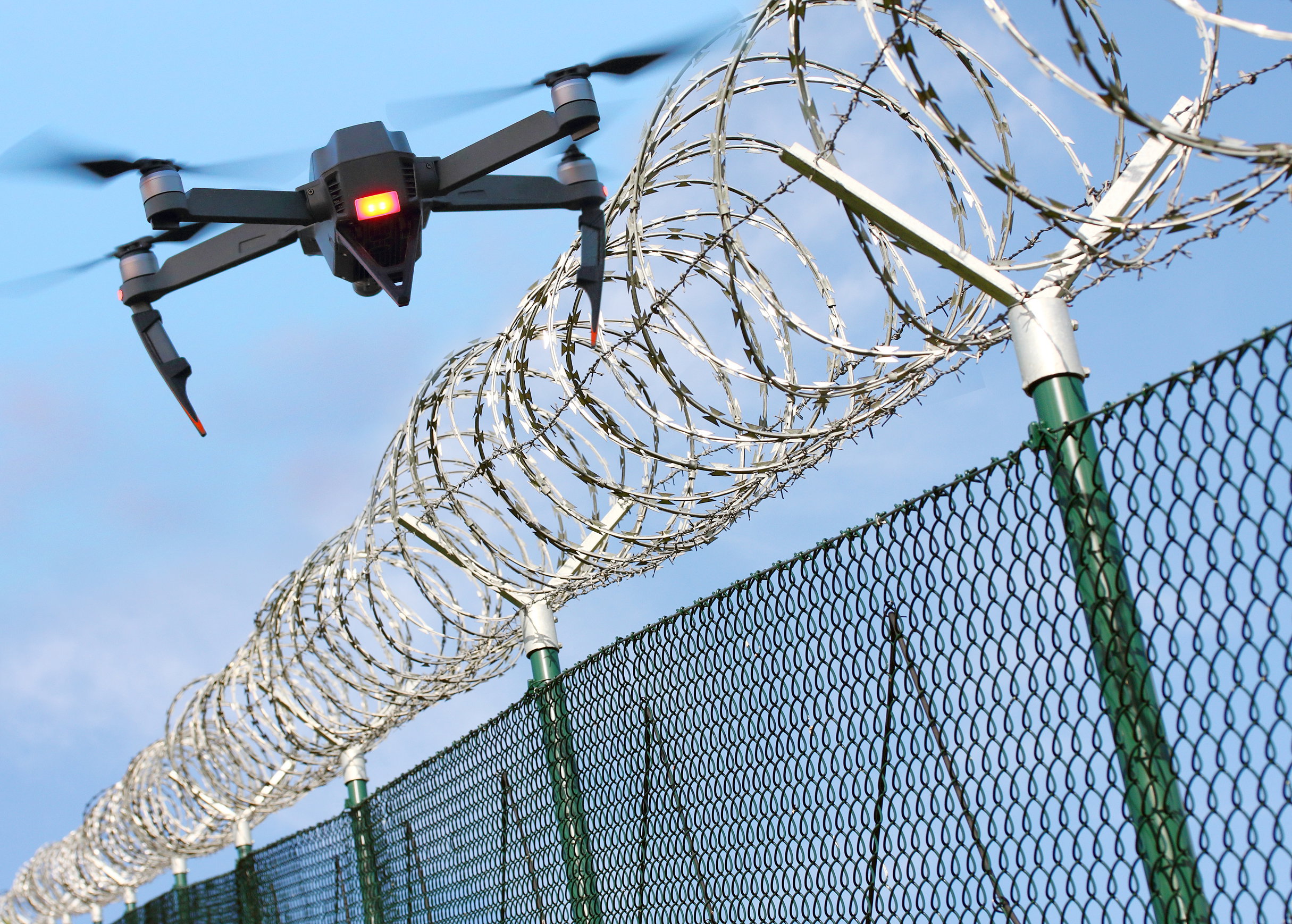
The Pentagon's concerns extend far beyond simple aerial observation. Military planners increasingly recognize that the same commercially available drone technologies that have revolutionized battlefields across Eastern Europe and the Middle East can be adapted by criminal organizations with relatively limited technical expertise and modest financial resources.
GettyImages.
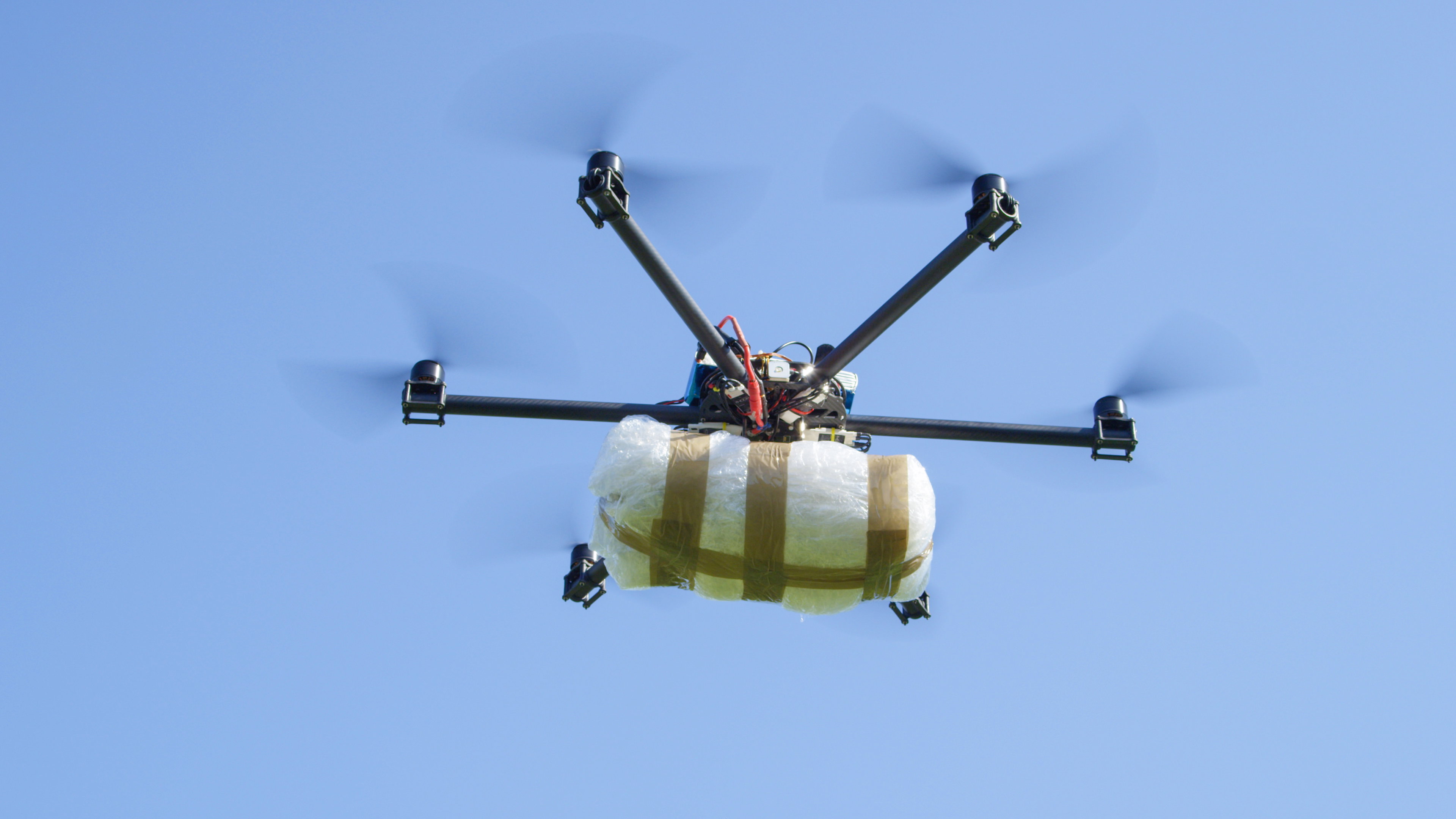
Unlike traditional military aircraft, commercial quadcopters and other small unmanned systems are inexpensive, widely available, difficult to detect, and relatively easy to modify for surveillance or even offensive operations.
The challenge is particularly acute because many existing American air defense systems were designed to defeat sophisticated threats such as advanced cruise missiles, combat aircraft, and ballistic weapons. These systems were never optimized to neutralize swarms of inexpensive drones flying at low altitude and often in large numbers.
Guillot acknowledged that while the military possesses numerous counter drone systems, the force still lacks reliable technologies capable of protecting troops who are constantly on the move while simultaneously defeating multiple aerial threats. This capability gap has become a source of growing anxiety within the Department of Defense.
Modern military patrols increasingly operate in environments where small, unmanned aircraft can observe troop formations, identify vehicle positions, relay intelligence in real time, and potentially guide attacks by hostile actors.
Protecting static military installations from drones is already a complex undertaking. Providing the same level of protection to soldiers conducting mounted and dismounted patrols presents an even more difficult engineering and tactical problem.
According to Business Insider's report, the U.S. military has already deployed hundreds of counter drone systems across the southern border in an effort to determine which technologies deliver consistent performance under operational conditions.
Rather than relying solely on laboratory evaluations or controlled military exercises, commanders are exposing these systems to genuine surveillance activity from cartel operated drones. The approach effectively transforms the border into a continuous field laboratory where manufacturers receive immediate operational feedback from soldiers confronting real aerial threats.
A "Literal and Figurative Sandbox" for Next Generation Military Technology
Guillot characterized the southern border as both "a literal and a figurative sandbox" for evaluating emerging counter drone technologies. His description illustrates a broader shift in Pentagon procurement philosophy.
Instead of purchasing equipment first and refining tactics later, military leaders increasingly want promising technologies tested under authentic operational conditions before committing to large procurement contracts. Guillot extended a direct invitation to defense companies developing counter drone capabilities.
"If you're willing to bring it down to the southern border, we'll put it to use. We'll tell you if it works," he said. The evaluation process is intentionally straightforward. "If it does, we'll probably buy it. If it doesn't, we'll tell you exactly what you need to work on."
This approach shortens the feedback loop between military operators and defense manufacturers, allowing companies to improve products based on real world performance rather than theoretical assumptions. It also reflects the extraordinary pace at which drone technology continues to evolve.
Traditional military acquisition programs often require years before new systems reach operational units. Commercial drone innovation, by contrast, advances at a much faster rate, driven largely by civilian markets and global supply chains. As adversaries rapidly adopt new technologies, the Pentagon has increasingly emphasized faster experimentation and accelerated procurement cycles.
The southern border provides an unusually valuable testing environment because it combines persistent drone activity with relatively controlled operating conditions compared with active war zones.
American forces stationed there conduct regular mounted patrols using military vehicles as well as dismounted patrols on foot. These missions expose personnel to the kinds of surveillance challenges that future expeditionary operations may also encounter. Lessons learned during border deployments could therefore influence how the military develops counter drone doctrine for conflicts elsewhere.
Rather than treating homeland security and overseas military operations as entirely separate missions, defense planners increasingly view them as interconnected environments where technological innovations can be tested, refined, and validated.
Drone Warfare is Becoming Accessible to Almost Anyone
The broader strategic concern extends well beyond Mexican cartels. During the same SOF Week panel discussion, Admiral Bradley Cooper, commander of U.S. Special Operations Command, reportedly warned that rapidly expanding access to commercial technologies has fundamentally altered the nature of modern conflict. He described the trend as the "democratization of technology."
According to Cooper, the threshold for acquiring precision strike capabilities has fallen dramatically over the past decade. Where advanced military technologies were once available only to nation states with sophisticated defense industries, commercially available components now allow non state actors to assemble surprisingly capable unmanned systems using products purchased through ordinary online marketplaces.
GettyImages.
"The barrier to be able to have a lethal, precise weapon to aim and orient at our maneuvering forces is lower to the point where anyone with an Alibaba or an Amazon account can piece those things together," Cooper said.
His remarks capture one of the defining characteristics of contemporary warfare. Military superiority is no longer determined solely by access to expensive aircraft, missiles, or armored vehicles. Increasingly, low-cost technologies can generate disproportionate operational effects when employed creatively.
The conflict in Ukraine has repeatedly demonstrated that relatively inexpensive drones can destroy tanks worth millions of dollars, identify artillery targets with remarkable precision, and conduct persistent surveillance across vast stretches of battlefield. The Middle East has produced similar lessons, with Iranian backed proxy groups using drones to threaten military installations and deployed forces.
Recent attacks have reinforced the seriousness of the threat. Business Insider noted that six U.S. service members were killed in Kuwait in March following an Iranian drone strike. It also referenced the deaths of three American soldiers in Jordan during 2024 after a drone attack launched by an Iran backed militia.
Subsequent investigations reportedly concluded that U.S. forces were insufficiently prepared to defend against certain drone threats. Those incidents have accelerated Pentagon efforts to improve both equipment and training.
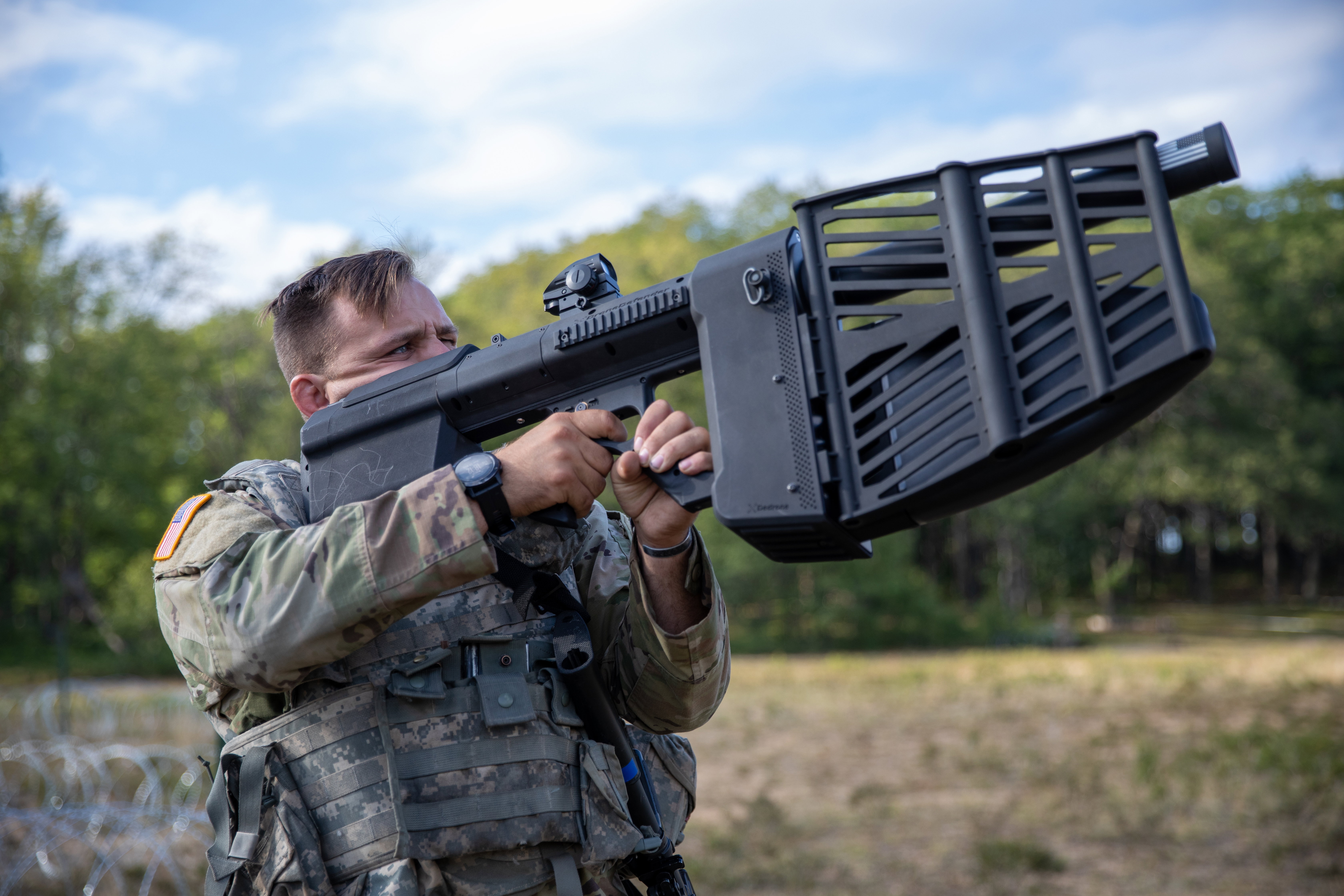
Image Credit: C4ISRNet.
Military leaders increasingly argue that defending against drones requires a layered approach combining electronic warfare, kinetic interceptors, sensors, artificial intelligence, and continuous operator training.
No single technology currently offers a universal solution. Instead, commanders anticipate deploying overlapping defensive systems capable of detecting, identifying, tracking, and neutralizing a wide spectrum of aerial threats ranging from sophisticated military platforms to inexpensive commercial quadcopters.
The operational experience gained along the southern border is expected to contribute directly to that evolving defensive architecture. As cartel drone activity continues to expose vulnerabilities in homeland security operations, military leaders appear determined to ensure those encounters become opportunities for experimentation rather than merely tactical challenges.
The border, once viewed primarily through the lens of immigration enforcement and law enforcement cooperation, is increasingly emerging as a proving ground for technologies that may eventually protect American forces in future conflicts around the world.
The convergence of criminal innovation, commercial technology, and military adaptation illustrates how the boundaries between domestic security and modern warfare continue to blur, forcing defense planners to rethink where tomorrow's battlefield begins.
US southern border counter drone technology Mexican drug cartels Pentagon UAS threats military innovation homeland security SOF Week General Gregory Guillot unmanned aerial systems border security drone warfare counter-UAS military technology cartel surveillance Department of Defense operational testing Admiral Bradley Cooper democratization of technology US Northern Command
Comments