28May
The United States Marine Corps is experimenting with a new way to extend the reach of small battlefield drones by turning helicopters into flying launch pads and control hubs.
The idea under review is simple in concept but complex in execution: use crewed aircraft not just for transport or attack, but as “airborne motherships” capable of deploying, receiving, and directing first-person-view (FPV) drones deep into contested airspace.
This approach blends traditional aviation with rapidly evolving uncrewed systems. Instead of relying solely on long-range munitions or exposing aircraft to dense air defenses, Marines are testing whether helicopters can act as intermediaries, pushing low-cost drones closer to targets while keeping pilots and crews at safer distances from threats on the ground.
The effort is part of a broader push inside the Marine Corps to rethink how airpower functions in modern combat environments where electronic warfare, dispersed formations, and cheap drones are reshaping battlefield dynamics.
Inside the Twentynine Palms Experiment
A recent field exercise at the Marine Corps Air Ground Combat Center in Twentynine Palms, California, provided the testing ground for the concept. Personnel from Marine Light Attack Helicopter Squadron 169 and the 3rd Light Armored Reconnaissance Battalion participated in trials designed to evaluate how FPV drones could be launched and controlled from airborne platforms.
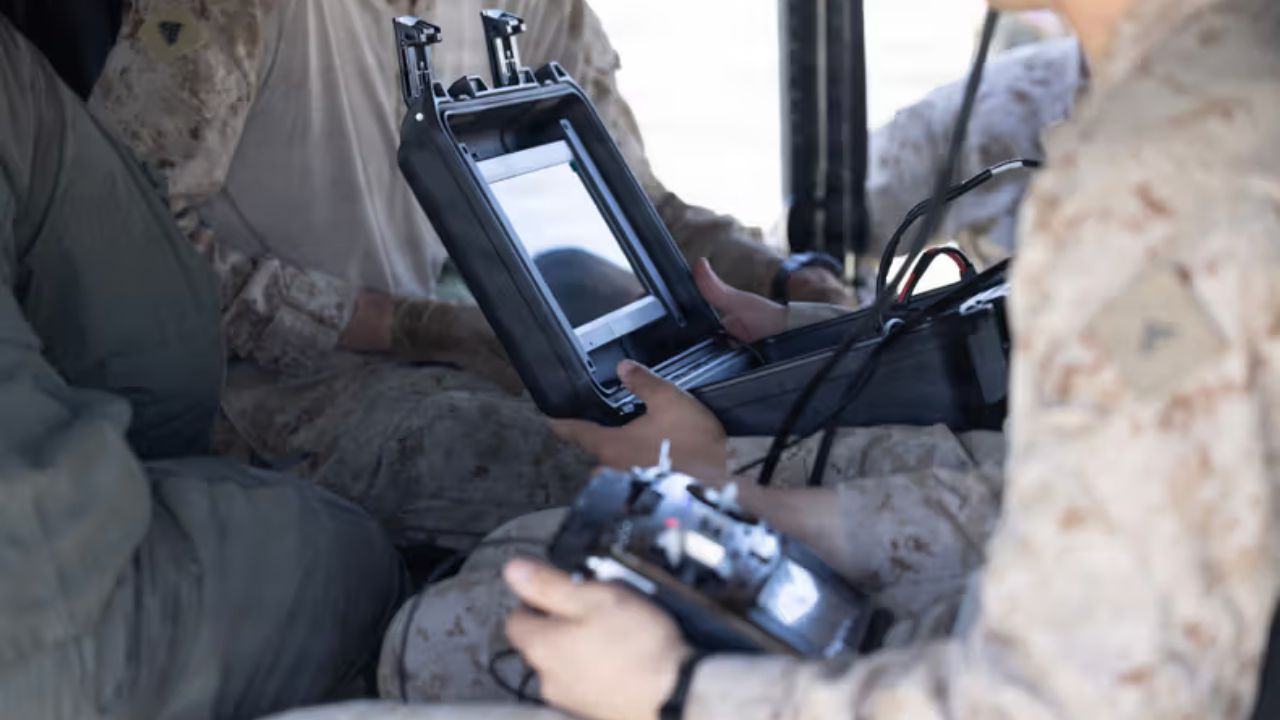
US Marine Corps photo by Sgt. Symira Bostic via BI
The exercise involved two key aircraft operated by the Marines: The Bell UH-1Y Venom and the Bell AH-1Z Viper. The UH-1Y Venom, a utility helicopter widely used for troop transport and support roles, and the AH-1Z Viper, a dedicated attack helicopter, were both adapted for experimental drone operations.
During the training, Marines successfully launched an FPV drone from a moving helicopter. The test demonstrated that drones could be deployed mid-flight, expanding the flexibility of aerial operations without requiring fixed launch sites on the ground.In another scenario, Marines explored a more complex handoff system.
Ground forces initially launched and guided an FPV drone, the Neros Archer, before transferring control to a team operating inside a UH-1Y Venom flying miles away. From that airborne position, operators maintained a stable line-of-sight connection and continued guiding the drone toward its target.
This created a mobile airborne control node that functioned as both a relay station and a command platform.
Turning Helicopters into Flying Command Posts
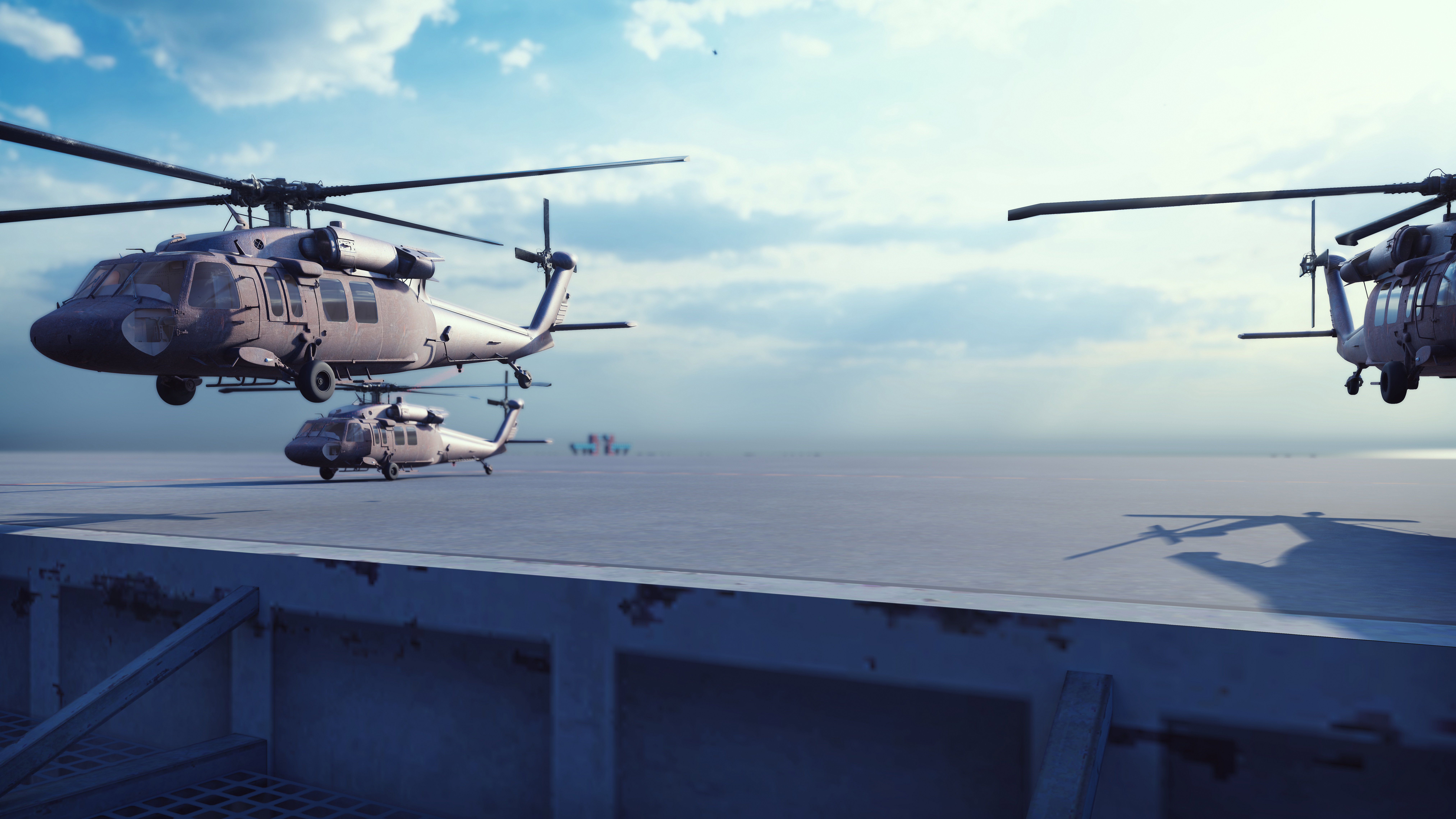
The core innovation being tested is the idea of helicopters acting as real-time control centers for FPV drones. Instead of a single operator controlling a drone from the ground, control can be shifted between units, platforms, and distances while maintaining operational continuity.
Inside the helicopter, operators effectively become airborne mission coordinators. They manage drone navigation, adjust targeting parameters, and maintain communications links that might otherwise be disrupted by terrain or enemy interference.
This transforms aircraft such as the UH-1Y Venom from purely transport and support platforms into mobile command hubs in the sky.
The Marines also explored the potential for multi-drone coordination from a single aircraft. In theory, multiple FPV drones could be launched and controlled in a coordinated pattern, enabling swarming behavior against targets.
While this aspect remains experimental, it reflects a growing interest in distributed drone tactics that overwhelm defenses through numbers rather than relying on a single high-value strike asset.
Military officials involved in the exercise described the approach as a way to offer commanders more flexibility while reducing risk exposure for both aircraft and personnel. By shifting drone control into the air, Marines can keep high-value platforms farther from contested zones while still maintaining influence over the battlefield below.
Strategic Implications for Modern Warfare
The FPV drone used in the tests, the Neros Archer, is already widely adopted within Marine infantry units.
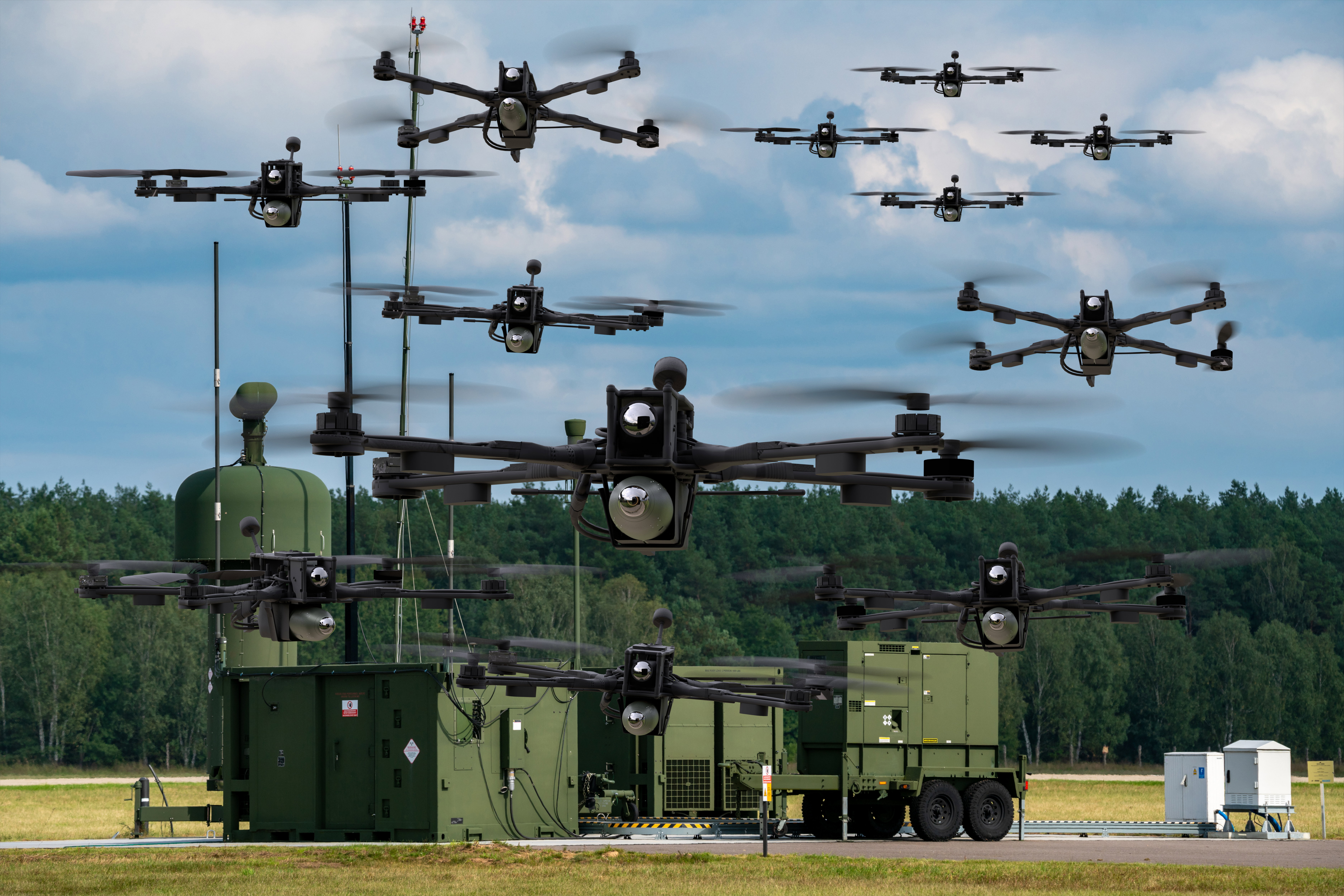
The system is known for its adaptability and relatively low cost, and it is part of a broader procurement effort that includes large-scale contracts to expand drone availability across the force. The platform has also seen operational use in other conflict environments, contributing to its selection for experimentation.
Like most FPV drones, its performance depends heavily on payload weight and configuration. Lighter setups allow for longer range and improved maneuverability, while heavier payloads reduce endurance but increase strike capability. This flexibility makes it suitable for testing concepts that involve rapid deployment from unconventional launch platforms such as helicopters.
Marine personnel involved in the trials emphasized that reducing exposure to direct combat is a key advantage. By launching drones from airborne platforms, crews can support ground operations without placing aircraft directly in high-risk zones or relying on expensive traditional munitions for every engagement.
One UH-1Y crew member described the system as a way to deliver close support while minimizing danger to personnel on both air and ground sides.
Beyond the Marine Corps, the broader U.S. military is pursuing similar manned-unmanned teaming concepts. The United States Air Force and the United States Navy are both advancing programs that integrate autonomous or semi-autonomous drones with crewed aircraft, including systems where drones fly alongside manned jets or receive instructions from onboard pilots.
The Twentynine Palms exercise reflects an emerging direction in military aviation: aircraft are no longer just platforms that carry weapons, but nodes in a larger digital and autonomous network. As these systems mature, the boundary between pilot and operator, aircraft and drone, may continue to blur, reshaping how airpower is deployed in future conflicts.
Sources: Business Insider
US Marines Marine Corps airborne mothership FPV drones drone warfare UH-1Y Venom AH-1Z Viper Neros Archer manned-unmanned teaming Twentynine Palms military technology aerial drone launch helicopter drone control modern warfare Marine Light Attack Helicopter Squadron 169 3rd Light Armored Reconnaissance Battalion battlefield drones autonomous systems military aviation drone swarm
Comments